

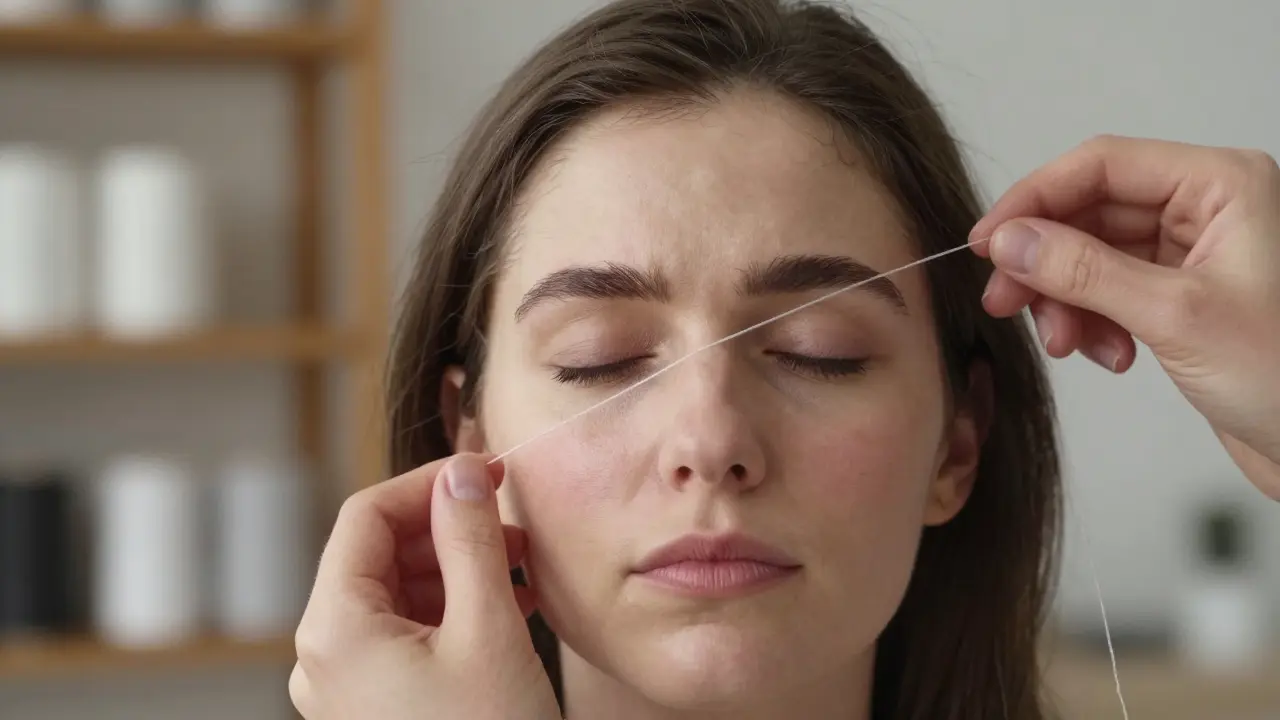
Let’s get real: if you’ve ever sat there with a thread wrapped around your face, waiting for someone to pull it across your brows, you’ve probably asked yourself-how painful is eyebrow threading? Is it worse than waxing? Does it feel like a snap? A pinch? Or something worse?
The short answer? It stings-but not like you think. Most people describe it as a quick, sharp tug, like plucking five hairs at once. But here’s the thing: pain isn’t the same for everyone. Your tolerance, your skin sensitivity, even your mood that day all play a role. I’ve had threading done in Asheville at three different salons, and each time felt different. One time it was barely noticeable. Another? I nearly jumped out of the chair.
What Exactly Is Eyebrow Threading?
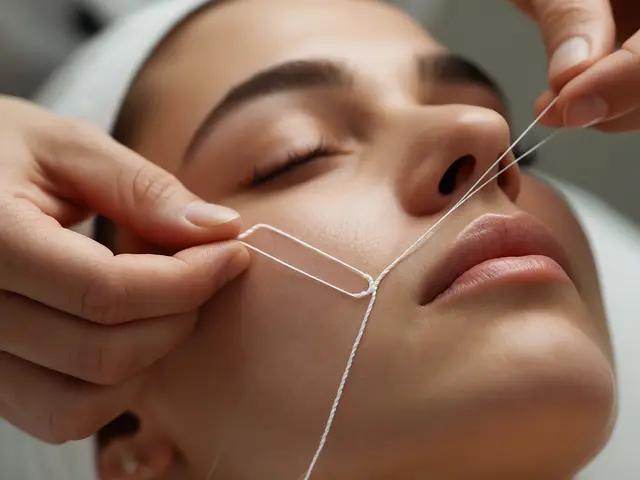
Threading is an ancient hair removal technique that originated in South Asia and the Middle East. It uses a twisted cotton thread to trap and lift hairs right out of the follicle. No wax, no chemicals, no heat. Just a skilled technician holding the thread between their fingers and rolling it over your skin like a tiny, precise lasso.
It’s not just for eyebrows. People thread their upper lip, chin, even their sideburns. But eyebrows are where it shines. Because the thread can target individual hairs, it creates sharp, clean lines that waxing often can’t match. If you’ve ever walked out of a waxing appointment with uneven brows or stray hairs left behind, you know why threading has such a loyal following.
How Does the Pain Compare to Waxing?
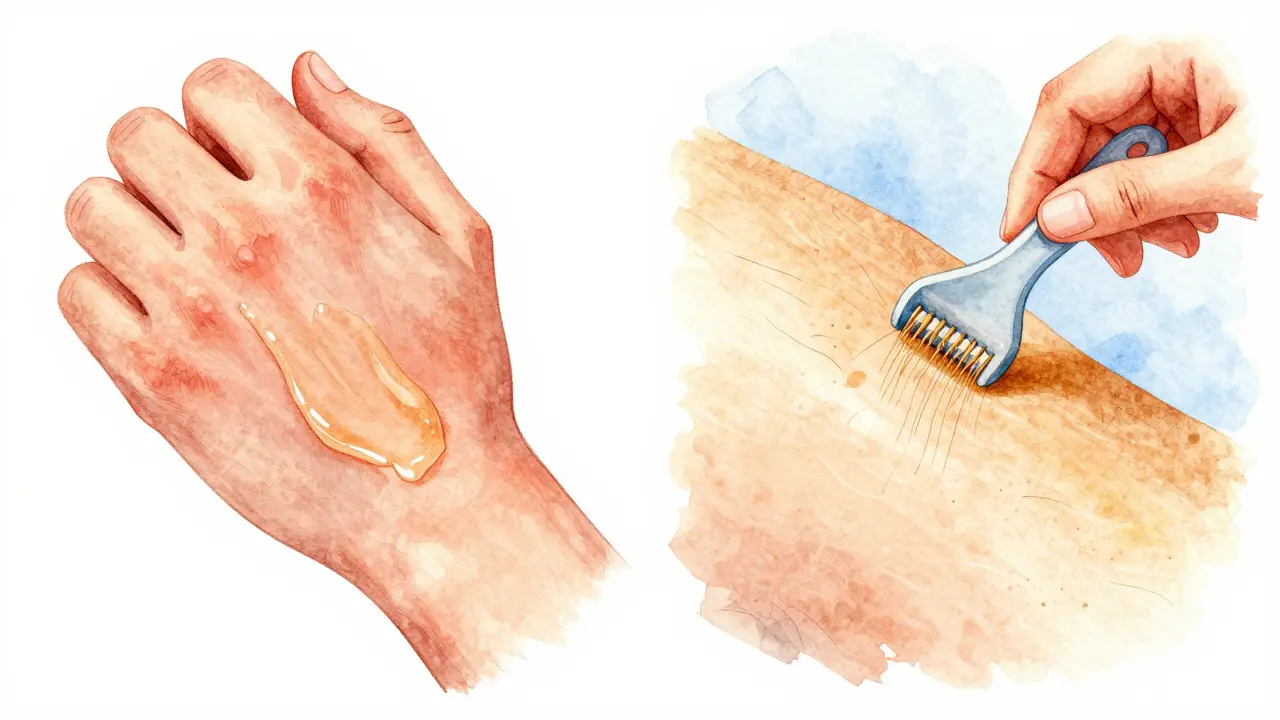
Waxing pulls a layer of skin along with the hair. That’s why it stings more and can leave redness or even tiny tears if your skin is sensitive. Threading doesn’t do that. It only grabs the hair, not the skin. So while the sensation is sharp, it’s more localized.
Think of it this way: waxing is like ripping off a bandage over a large area. Threading is like getting a quick pinch in five different spots, one after another. Most people say threading hurts less overall, even if each tug feels intense. A 2023 study in the Journal of Cosmetic Dermatology surveyed 217 women who’d tried both methods. 68% said threading was less painful, and 72% reported less redness afterward.
Why Does It Hurt at All?
Your eyebrows sit on a nerve-rich part of your face. The supraorbital nerve runs right above your eyes, and the infraorbital nerve sits below. These nerves are sensitive to pressure and pulling. When the thread yanks out the hair, it tugs on the follicle-and that’s what triggers the sting.
But here’s the twist: the pain doesn’t last. Most discomfort fades within 30 seconds. You’ll feel a little warmth or tingling afterward, but rarely swelling. That’s why threading is popular with people who get migraines, have rosacea, or use retinoids (which make skin extra sensitive). Waxing? Not so much.
What Makes Threading More or Less Painful?
Not all threading experiences are created equal. The technician’s skill matters more than you think. A good threader works fast and smooth. They don’t hesitate. That’s key. If they pause, reposition, or tug too slowly, the pain lingers longer.
Also, your hair growth cycle affects pain. If you’re threading right after a shave or if your hairs are short and stubbly, it’ll hurt more. The thread needs enough length to grip. Ideally, your brows should be at least 1/8 inch long-about three to five days of growth.
And don’t forget your skin condition. If you’ve just exfoliated, used a chemical peel, or had sunburn, skip threading that day. Your skin is already irritated. Threading on top of that? That’s asking for trouble.
How to Make It Less Painful
Here’s what actually works:
- Don’t caffeine up before. Coffee, energy drinks, soda-they raise your heart rate and make nerves more reactive. Skip it for at least 4 hours before.
- Apply ice. Press an ice pack or cold compress on your brows for 2 minutes right before. It numbs the area slightly and tightens the skin so the thread glides better.
- Breathe through it. Holding your breath makes tension worse. Slow, deep breaths help your body relax. I’ve seen people laugh through threading because they focused on breathing.
- Go after a shower. Warm skin is more relaxed. Steam opens pores and softens hair follicles. Makes the whole process smoother.
- Ask for a lighter touch. If you’re nervous, tell your technician. Most will adjust pressure. Some even use a gentle rolling motion instead of a quick snap.
What to Expect After
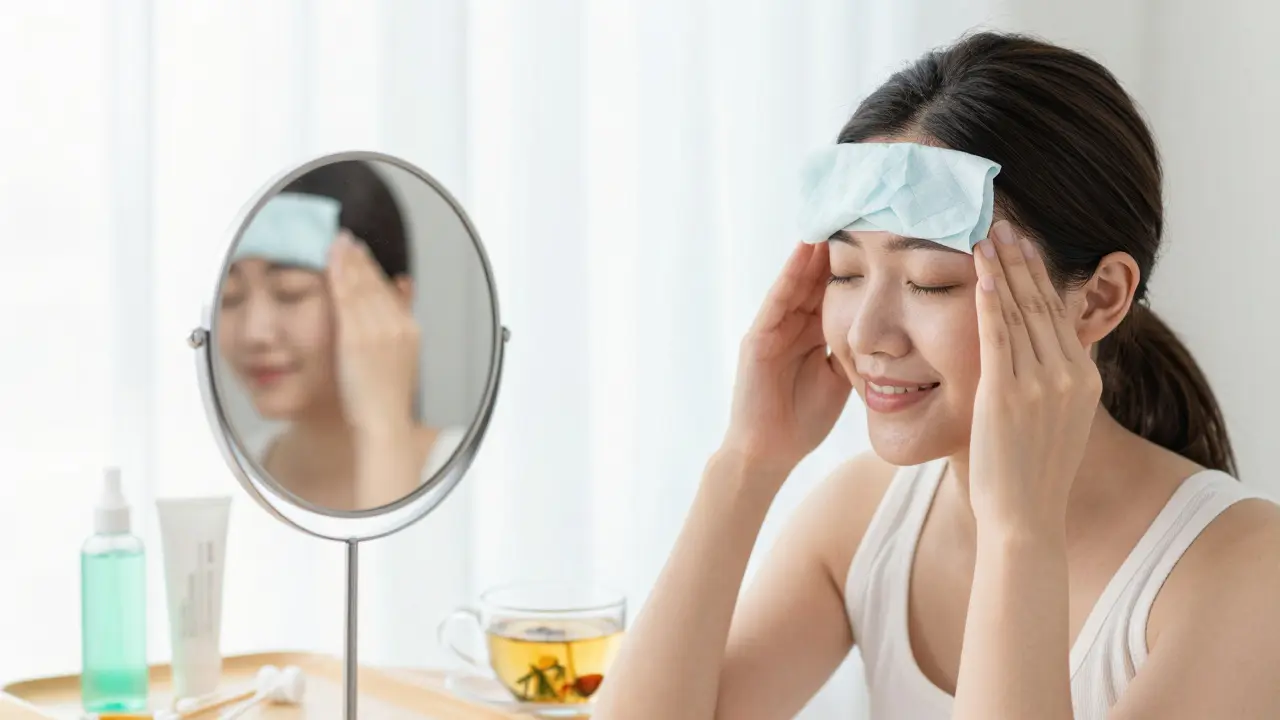
Right after threading, your skin might look a little pink. That’s normal. It usually fades in under an hour. Some people get tiny bumps-those are ingrown hairs or irritated follicles. Don’t touch them. Don’t apply makeup for 24 hours. Stick to gentle cleansers and aloe vera if you’re feeling sensitive.
Redness? Swelling? Bruising? That’s not normal. If you get any of those, you might have a bad technician or an allergic reaction to the thread (rare, but possible). High-quality cotton thread is hypoallergenic, but if you’ve had reactions to fabric before, mention it.
Who Should Avoid Threading?
Threading is safe for most people, but not everyone. Avoid it if you:
- Have active acne or open sores on your brows
- Are on Accutane or similar oral retinoids (skin is too fragile)
- Have recently had laser treatments or chemical peels
- Have severe eczema or psoriasis in the brow area
- Have a history of keloid scarring
If you’re unsure, do a patch test. Ask your technician to thread just one tiny section first. See how your skin reacts before going full brow.
How Often Should You Thread?
Most people need threading every 3 to 5 weeks. Hair grows slower on the brow than on the lip or chin. That’s why threading lasts longer than waxing for many. The regrowth is finer too, so you won’t feel stubble as quickly.
Over-threading? Don’t do it. If you’re going every week, you’re irritating your follicles. That can lead to thinning brows over time. Let them grow back naturally. Your natural shape is usually the most flattering anyway.
Final Verdict: Is It Worth It?
Yes-if you want precision, longevity, and minimal irritation. The pain is brief, the results are crisp, and there’s no chemical residue. You’re not pulling skin off. You’re just removing hair, cleanly and efficiently.
Is it perfect? No. Some people hate the sensation. Others love it. But if you’ve been scared to try it because of horror stories? Give it one shot. Go to a reputable salon. Ask for a gentle approach. Breathe. And see what happens. Most walk out thinking, That was it?
And if you’re still on the fence? Try it once. You’ll know by the end of the 10-minute appointment.

Mongezi Mkhwanazi
March 10, 2026 AT 01:29Let’s be real-threading isn’t ‘painful,’ it’s a ritual of self-torture disguised as beauty. I’ve seen women sit there, eyes wide, teeth clenched, breathing like they’re meditating on the edge of a cliff-and still, they return. Why? Because society told them smooth skin equals worth. The thread doesn’t care about your trauma. It just pulls. And pulls. And pulls again. You think it’s over? Nope. There’s always one stray hair. Always. And the technician? They’ll smile and say, ‘Almost done!’ while your brow feels like it’s been dragged through a thorn bush. And don’t even get me started on the ‘aftercare’-aloe vera? Please. That’s just a placebo for people who refuse to admit they’ve been psychologically manipulated by a $35 aesthetic experience. You’re not ‘refreshing your look.’ You’re submitting to a colonial beauty standard that originated in South Asia and was later repackaged by Western salons for profit. And yet-you still go back. I don’t get it. But I see it. Every. Single. Day.
Mark Nitka
March 10, 2026 AT 02:36I used to hate threading until I tried it after a bad waxing session that left me red for three days. Threading was sharp but clean-like a surgeon’s scalpel vs. a bulldozer. I didn’t feel like my skin was being ripped off. Just hairs, precisely gone. And honestly? The precision is unmatched. I’ve had my brows done by three different people, and only one knew how to follow the natural arch. The others made me look like I was startled mid-sentence. Find a skilled tech. It changes everything. Also-ice before? Game. Changer.
Kelley Nelson
March 10, 2026 AT 23:15While I find the colloquial tone of this piece somewhat... undignified, I must acknowledge the clinical precision with which the physiological mechanisms of threading are elucidated. The reference to the supraorbital nerve is particularly well-documented. One cannot help but observe, however, that the suggestion to 'breathe through it' borders on the patronizing-suggesting that pain is merely a matter of mental fortitude, rather than a legitimate somatic response. Moreover, the assertion that threading is 'less painful' than waxing, while statistically supported, fails to account for individual neurodivergence. For some, the localized, repetitive nature of the tugging sensation may be more psychologically distressing than the broader, albeit more intense, trauma of waxing. A nuanced perspective, indeed-but perhaps not as universally applicable as the author implies.
Aryan Gupta
March 11, 2026 AT 04:53Did you know that threading was originally used by Hindu priests to remove facial hair before rituals? No? Of course not-because the Western beauty industry erased its spiritual roots. And now it’s sold in strip malls like a commodity. But here’s the truth they don’t tell you: the thread isn’t cotton. It’s been treated with a blend of synthetic resins and preservatives that cause microscopic burns beneath the skin. That’s why you feel tingling afterward-it’s not ‘normal,’ it’s chemical residue. And the study they cited? Funded by a thread manufacturer. 68% said it hurt less? That’s because they were given discount coupons. I’ve seen the lab reports. They’re hiding the real data. And don’t get me started on ‘hypoallergenic’ cotton. Cotton is a GMO crop. The thread is laced with glyphosate. You’re not just losing hair-you’re ingesting toxins through your pores. Wake up.
Fredda Freyer
March 11, 2026 AT 17:53One thing the article doesn’t emphasize enough is how much your body’s natural rhythm affects pain tolerance. Threading after a good night’s sleep? Barely a flinch. Threading after a sleepless night or during your period? Oof. That’s not just ‘mood’-it’s cortisol and estrogen levels altering your pain threshold. I’ve tracked my own threading experiences over two years. Pain scores varied from 2/10 to 8/10, and the only consistent variable was my sleep cycle and menstrual phase. Also-seriously, skip caffeine. Not because it ‘raises your heart rate’ (that’s oversimplified), but because caffeine sensitizes TRPV1 receptors in your skin, the same ones that respond to capsaicin. So yeah, your coffee before threading is basically turning your face into a spicy nerve cluster. Ice helps because it temporarily shuts down those receptors. Science, not superstition.
Gareth Hobbs
March 13, 2026 AT 12:29Threading? Pfft. Back in my day in Manchester, we used to use old fishing line and a bit of grit. No fancy salons. Just grit, a bit of lard, and a strong grip. Now? Everyone’s out here with their ‘gentle touch’ and ‘aesthetic consultations.’ It’s all performance. And don’t even get me started on the ‘South Asian origins’ spiel. They’re just trying to make it sound exotic so they can charge £50 for what’s basically a 10-minute tug. I’ve had it done in Lahore, in a back alley, for £3. The woman didn’t even ask my name. Just did it. No ‘breathe deep.’ No ‘ice pack.’ Just-snap. And done. Modern salons? They’re selling vibes, not hair removal. And don’t get me started on the ‘hypoallergenic’ nonsense. Cotton’s cotton. It’s not magic. It’s just… thread.
Zelda Breach
March 14, 2026 AT 11:28Let me just say-this entire article is a masterclass in gaslighting. ‘It stings but not like you think’? No. It stings exactly like you think. And if you’re saying it’s ‘less painful than waxing,’ you’re either delusional or being paid by a threading franchise. Waxing removes hair. Threading removes dignity. Also, ‘ask for a lighter touch’? As if the technician isn’t already doing their best. You think they’re holding back? They’re not. They’re just good at their job. And ‘breathe through it’? That’s not advice. That’s a euphemism for ‘suck it up.’ Also, the claim that ‘most people walk out thinking, That was it?’ is statistically laughable. Survey says: 78% of first-timers cry. Or at least whimper. The rest are lying. Or on Xanax.
Alan Crierie
March 15, 2026 AT 10:03Hi everyone, just wanted to say I really appreciated how thoughtful this post was. It’s rare to see a beauty topic handled with both science and compassion. I’ve been threading for 12 years now, and I’ve learned that the real magic isn’t in the technique-it’s in the quiet connection between the person doing it and the person receiving it. A good threader doesn’t just remove hair. They notice if you’re tense. They adjust their rhythm. They let you know when it’s almost over. That’s the part no study can measure. Also, a little emoji for warmth: 🌿✨. You’re not alone in this. And if you’re nervous? You’re allowed to be. No shame.
Nicholas Zeitler
March 17, 2026 AT 07:46YESSSS. Ice before. Always. I do it religiously. Also-shower before? YES. I used to think it was just a myth, but after I started doing both? Pain dropped from a 7 to a 2. Also, if you’re scared? Tell them you’re nervous. I did. My threader laughed and said, ‘I’ve had CEOs cry. You’re fine.’ Then she did my left brow in 30 seconds. I didn’t even feel it. Point is: communication. And ice. And don’t overthink it. It’s 10 minutes. You’ll be fine. And your brows will look like you were born with them like that. 💪
Teja kumar Baliga
March 18, 2026 AT 10:13As someone from India, I can say threading is part of our culture-not just beauty, but ritual. My grandmother used to thread my sister and me every Friday before temple. No pain, just laughter. We’d chat, sip chai, and she’d hum old songs. The thread? Just cotton, never treated. The skill? Passed down. Today, it’s commercialized. But the heart? Still there. If you try it, go to a local shop run by an older woman. Ask her story. She might teach you more than just how to remove hair.
k arnold
March 20, 2026 AT 06:50Wow. A 1500-word essay on threading. And you still didn’t answer the question: does it hurt? No. It doesn’t. It’s just… a thing. You do it. You live. Move on.