

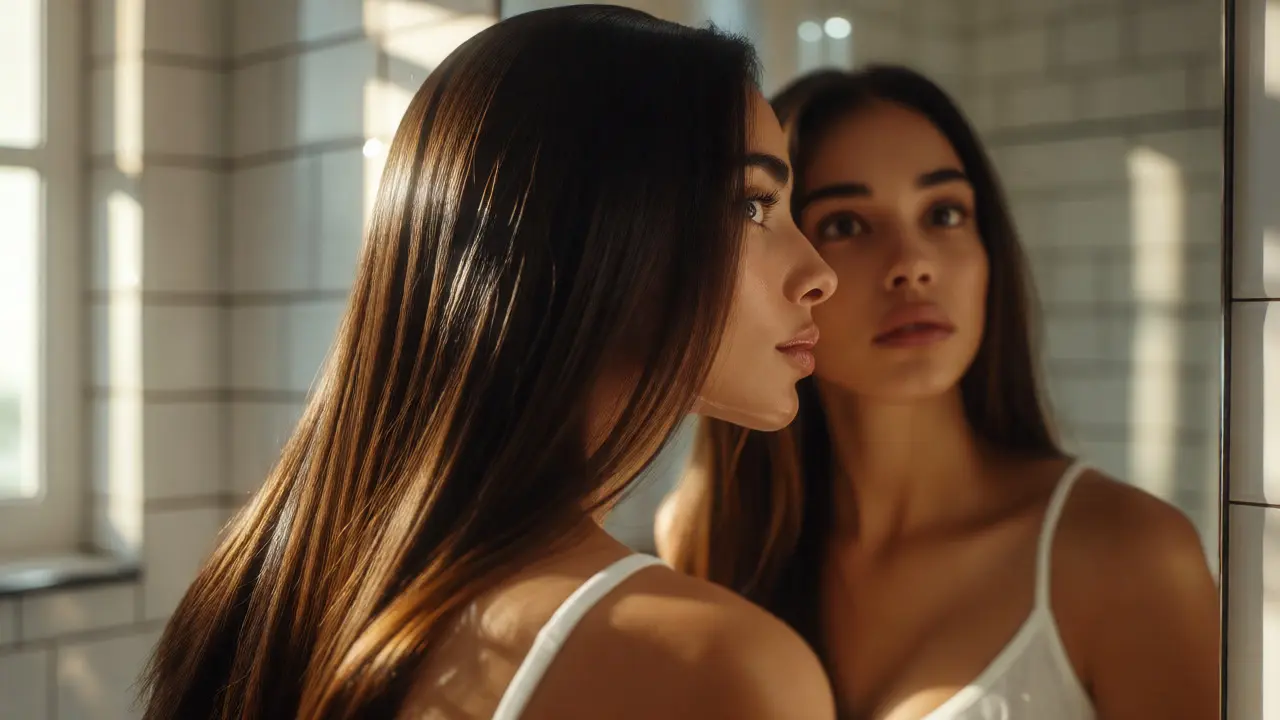
You wake up, look in the mirror, and see a wall of sleek, shiny strands. It sounds like a dream, right? But if you have long straight hair, you know the reality is often less glamorous. It can feel heavy, slippery, or just plain flat. The struggle isn’t getting it to hold a curl-it’s keeping it from looking like a curtain that hides your face.
Here’s the thing: straight hair is actually a blank canvas. It doesn’t have the frizz battles of curly hair or the oiliness traps of wavy hair. But because it lacks natural volume, choosing the wrong cut can make you look tired or older than you are. I’ve seen too many people with beautiful, healthy lengths hiding behind one-length bobs that drag their features down. This guide breaks down exactly which styles work, why they work, and how to keep them looking fresh without spending hours in front of the mirror.
Understanding Your Canvas: Why Straight Hair Behaves Differently
To pick the right style, you first need to understand the physics of your hair. Unlike textured hair, which has structure and body due to its shape, straight hair tends to lie flat against the scalp. Gravity is your biggest enemy here. If your hair is thick and dense, it might weigh itself down, creating a triangular silhouette that looks unbalanced. If it’s fine, it might cling to your head, revealing every bit of scalp.
The key attribute of straight hair is its light-reflecting surface. This makes it look incredibly glossy when healthy but emphasizes any split ends or dryness instantly. Therefore, the goal of any hairstyle for this texture is twofold: create movement and protect the integrity of the strand. You aren't trying to fight the straightness; you're trying to frame it.
The Face Shape Factor: Matching Cuts to Features
There is no single "best" haircut for everyone. It depends entirely on your bone structure. A style that elongates a round face might shorten an already long face. Here is how to match your cut to your geometry.
| Face Shape | Goal | Recommended Styles | Avoid |
|---|---|---|---|
| Oval | Maintain balance | Long layers, blunt cuts, curtain bangs | Heavy, severe side parts (can disrupt symmetry) |
| Round | Elongate and slim | Long layers starting below chin, side-swept bangs | Chin-length bobs, center parts with no layers |
| Square | Soften angles | Soft wispy layers, rounded ends, shag cuts | Blunt, sharp lines at jaw level |
| Heart | Balance wide forehead/narrow chin | Side-swept bangs, layers starting at cheekbones | Voluminous tops with thin bottoms |
| Long/Oblong | Add width and shorten | Bangs (full or curtain), shoulder-length cuts | Very long, one-length hair with no bangs |
Top Hairstyles That Actually Work
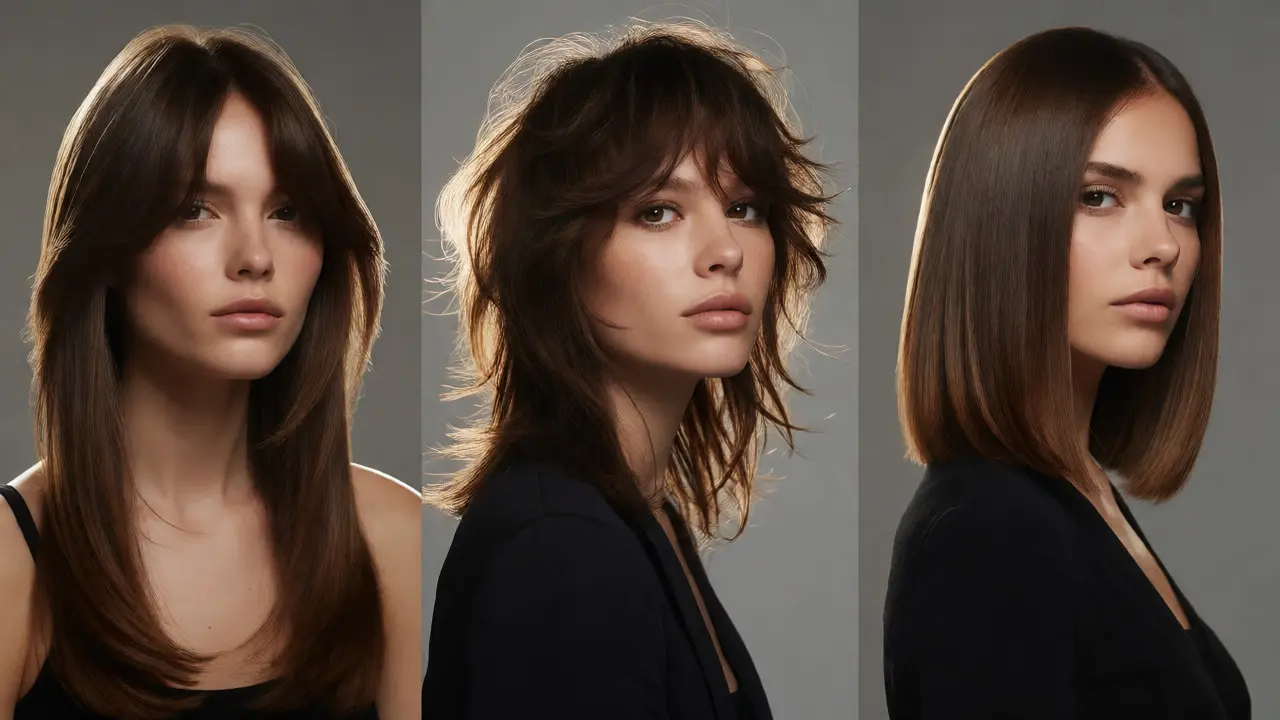
Once you know your face shape, you can narrow down the options. These four styles are the gold standard for long straight hair because they address the common issues of flatness and lack of movement.
The Long Layered Cut
This is the most versatile option. By cutting layers into the bottom half of your hair, you remove weight from the ends while keeping the overall length. This creates internal movement. When you walk, your hair sways rather than swinging as one solid block. For those with thick hair, ask for "invisible layers"-layers that are hidden underneath so the top remains sleek, but the bottom gets lightness. For fine hair, start the layers higher up near the crown to boost root volume.
The Curtain Bang Trend
If you’ve been hesitant about bangs, curtain bangs are your safety net. They part in the middle and sweep out to the sides, framing the eyes and cheekbones. Because they blend seamlessly into the rest of your long hair, you can grow them out easily if you change your mind. They add instant softness to angular faces and break up the monotony of a long, straight sheet of hair. Plus, they require minimal heat styling-often, a quick blow-dry with a round brush is all they need.
The Modern Shag
Think Farrah Fawcett meets modern minimalism. The shag relies on choppy, textured layers throughout the entire head, not just the ends. Traditionally, shags were for wavy hair, but stylists have adapted them for straight textures. The trick is using point-cutting techniques to create jagged edges that catch the light differently. This adds perceived thickness and volume without needing backcombing. It’s perfect if you want an edgy, effortless vibe that still looks polished.
The Blunt Bob (with a Twist)
Wait, didn’t we say avoid short cuts? Not necessarily. A long, blunt bob (lob) that hits just above the shoulders can be stunning. The key is keeping it one-length and super sleek. This style highlights the health and shine of straight hair. However, if your hair is very fine, a blunt cut can sometimes look sparse. In that case, add subtle face-framing pieces around the ears to draw attention away from density issues.
Styling Secrets for Long Straight Hair
Cutting the hair is only half the battle. How you style it determines whether you look like a shampoo commercial or someone who just rolled out of bed. Straight hair shows every mistake, so precision matters.
- Heat Protection is Non-Negotiable: Since you likely use flat irons or blow dryers to maintain sleekness, thermal damage accumulates fast. Use a spray protectant on damp hair before drying. Look for ingredients like dimethicone or argan oil.
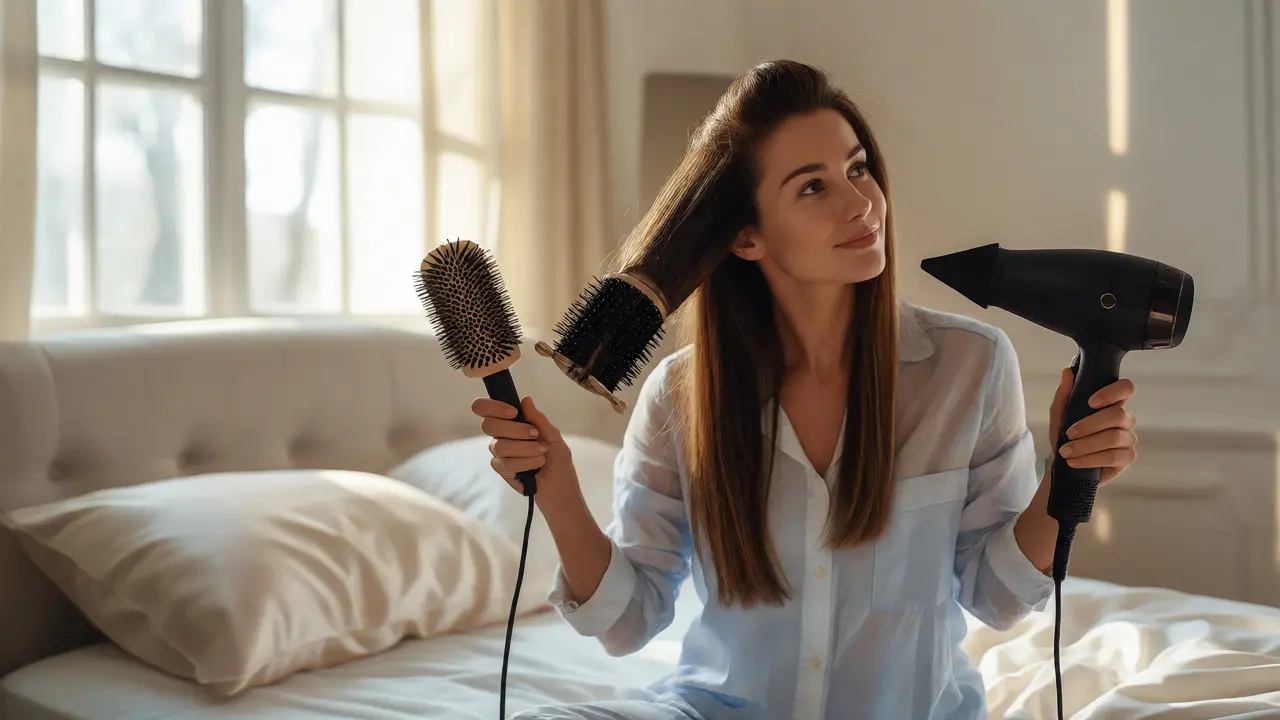
- The Cool Shot Button: After straightening a section, hit it with the cold air button on your dryer. This seals the hair cuticle, locking in the shape and adding shine. Heat sets the style; cold locks it in.
- Strategic Product Placement: Avoid heavy creams on the roots-they will flatten your hair. Apply lightweight mousses or volumizing sprays only at the roots. Keep oils and serums strictly for the mid-lengths and ends to prevent greasiness.
- Silk Pillowcases: Friction causes breakage and tangles overnight. Cotton pillowcases absorb moisture from your hair. Switching to silk or satin reduces friction, meaning less morning detangling and fewer split ends over time.
Maintenance: Keeping It Healthy
Because straight hair reflects light, imperfections are obvious. You cannot hide a bad trim behind curls. Regular maintenance is crucial.
Get trims every 8-12 weeks. Even if you’re growing your hair out, micro-trims prevent split ends from traveling up the shaft. If you color your hair, remember that bleaching strips the protective outer layer. Straight hair becomes porous faster, leading to dryness. Incorporate a weekly deep-conditioning mask focused on hydration, not protein. Too much protein can make straight hair brittle and straw-like.
Also, watch your washing frequency. Over-washing strips natural oils, causing your scalp to overproduce sebum. Try stretching wash days by using dry shampoo on day two. Spray it from a distance, let it sit for five minutes to absorb oil, then brush it through thoroughly. This keeps the roots fresh without drying out the lengths.
Common Pitfalls to Avoid
Even with good intentions, certain habits ruin long straight hair. First, never brush wet hair aggressively. Wet hair is elastic and prone to snapping. Use a wide-tooth comb or a detangling brush specifically designed for wet hair, starting from the ends and working your way up.
Second, avoid tight ponytails. While practical, pulling hair back tightly puts stress on the hairline, leading to traction alopecia over time. If you must wear a ponytail, use spiral hair ties instead of rubber bands, and vary the height of the ponytail daily to distribute tension.
Finally, don’t ignore your eyebrows. With long, straight hair, your face is more exposed. Well-groomed brows provide necessary contrast and definition. If your hair is dark and straight, lighter or shaped brows can open up your face significantly.
Does long straight hair make me look older?
It can, especially if it is one-length and drags down facial features. Adding layers or bangs introduces movement and frames the face, which typically creates a younger, fresher appearance. Volume at the crown also helps counteract the aging effect of gravity pulling hair down.
How do I add volume to long straight hair without teasing?
Teasing damages hair. Instead, try changing your part line. A side part instantly lifts the roots on the opposite side. Using a root-lifting spray on damp hair and blow-drying upside down also creates lasting lift without mechanical damage.
Can I get bangs if I have long straight hair?
Absolutely. Curtain bangs or side-swept bangs are ideal because they blend easily with long lengths. Full blunt bangs work too but require frequent trims (every 4-6 weeks) to stay out of your eyes. Ensure your stylist cuts them slightly longer than desired, as they may shrink when dried.
What is the best product for holding a style in straight hair?
Lightweight hairsprays with flexible hold are best. Heavy gels can make straight hair look crunchy or stringy. Mousse applied to damp roots provides volume, while a finishing spray locks in the style without weighing it down. Avoid products with high alcohol content, which dries out the hair.
How often should I wash long straight hair?
Most people with straight hair need to wash every 2-3 days. Fine hair may get oily faster, requiring daily washing, while thick coarse hair might stretch to 4 days. Listen to your scalp-if it feels itchy or looks greasy, wash it. Otherwise, extend the time between washes to preserve natural oils.


Prayagraj Medicose
September 26, 2026 AT 21:56They want us to think straight hair is a blank canvas, but it's actually a surveillance tool. The shine reflects everything back at you so they can track your movements better. I stopped using argan oil because the government started sending me targeted ads for silk pillowcases immediately after. It’s all connected.
Brad Walker
September 27, 2026 AT 14:15We are merely actors on a stage of keratin and gravity.
The 'curtain' metaphor is not just about aesthetics; it is about the existential veil we place between our true selves and the judging eyes of society. To cut layers is to slice through the illusion of permanence. We seek volume, yet we are hollow. The flat iron is the scepter of our oppression, heating the strands until they conform to a shape that is not their own. Is it vanity? Or is it survival in a world that demands structure from chaos?
Howard Hurd
September 28, 2026 AT 05:29Typical Euro-centric advice. In America, we know how to handle thick straight hair without crying over "face shapes." Just get a good barber who doesn't charge $80 for a trim. :P
Also, stop buying those fancy silk cases. Buy cotton, wash it hot. Simple. You guys make it too complicated with all this "physics" talk. Hair is hair. Cut it short if it bothers you. Stop whining about gravity when you have a whole head of hair most people would kill for. >:|
Manoj Kumar
September 28, 2026 AT 10:36One must consider the socioeconomic implications of the recommended maintenance schedule. Trims every 8-12 weeks imply a disposable income stream that the average consumer lacks. Furthermore, the suggestion to use dry shampoo as a substitute for washing creates a false economy; one pays for the product only to avoid the cost of water and labor. This is a trap set by the cosmetic industry to ensure recurring revenue. The emphasis on "silk" pillowcases further alienates the working class, who cannot afford such luxuries. Thus, the guide serves not to help, but to enforce a hierarchy of beauty based on financial capacity rather than actual hair health.
Hemali Jaiswal
September 29, 2026 AT 19:00I absolutely adore the nuance here! 💖 The idea that straight hair is a "blank canvas" is such a beautiful reframe. Instead of seeing it as "flat," we can see it as a smooth surface ready to catch light like a polished gemstone. 🌟
For my friends with fine hair, please don't be afraid of the curtain bang! It adds such a whimsical, airy feel without committing to a drastic change. And remember, hydration is key-think of your hair as a thirsty garden needing gentle rain, not a storm. 🌧️🌸 Embrace the sleekness; it is elegant and timeless.
SHANNON GRUBER
September 30, 2026 AT 15:46This article is painfully basic. If you need a guide to tell you that layers add movement, you probably shouldn't be styling your own hair. The section on heat protection is redundant-we all know heat damages hair. Stop wasting time reading fluff and go buy a professional-grade flat iron instead of relying on "cool shots" to save a bad technique.
Sean Eagen
October 2, 2026 AT 12:56Its rude to suggest straight hair looks old. God made us different. Respect the texture. Don't judge people for their natural state.
Kieran Mitchell
October 2, 2026 AT 19:25Wait... wait... WAIT!!! Did anyone else notice the bias against blunt cuts?!
Blunt bobs are CLASSIC! They are powerful! They are strong! Saying they drag features down is a LIE spread by shag enthusiasts who want to sell you more product!
My mother had a blunt bob and she looked FIERCE! She commanded rooms! Why are we demonizing precision cutting?! This guide is clearly written by someone who has never seen a well-maintained lob in real life!! 😤😤😤
Darlene Hopkins
October 3, 2026 AT 12:54I hear you, Kieran. Blunt cuts are definitely powerful. I just find layers easier to manage emotionally. Less stress means less frizz, right?