

Having long, thick, and wavy hair is a blessing and a curse. On one hand, you have that enviable body and bounce. On the other, it can turn into a frizzy helmet or weigh down your face if cut incorrectly. The wrong haircut doesn't just look bad; it makes daily styling a nightmare. You spend twenty minutes blow-drying, only to watch the shape collapse as soon as you step outside.
The secret isn't fighting your hair texture. It’s working with it. When you choose the right layered haircut, you remove excess bulk without sacrificing length. This creates movement, reduces drying time, and enhances your natural wave pattern instead of hiding it. Here is exactly which cuts work best and why.
Why Layers Are Non-Negotiable for Thick Waves
If you have thick hair, density is your main challenge. Thick hair has more strands per square inch, which means it holds weight. Without layers, that weight pulls your waves straight, turning them into limp curtains rather than defined spirals. Layers distribute that weight evenly throughout the head.
Think of layers like steps on a staircase. Instead of one heavy block of hair falling from your crown to your shoulders, shorter pieces sit on top of longer ones. This allows light to hit different sections of your hair, creating dimension. More importantly, it lets air circulate during drying, which reduces frizz. For wavy hair specifically, point-cutting techniques used by stylists create soft edges that blend seamlessly, avoiding the 'shaggy' look that can happen with blunt layering.
Do I need short layers or long layers?
For most people with long, thick, wavy hair, long layers are safer. They maintain length while removing bulk. Short layers (starting at chin level) add more volume but can make fine-thick hair look poofy. Stick to collarbone-length layers unless you want maximum height at the roots.
The Best Haircuts for Your Texture
Not all layers are created equal. Depending on your face shape and desired maintenance level, three specific styles dominate the recommendations for this hair type.
1. The Soft Shag
The shag has made a massive comeback, and for good reason. Unlike the messy shags of the 70s, the modern soft shag is tailored. It features disconnected layers around the crown and face-framing pieces. This style is perfect if your waves tend to be irregular. The choppy ends hide uneven curl patterns and embrace the chaos. If you have a round face, ask for extra length in the front layers to elongate your features.
2. Curtain Bangs with Face-Framing Layers
Curtain bangs are arguably the most versatile addition to long, thick hair. They part in the middle and sweep away from the face, blending into the rest of your layers. This solves two problems: it takes width off the sides of your face (great for wide foreheads or cheekbones) and removes bulk from the heaviest part of your hair-the front. Because they are connected to the rest of your hair, they grow out gracefully. You won’t have that awkward 'bangs stuck in your eyes' phase for months.
3. The One-Length Cut with Texturizing
Some people fear layers because they worry their hair will get too thin. If you have extremely dense hair but want to keep maximum length, a one-length cut with internal texturizing is the answer. Your stylist uses thinning shears or razor cutting techniques inside the hair shaft rather than on the surface. This removes weight invisibly. The result is a sleek, uniform look that still moves freely. This works best if your waves are uniform and you prefer a polished, professional appearance.
| Haircut Style | Best For | Maintenance Level | Volume Effect |
|---|---|---|---|
| Soft Shag | Irrregular waves, round faces | High (needs regular trims) | High volume at crown |
| Curtain Bangs + Layers | Wide foreheads, heart-shaped faces | Low (grows out well) | Medium, balanced volume |
| One-Length with Texturizing | Uniform waves, professional looks | Medium | Low to Medium |

How to Communicate With Your Stylist
Walking into a salon with just a photo often leads to disappointment. Photos don't show density or wave pattern. Instead, use specific terminology. Tell your stylist you want "weight removal" not "shortening." Ask for "blunt ends" within the layers to prevent splitting. Split ends travel up thick hair quickly, causing breakage that ruins the shape of any cut.
Show them a picture of the *length* you want, but verbally explain the *texture*. Say, "I have high-density hair, so I need layers starting below the chin to avoid triangle hair." Triangle hair is when the bottom is heavy and puffy, while the top is flat. Starting layers lower keeps the silhouette streamlined.
Daily Styling Tips to Maintain the Shape
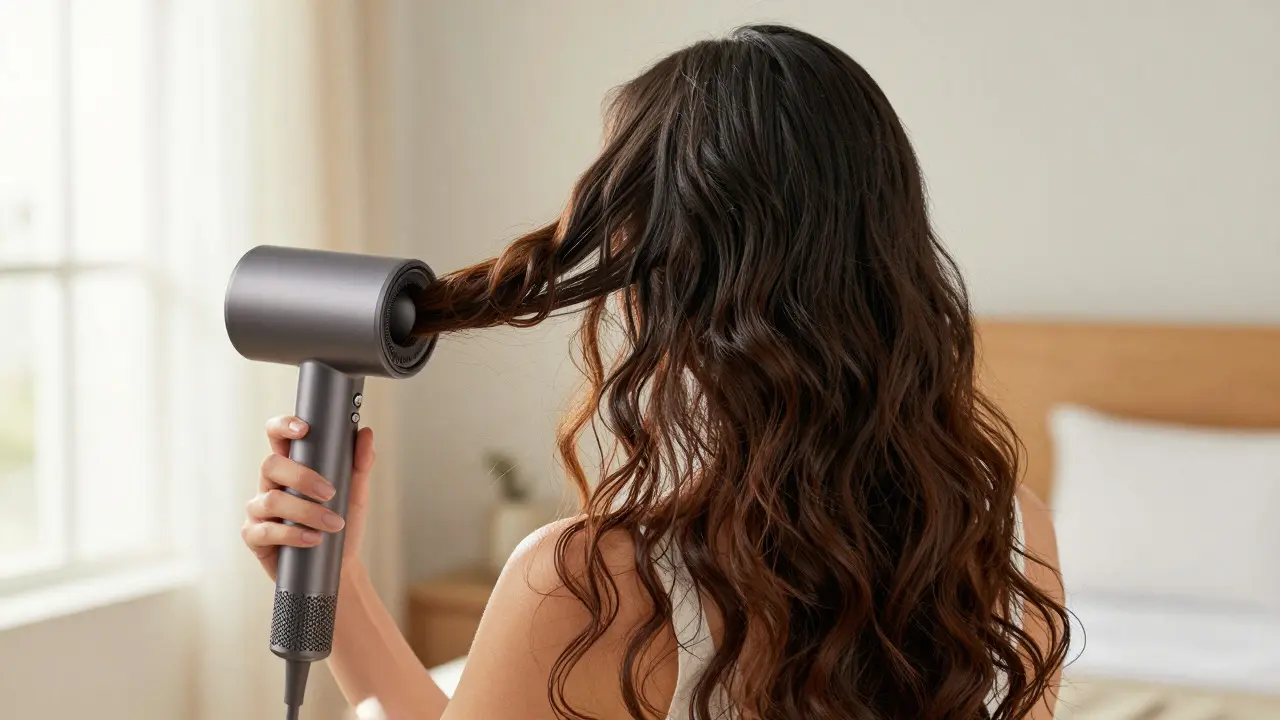
A great haircut fails if you dry it wrong. For thick, wavy hair, heat is often the enemy of definition. Try these methods to preserve your cut:
- Diffuse, Don't Blow-Dry: Use a diffuser attachment on low heat and medium speed. Cup sections of hair into the diffuser and hold it in place for 30 seconds. This encourages the wave to form without disrupting the cuticle.
- Scrunch Out the Crunch: If you use gel or mousse, let your hair dry completely before touching it. Once dry, scrunch gently with a drop of oil to break the cast. This reveals soft, defined waves without frizz.
- Silk Pillowcases: Cotton absorbs moisture and creates friction, leading to bedhead and frizz. Silk or satin preserves the layer alignment overnight.
When to Avoid Certain Cuts
While layers are generally good, some variations backfire. Avoid "micro-layers" if your waves are loose. Micro-layers are very short pieces cut close to the scalp. On tight curls, they add spring. On loose waves, they just create poofiness near the ears. Similarly, avoid blunt bobs if you have a strong cowlick at the nape. The weight of thick hair combined with a directional growth pattern can make a bob stick out horizontally.
Frequently Asked Questions
Will layers make my hair look thinner?
Layers remove bulk, not density. If done correctly, they make thick hair look healthier and more manageable. However, over-layering can make fine-thick hair look sparse. Ask for conservative layering if you are worried about losing fullness.
How often should I get a trim?
For layered cuts, every 8-10 weeks is ideal. Layers lose their shape faster than one-length cuts because the shorter pieces grow out and disrupt the balance. Regular trims keep the weight distribution even.
Can I wear my hair straight with layers?
Yes, but be careful. Straightening thick, layered hair can sometimes reveal gaps between layers. To avoid this, ensure your stylist blends the layers smoothly. Using a heat protectant is crucial to prevent damage from frequent straightening.
What products help define wavy hair?
Look for lightweight mousses or sea salt sprays. Heavy creams can weigh down thick waves. Apply product to damp hair using the 'praying hands' method to smooth the cuticle before scrunching for definition.
Is a razor cut better than scissors?
Razor cutting creates softer, feathered ends that reduce bulk significantly. However, razors can cause split ends in dry or damaged hair. Scissors provide a cleaner cut that lasts longer. Discuss your hair's condition with your stylist before choosing the tool.