

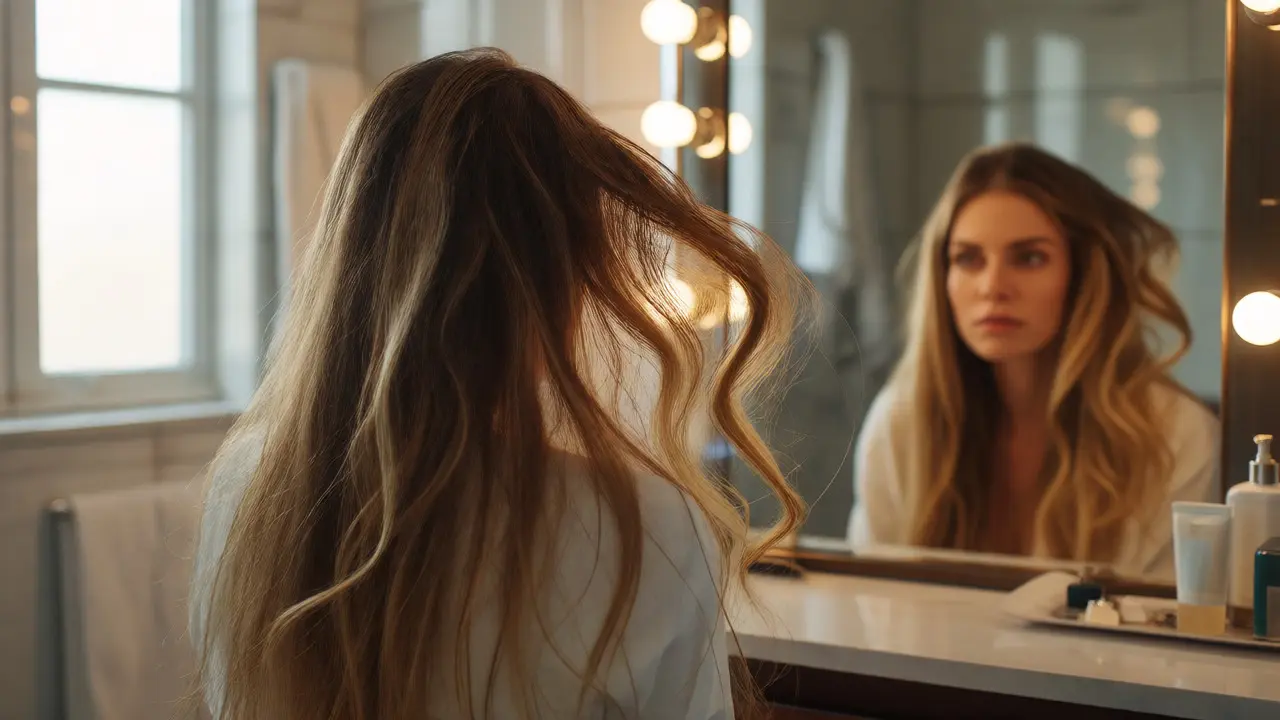
Ever spent forty-five minutes creating perfect ringlets, only to watch them droop into limp waves before you’ve even put your shoes on? If you have long thin hair, this is likely a familiar frustration. Fine strands lack the structural density to hold shape against gravity and humidity, making standard styling tools often counterproductive. They either burn delicate ends or fail to create enough tension for a lasting bend.
The solution isn’t just buying any tool; it’s about matching the physics of your hair with the right engineering. You need specific barrel diameters, precise temperature control, and materials that distribute heat evenly without scorching. This guide breaks down exactly what works for fine, long lengths in 2026, cutting through the marketing noise to give you actionable choices.
Key Takeaways for Fine Hair Styling
- Barrel Size Matters Most: For long thin hair, avoid barrels larger than 1.5 inches (38mm). Smaller barrels (1 inch to 1.25 inches) create tighter coils that loosen into natural-looking waves rather than falling flat immediately.
- Material Choice: Ceramic or tourmaline-infused plates are essential. They emit negative ions that reduce frizz and seal the cuticle, which is critical for fine hair that gets poofy easily.
- Temperature Control: Never exceed 300°F (150°C) initially. Fine hair burns faster than thick hair. Start low and increase only if necessary.
- Clamp vs. Wand: Clamp irons provide more tension, helping fine hair hold a curl better than wands, which require manual wrapping skill and often slip out of fine strands.
- Preparation is Key: No curl holds on clean, slippery hair. Use a texturizing spray or dry shampoo at the roots to add grip before applying heat.
Why Long Thin Hair Behaves Differently
To pick the right tool, you first need to understand why your hair fights back. Fine hair refers to the diameter of individual strands, not the amount of hair on your head. You can have fine hair but high density (lots of strands), or fine hair with low density (sparse coverage). Most people seeking this advice have fine strands that struggle to retain hydrogen bonds-the chemical links that hold a curl shape-when exposed to humidity.
Long length adds weight. Gravity pulls down on every millimeter of length. A curl created at the root has to support several inches of hair below it. If the curl structure isn't tight enough, the weight stretches it out within hours. Thick, coarse hair has a wider cortex that naturally resists this stretching. Fine hair does not. Therefore, your goal is to create a curl that is structurally stronger than the weight of your hair.
This means you cannot use the same settings as someone with thick, curly hair. High heat melts the keratin proteins in fine hair, causing permanent damage that makes the hair even weaker and less able to hold style. The sweet spot is moderate heat combined with mechanical tension during cooling.
Choosing the Right Barrel Diameter
This is the most common mistake people make. They see celebrity photos with loose, beachy waves and buy a 2-inch barrel. On long thin hair, a 2-inch barrel creates a wave so large that gravity flattens it by lunchtime. It looks great for ten minutes, then disappears.
For long thin hair, smaller is better. Here is the logic:
- 1 Inch (25mm): Creates tight spirals. These take longer to brush out but offer the best longevity. If you want volume and texture, start here.
- 1.25 Inches (32mm): The sweet spot for many. Creates classic Hollywood waves that hold well without looking like perm rods from the 1980s.
- 1.5 Inches (38mm): Only suitable if you have some thickness or use strong holding products. Expect these curls to relax significantly within a few hours.
- 2+ Inches (50mm+): Generally too large for fine hair unless you want barely-there bends. Not recommended for beginners.
Pro Tip: If you want big waves, do not buy a bigger iron. Buy a smaller iron (1.25") and wrap sections loosely, leaving the ends straight. Then, gently comb through the cooled curls with your fingers. This technique gives you volume without sacrificing hold.
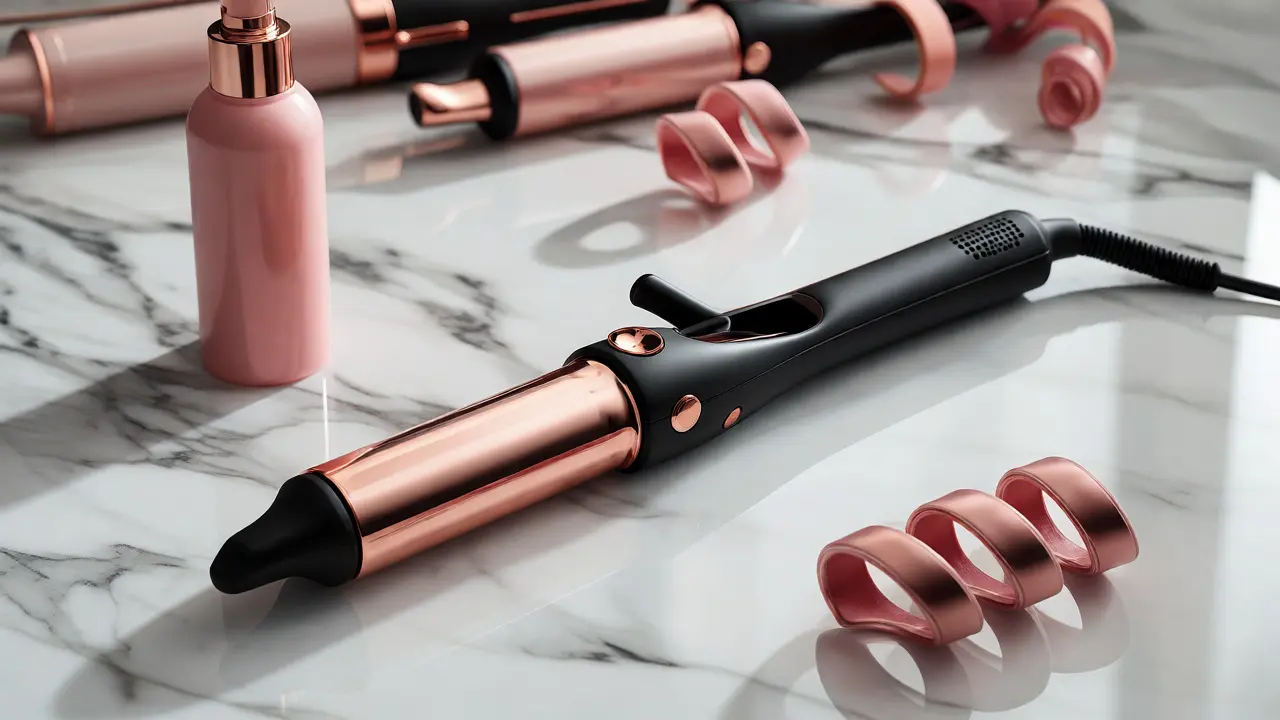
Top Curling Iron Types for Fine Hair
Not all curlers are created equal. Some designs work better with the slipperiness of fine hair. Here is a breakdown of the main categories available in 2026.
| Tool Type | Best For | Hold Strength | Damage Risk | Skill Level |
|---|---|---|---|---|
| Ceramic Clamp Iron | Precise, uniform curls | High | Low (if temp controlled) | Beginner |
| Tourmaline Wand | Natural, messy waves | Medium | Very Low | Intermediate |
| Conical Barrel | Voluminous, tapered ends | Medium-High | Low | Beginner |
| Infrared Heater | Health-conscious styling | Medium | Minimal | Advanced |
Ceramic Clamp Irons: The Reliable Workhorse
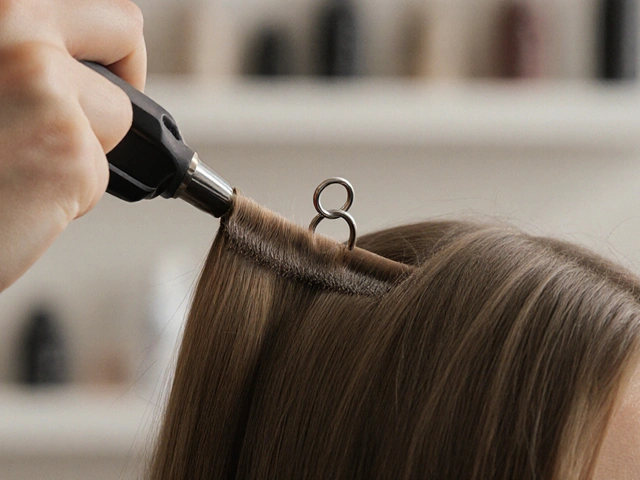
A clamp iron grips the hair, ensuring consistent contact with the heated surface. For fine hair, this grip is crucial because it prevents the strand from sliding off the barrel prematurely. Look for models with floating clamps, which adjust pressure automatically. If the clamp is too tight, it crimps the hair; too loose, and the curl slips. Brands like BaBylissPRO and Hot Tools offer professional-grade ceramic options with precise digital thermostats.
Wands: For Natural Movement
Wands lack a clamp, meaning you must manually hold the end of the hair while wrapping. This requires practice. However, they create seamless curls without the crease mark left by a clamp. For long thin hair, choose a wand with a textured surface (like velvet or flocked coating) rather than smooth metal. Smooth metal is too slippery for fine strands. The texture provides friction, helping the hair stay wrapped until it cools.
Conical Barrels: Volume Without Bulk
These barrels taper from wide to narrow. They are excellent for long hair because they create volume at the crown (where the barrel is widest) and definition at the ends (where it is narrow). This mimics the natural layering of hair. Since fine hair often lacks volume at the roots, a conical iron solves two problems at once. Just be careful near the ends, as the narrower tip heats up faster and can burn fragile tips if held too long.
Critical Features to Look For
When shopping, ignore flashy colors and focus on these technical specs.
Adjustable Temperature: This is non-negotiable. Fine hair needs lower heat. A tool that only goes up to 450°F might overshoot your needs. You want a range starting at 250°F or 300°F. Digital displays are better than dials because they allow precise setting. Remember, heat damages protein bonds. Lower heat preserves integrity.
Ionic Technology: Fine hair is prone to static and frizz. Ionic generators emit negative ions that neutralize positive charges in the hair, smoothing the cuticle. This results in shinier curls that look healthier. Look for "tourmaline" or "ionic" in the product description.
Auto Shut-Off: Safety feature, but also useful for busy mornings. Ensure it shuts off after 30-60 minutes of inactivity.
Ergonomic Handle: Styling long hair takes time. Your wrist will tire quickly if the handle is heavy or poorly balanced. Look for lightweight models with cool-touch handles.
Step-by-Step Routine for Lasting Curls
Even the best iron fails if you skip preparation. Follow this routine for maximum hold.
- Start with Day-Old Hair: Freshly washed hair is too soft and slippery. Wait 24 hours after washing, or use dry shampoo to absorb oils and add grit.
- Apply Heat Protectant: Do not skip this. Fine hair burns instantly. Spray a lightweight thermal protector evenly. Avoid heavy creams that weigh hair down.
- Add Texture: Mist a light-hold hairspray or texturizing spray onto the mid-lengths and ends before curling. This gives the curl something to "grip."
- Section Properly: Divide hair into four quadrants. Clip up the top three. Work with small sections (1-2 inches wide). Small sections ensure heat penetrates fully to the core of the strand.
- Curl Away from Face: For long hair, alternate directions slightly for a natural look, but generally curl away from the face for a flattering frame.
- Hold for Cooling: Keep the curl in your hand or clip it up until it is completely cool. Heat sets the shape; cooling locks it in. If you release warm hair, it falls flat.
- Set with Hairspray: Once all curls are cool, lightly mist with flexible-hold hairspray. Do not use strong-hold aerosol immediately, as it can make fine hair crunchy.
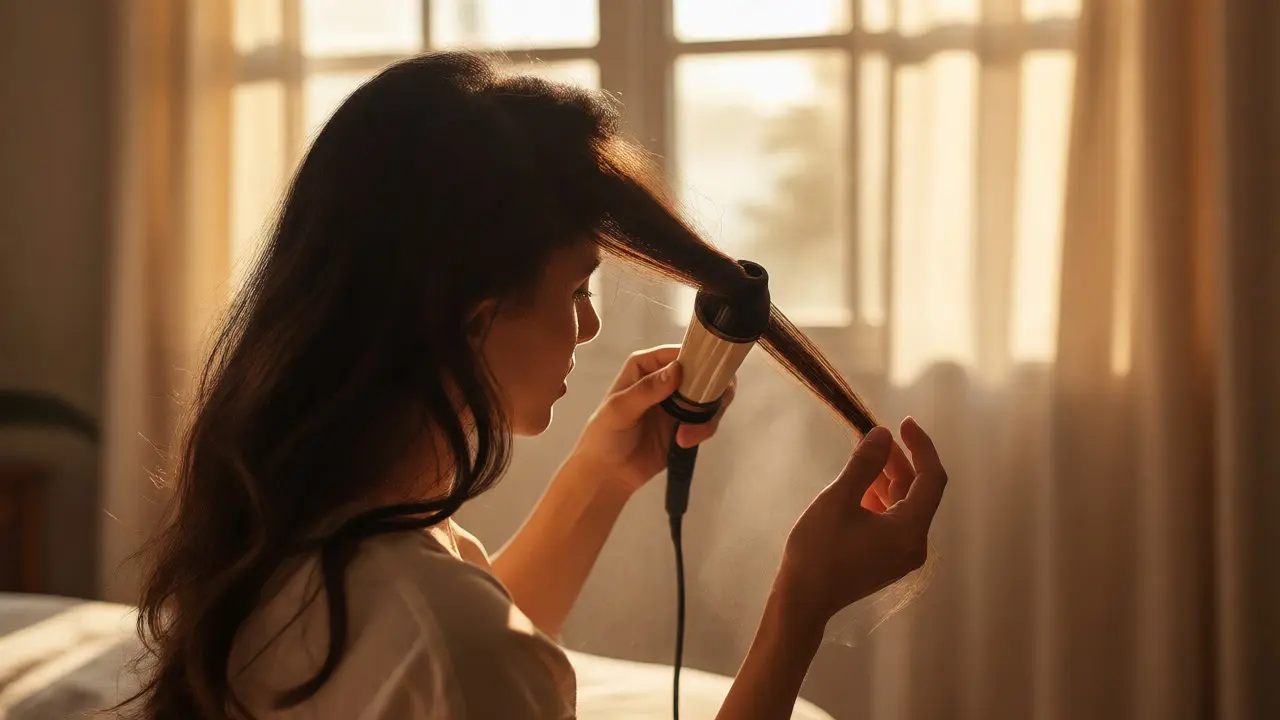
Mistakes That Kill Curls on Fine Hair
You might be sabotaging your own style. Check for these errors.
Overloading Sections: Wrapping too much hair around the barrel means the inner layers don’t get hot enough. The outside curls, the inside stays straight. When you unroll, the curl collapses. Keep sections thin.
Touching Too Soon: Impatience is the enemy. Warm hair is malleable. If you touch or brush warm curls, you destroy the set. Wait at least 5-10 minutes after finishing all sections before brushing.
Using Heavy Products: Mousse and gel can weigh down fine hair. Stick to sprays and light creams. If your hair feels sticky after styling, you used too much product.
Ignoring Humidity: In humid climates, fine hair absorbs moisture from the air, relaxing the hydrogen bonds. Use an anti-humidity serum or finish with a humidity-blocking hairspray.
Frequently Asked Questions
Can I use a curling wand on very fine hair?
Yes, but it is harder. Wands rely on manual tension, and fine hair slips easily. To succeed, choose a wand with a textured or flocked surface instead of smooth ceramic. Also, use a texturizing spray before wrapping to add grip. If you find yourself struggling, switch to a clamp iron for better control.
What temperature should I set my curling iron for thin hair?
Start at 275°F to 300°F (135°C to 150°C). Fine hair reaches its plastic deformation point at lower temperatures than thick hair. Higher heat causes rapid damage and breakage. Only increase the temperature if the curl falls out immediately, and never exceed 350°F (175°C) unless your hair is chemically treated and resistant.
How do I make curls last longer on long thin hair?
The key is cooling and product choice. Always let curls cool completely in a pinned position before releasing them. Use dry shampoo at the roots for lift and grip. Finish with a flexible-hold hairspray rather than a stiff one, which can crack and fall. Avoid touching your hair throughout the day, as oils from your hands relax the curl.
Is a titanium or ceramic iron better for fine hair?
Ceramic is generally better for fine hair. Titanium heats up extremely fast and retains high heat, which can scorch fine strands if you aren't quick. Ceramic distributes heat more evenly and gently. Tourmaline-infused ceramic is even better as it emits more negative ions to reduce frizz, which is a common issue with fine hair.
Should I curl my hair when it is wet or dry?
Always curl dry hair. Curling damp hair causes steam bubbles to form inside the hair shaft, leading to bubble hair syndrome, where the hair becomes porous and brittle. Ensure your hair is 100% dry before applying heat. If you blow-dry, make sure no moisture remains at the roots or ends.
Next Steps: Building Your Styling Kit
If you are ready to upgrade your routine, start with a 1.25-inch ceramic clamp iron with adjustable heat. Pair it with a lightweight thermal protectant and a texturizing spray. Practice on small sections to master the timing. Within a week, you will know exactly how long to hold each section for your specific hair type. Consistency beats intensity when styling fine hair.
Tommy Cahyadi
October 4, 2026 AT 21:30Oh, great. Another article telling me my hair is structurally deficient because I have thin strands. Thanks for the reminder that gravity exists and hates me specifically. The bit about not using a 2-inch barrel is actually useful though, unlike most advice I get which assumes everyone has thick, coarse hair that can withstand industrial heat levels. I guess I will try the smaller barrel and pretend I am not fighting physics every morning.
Anthony .
October 5, 2026 AT 03:31This is such a thoughtful breakdown! 🌟 It really highlights how we often ignore the unique needs of fine hair in favor of one-size-fits-all marketing. I think the point about cooling is profound-patience is truly a virtue when it comes to styling. We are all just trying to find harmony with our own biology, right? 😊
Marisa Marroquin
October 5, 2026 AT 21:00The distinction between strand diameter and density is elegantly articulated here. One must consider the tensile strength of individual filaments when selecting thermal tools. I have found that tourmaline-infused ceramics provide a superior sheen compared to standard metal plates, likely due to the ionization effects sealing the cuticle layer more effectively. It is fascinating how material science intersects with daily grooming routines. I shall adopt the recommendation for lower temperatures immediately to preserve the integrity of my delicate locks.
Kathy Mccoy
October 6, 2026 AT 08:59Hey everyone! Just wanted to add that sectioning your hair into four quadrants was a total game changer for me. When I tried to do big chunks, the inside never got hot enough, so the curl fell flat instantly. Also, please remember to let those curls cool completely before touching them! It feels like an eternity, but it makes such a huge difference in longevity. You've got this! 💪✨
Sabrina Silvani
October 7, 2026 AT 23:40The reliance on 'marketing noise' implies that consumers are passive victims rather than active participants in their own aesthetic choices. However the technical advice regarding hydrogen bonds is sound. Fine hair does indeed struggle with structural retention under gravitational stress. One must question why manufacturers continue to push large barrels when the physics clearly dictate otherwise. It is a failure of industry standards not consumer error. The suggestion to use dry shampoo for grip is practical and chemically logical.
Mithilesh Singh
October 9, 2026 AT 10:08This is absolutely correct. In India we have known for centuries that natural materials and gentle handling are superior to harsh Western chemical treatments. The emphasis on ceramic and tourmaline aligns perfectly with traditional Ayurvedic principles of preserving hair health. Modern science finally catches up to ancient wisdom. We should be proud of our heritage where hair care was treated with respect and not just as a cosmetic afterthought. The temperature limits mentioned are essential for preventing breakage which leads to premature aging of the hair shaft.
Shaina Silver-Baird
October 10, 2026 AT 16:44I suspect that the prevalence of large-barrel irons in mainstream media is a deliberate strategy to shorten product lifespan. If curls fall out quickly due to improper tool selection, consumers buy more products to compensate. This creates a cycle of dependency. Furthermore, the mention of 'humidity' seems to downplay the role of environmental pollutants which may also affect bond stability. One should remain skeptical of any single solution without considering the broader industrial context.
evelyn starcher
October 11, 2026 AT 18:25It is frustrating to see such basic physics ignored by major brands. We deserve better quality control. 🇺🇸 The fact that we have to research this ourselves shows how disconnected companies are from actual user experience. I feel angry reading about people burning their hair because they trusted bad advice. We need to support brands that prioritize function over flashy packaging. Let's demand transparency in heating technology specifications. 🙄