

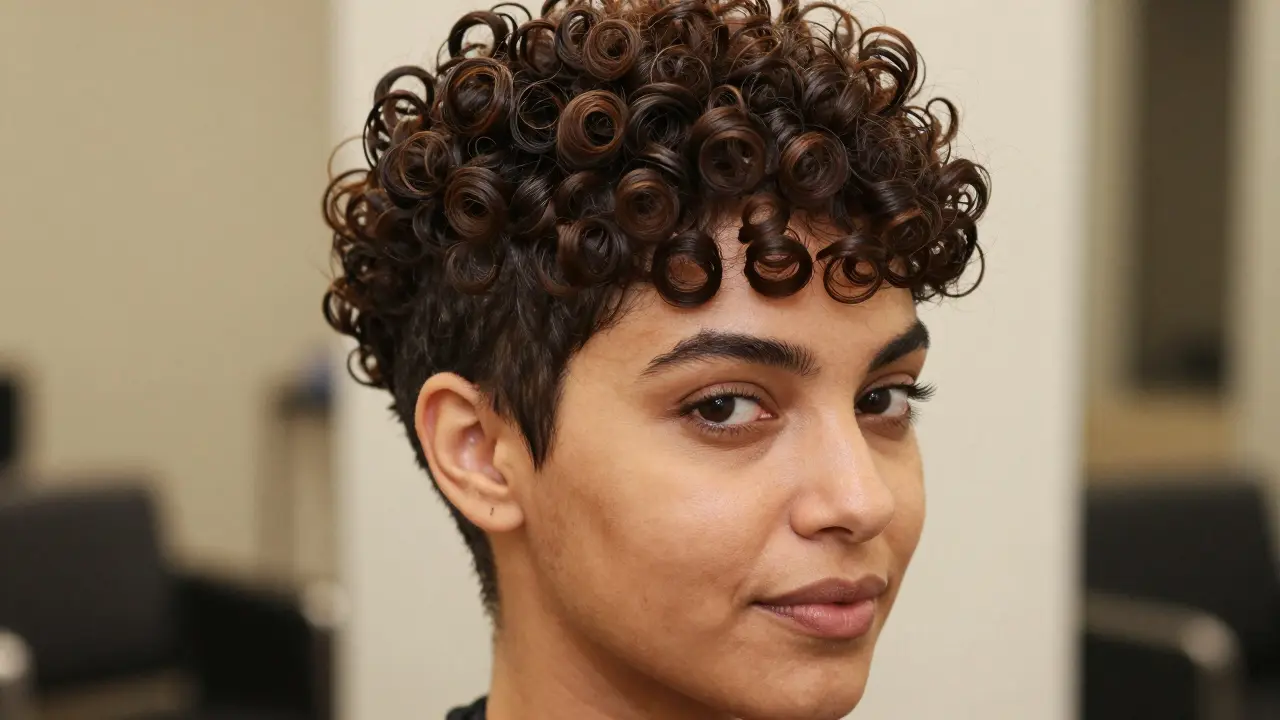
Short hair with curls can be a beautiful thing, but it also comes with a specific set of challenges. You want definition, not a halo of static electricity. You want volume that looks intentional, not like you just rolled out of bed (unless that’s the vibe, but even then, we aim for control). If you have thick, curly, and frizzy short hair, finding the right cut is half the battle. The other half is knowing how to style it so those flyaways stay put.
The good news? Short curly hair is incredibly versatile. It dries faster than long hair, it holds shape better if cut correctly, and it adds instant lift to your face. The bad news? One wrong move with a razor or a cheap brush can turn your mane into a cloud. Let’s look at the best hairstyles that work with your texture, not against it, and how to keep that frizz in check.
The Deconstructed Pixie Cut
If you are brave enough to go very short, the pixie cut is a game-changer for curly hair. But here is the catch: do not get a traditional, flat pixie. That requires straight hair to sit neatly. Instead, ask your stylist for a "deconstructed" or "shaggy" pixie.
This style keeps more length on top-usually around two to three inches-to allow your curls to clump together naturally. The sides and back are tapered closely to reduce bulk. Why does this help with frizz? Less weight means less pulling on the curl pattern, which reduces breakage and flyaways. Plus, with shorter hair on the sides, there is less surface area for humidity to attack.
- Best for: Tight coils (Type 3C-4C) or loose waves (Type 2B-3A).
- Maintenance: Low. Wash every 3-4 days.
- Styling tip: Use a lightweight gel while damp, scrunch upward, and let it air dry. Do not touch it until it is completely dry.
The Curly Bob with Layers
The classic bob is often associated with sleek, straight hair, but a curly bob is arguably more stylish. The key here is layers. A blunt-cut bob on curly hair can create a triangle shape because the curls stack up at the bottom, making your chin look wider than it is. Adding internal layers removes weight without losing length.
For frizzy hair, the length matters. Aim for chin-length or slightly below. This length allows the weight of the hair to pull down slightly, smoothing out some of the puffiness, while still being short enough to manage easily. Ask your stylist for "disconnected layers," where the top layers are shorter and the bottom layers remain longer. This creates movement and prevents the "helmet" look.
| Feature | Layered Curly Bob | Blunt Straight Bob |
|---|---|---|
| Volume Control | High (removes bulk) | Low (can cause poofiness) |
| Face Framing | Yes (softens angles) | No (can widen jawline) |
| Frizz Management | Better (less tension) | Poorer (static buildup) |
The Shag Cut with Curtain Bangs
The shag has made a massive comeback, and for good reason. It is essentially a haircut designed for chaos, which makes it perfect for frizzy curly hair. The shag cut relies on choppy layers throughout the entire head, creating a textured, lived-in look.
When you add curtain bangs, you frame the face beautifully. These bangs are parted in the middle and sweep to the sides, blending into the rest of the hair. For short hair, keep the bangs above the eyebrows. This length ensures they don’t get in your eyes when they shrink up as they dry (curls always shrink!). The disconnected nature of the shag means that if one section gets frizzy, it looks like part of the style, not a mistake.
To style this, use a diffuser attachment on your dryer. Flip your head upside down and hover the diffuser under your roots. This boosts volume without disturbing the curl clumps. Finish with a light oil serum on the ends to seal in moisture.

The Textured Lob (Long Bob)
If you aren’t ready to commit to chin-length hair, the lob-or long bob-is the sweet spot. Sitting just above the shoulders, this cut offers enough length to tie back if needed, but remains short enough to feel airy. For curly hair, the "textured" part is crucial. Your stylist should point-cut the ends rather than slicing them straight across. Point cutting creates a softer edge that blends frizz into the overall texture.
This style works well with medium to coarse hair textures. The slight weight helps weigh down extreme frizz, while the length allows for versatile styling. You can wear it down for a bohemian look or clip it back for a polished appearance. Just remember: curly lobs shrink significantly. What looks like shoulder-length when wet might end up at the collarbone when dry.
Essential Anti-Frizz Routine for Short Curls
Even the best haircut won’t save you if your routine is fighting your hair type. Frizz is essentially dryness seeking moisture from the air. To stop it, you need to lock hydration in and protect the cuticle.
- Cleanse Gently: Avoid sulfates. They strip natural oils, leaving curly hair brittle and prone to frizz. Use a co-wash (cleansing conditioner) or a sulfate-free shampoo once a week.
- Condition Heavily: Conditioner is non-negotiable. Apply it from mid-lengths to ends. Leave it on for at least five minutes. For extra slip, use a wide-tooth comb to detangle only when the conditioner is in.
- Leave-In Moisture: While hair is soaking wet, apply a leave-in conditioner. Look for ingredients like glycerin (in low humidity) or honey. In high humidity, switch to heavier butters like shea butter to block moisture entry.
- Seal with Oil: After the leave-in, seal the cuticle with an oil. Argan oil, jojoba oil, or marula oil work wonders. Rub a small amount between your palms and glaze over the curls.
- Style with Gel or Cream: Define your curls with a holding product. Mousse provides volume; gel provides hold. Scrunch the product into your hair, then plop it in a microfiber towel or cotton t-shirt for 20 minutes to remove excess water without friction.
Tools That Make or Break Your Style
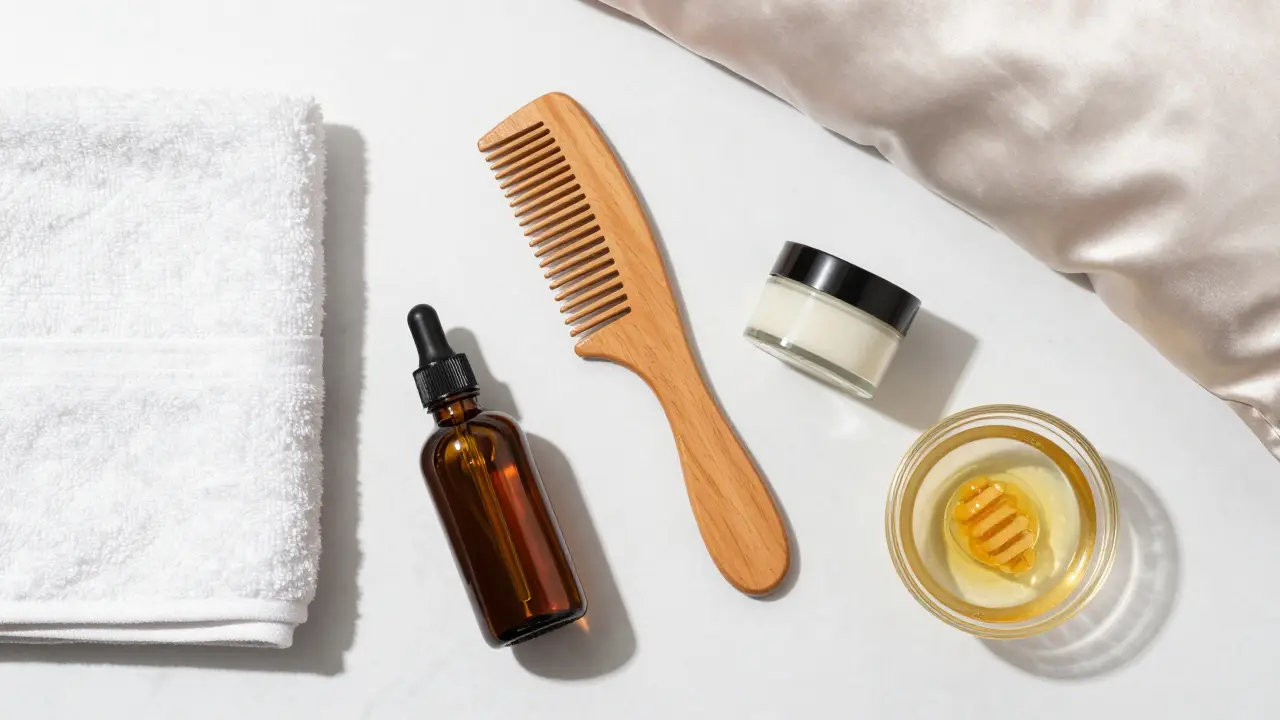
Your tools matter just as much as your products. Using the wrong ones can introduce static instantly.
- Microfiber Towel or Cotton T-Shirt: Never use a regular bath towel. The loops catch on curly cuticles, causing breakage and frizz. Plopping with a smooth fabric preserves the curl pattern.
- Wide-Tooth Comb: Use this only when hair is wet and coated in conditioner. Detangling dry curly hair is a recipe for disaster.
- Diffuser Attachment: If you blow-dry, a diffuser disperses airflow, preventing the wind from blowing curls apart and creating frizz. Dry on low heat and low speed.
- Satin Pillowcase: Cotton pillowcases absorb moisture and create friction while you sleep. Satin or silk allows hair to glide, reducing morning frizz and tangles.
Common Mistakes to Avoid
Many people ruin their short curly hair by trying to make it behave like straight hair. Here are the biggest pitfalls:
Brushing Dry Hair: I cannot stress this enough. Brushing dry curly hair separates the clumps, turning defined curls into a frizzy mess. Only detangle when wet and conditioned.
Overwashing: Curly hair is naturally drier because scalp oils have a harder time traveling down the spiral shaft. Washing daily strips these oils, leading to reactive frizz. Try to stretch wash days to 2-3 times a week.
Ignoring Trim Frequency: Split ends travel up curly hair quickly. Once a split end reaches the root, it causes breakage and uneven texture. Get a trim every 8-12 weeks to maintain shape and health.
Using Heavy Silicones: Some silicones build up on curly hair, blocking moisture. If you use silicone-based products, ensure you use a clarifying shampoo once a month to reset your hair’s balance.
Finding the Right Stylist
Not all stylists understand curly hair. When booking an appointment, look for specialists who advertise "curly cuts" or "dry cuts." A dry cut allows the stylist to see exactly how your curls fall and shrink, ensuring the shape is correct when dry, not just when stretched wet. Bring photos of the styles you like, specifically showing the back and sides, as front views can be misleading.
Ask questions during the consultation. Does the stylist use texturizing techniques? Do they recommend specific products? A good curly specialist will educate you on how to maintain the cut at home. If they suggest straightening your hair regularly to manage it, consider finding someone else.
How do I stop my short curly hair from shrinking?
You cannot completely stop shrinkage, as it is a natural property of curly hair. However, you can minimize it by stretching your curls while drying. Techniques include braiding damp hair, using a diffuser to lift roots, or applying heavy creams that weigh the hair down slightly. Accepting shrinkage is also key-it means your hair is healthy and hydrated.
What is the best haircut for thin curly hair?
For thin curly hair, avoid too many layers, as they can make hair look sparse. A blunt bob or a uniform pixie cut adds the illusion of thickness by keeping the density intact. Keep the length short to medium to prevent the ends from looking wispy.
Can I straighten my short curly hair without damage?
Heat styling always carries some risk. To minimize damage, always use a heat protectant spray before straightening. Use the lowest effective temperature (under 350°F) and limit heat styling to special occasions. Consider keratin treatments for temporary smoothing, but research formaldehyde-free options.
Why is my short curly hair frizzy only on the top?
Top-layer frizz is often caused by friction from pillows, hats, or brushing. It can also indicate that your scalp is oily while the ends are dry. Ensure you are applying conditioner evenly and sleeping on a satin pillowcase. Avoid touching your roots during the day, as oils from your hands can disrupt the cuticle.
How often should I trim my short curly hair?
Every 8 to 12 weeks is ideal for short curly hair. Regular trims prevent split ends from traveling up the curl shaft, which maintains the shape of the cut and reduces overall frizz. Neglecting trims leads to an uneven, triangular shape that is harder to style.

Edward Gilbreath
June 24, 2026 AT 07:57they want you to buy all these expensive serums and oils so you can feel better about your hair but really its just marketing bs designed to keep you spending money every month on products that do absolutely nothing for the actual structure of your hair follicle which is determined by genetics not some bottle of argan oil from a corporation in california
Lisa Nally
June 25, 2026 AT 23:24The article’s emphasis on "deconstructed" pixie cuts is technically sound, yet it overlooks the critical role of porosity in product retention. High-porosity curls require heavier sealing agents like shea butter or castor oil rather than lightweight gels, which evaporate too quickly to provide adequate hold for Type 3C-4C textures. Furthermore, the suggestion to use glycerin in low humidity is correct, but one must consider that glycerin is hygroscopic and can draw moisture out of the hair shaft in arid environments if not properly sealed with an occlusive layer. The table comparing layered vs. blunt bobs is informative, but it fails to account for density variations; fine, dense curly hair may actually benefit from a blunt cut to create the illusion of volume without the triangular effect seen in coarse, sparse hair. Stylists often misinterpret "disconnected layers" as simply cutting shorter pieces, whereas true disconnection requires precise texturizing techniques such as point-cutting or slide-cutting to remove weight without compromising the curl clump integrity.
kimberly de Bruin
June 26, 2026 AT 17:11we are told to control our hair as if it were a wild animal that needs taming but perhaps the frizz is not a flaw but a feature of our natural state resisting the societal pressure to be smooth and uniform like everyone else who has spent hours straightening their strands into submission
Laura Davis
June 27, 2026 AT 18:55I am so tired of people telling me my hair is bad when I clearly put effort into it. Stop giving unsolicited advice on Reddit. If you have something constructive say it nicely otherwise leave me alone. I know what works for my hair and I will continue to do what makes me feel confident and beautiful regardless of your opinions.
Edward Nigma
June 29, 2026 AT 18:29actually most of this advice is completely backwards because diffusing upside down creates more frizz not less by disturbing the cuticle layer and causing static buildup especially in dry climates where humidity is already low enough to make any gel application feel like painting with glue instead of styling with precision
Francis Laquerre
June 30, 2026 AT 22:10In many Mediterranean cultures, short curly hair is celebrated for its vitality and energy, often associated with youthfulness and resilience against harsh sun exposure. The shag cut mentioned here resonates deeply with traditional styles seen in rural communities where practicality meets aesthetic expression through textured layers that withstand daily labor without requiring excessive maintenance. It is fascinating how modern beauty standards attempt to standardize curl patterns when historically diverse textures were valued for their unique character and ability to adapt to environmental conditions.
michael rome
July 2, 2026 AT 09:00It is important to recognize that every individual's hair journey is unique and deserves respect. Please ensure that all discussions remain courteous and supportive as we share knowledge about managing curly hair challenges together.
Andrea Alonzo
July 3, 2026 AT 20:09I have been struggling with finding the right balance between moisture and protein for quite some time now and I think what really helped me was understanding that my hair needed more hydration during the summer months when the air conditioning dried it out significantly whereas in winter I found that a lighter routine worked better because the cold air naturally held moisture longer so maybe you should try adjusting your regimen based on seasonal changes rather than sticking rigidly to one method year round since our bodies respond differently to environmental shifts and our hair reflects those internal adjustments over time.
Saranya M.L.
July 5, 2026 AT 02:05Your approach to managing curly hair lacks scientific rigor and ignores established dermatological principles regarding sebum distribution along the scalp versus mid-shaft regions. In India, we understand that high humidity demands specific formulations containing hydrolyzed proteins and amino acids rather than generic silicones which merely coat the hair temporarily without addressing underlying structural weaknesses caused by thermal damage or chemical processing. You should consult peer-reviewed studies on keratin bonding mechanisms before disseminating potentially harmful misinformation to vulnerable individuals seeking genuine solutions for their textural concerns.
om gman
July 6, 2026 AT 14:30oh look another american trying to tell us how to style our hair like they invented curls themselves probably never experienced real heat or humidity in their lives just sitting in climate controlled rooms complaining about static while the rest of us deal with actual elements
Robert Barakat
July 7, 2026 AT 00:25The nature of frizz is not merely a cosmetic issue but a manifestation of deeper existential tensions within the self-image constructed by societal norms dictating conformity to sleekness and orderliness thereby rendering the chaotic beauty of natural texture as something to be corrected rather than embraced as an authentic expression of identity
Michael Richards
July 8, 2026 AT 09:04You are wasting your time reading this garbage if you cannot even maintain basic hygiene routines that prevent split ends from occurring in the first place which means you are likely using cheap products and improper techniques that destroy your hair health faster than any stylist could fix with layers or trims so stop blaming the cut and start fixing your habits