

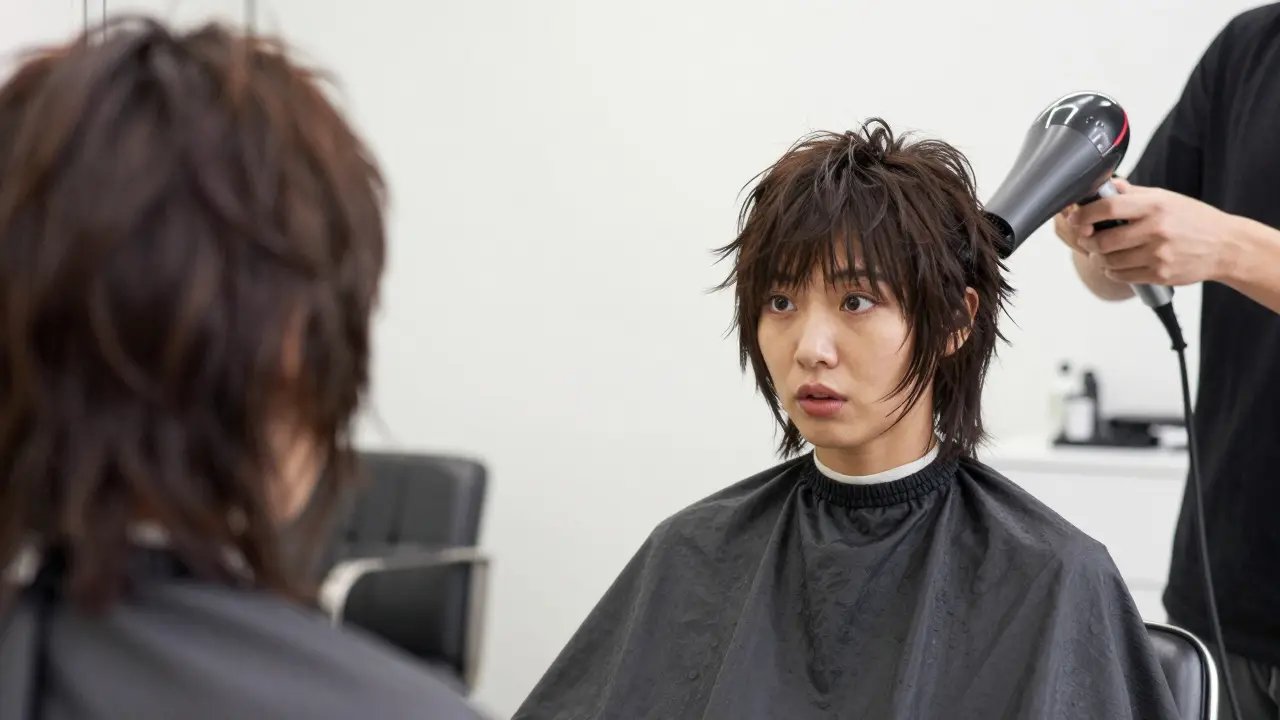
You step out of the salon with a haircut that feels electric. It’s sharp, it’s new, and everyone at work stops to ask where you got it done. Three months later, however, that same cut starts looking dated. The trend has moved on, and now your hair feels like a relic from last season. This is the defining characteristic of a faddish hairstyle.
Understanding what makes a hairstyle "faddish" versus "classic" can save you time, money, and potential regret. A fad is intense but short-lived. It relies on novelty rather than longevity. When you recognize the signs of a fad, you can decide whether to jump on the bandwagon for fun or stick to styles that grow out gracefully.
The Anatomy of a Hair Fad
A faddish hairstyle is a specific look that gains rapid popularity through social media or celebrity influence, peaks quickly, and then fades as consumers seek the next novelty. Unlike a classic cut, which evolves slowly over decades, a fad explodes overnight. Think of the difference between a little black dress and a neon mesh top worn in a single viral video. One belongs in your wardrobe forever; the other belongs in a moment.
These styles often share three key traits: they require high maintenance, they defy natural hair texture, and they rely heavily on external validation. If you need three products, a heat tool, and twenty minutes every morning to achieve the look, it is likely a fad. Classic styles, by contrast, usually work with your hair’s natural behavior. They might need product, but they don’t fight against your biology.
Consider the shag haircut of the late 2010s. While shags have existed since the 70s, the modern version became a fad when influencers posted tutorials showing how to chop their own hair into choppy layers. Millions tried it. But because it required constant texturizing spray and blow-drying to avoid looking messy, many abandoned it once the algorithm moved on to sleek, straight looks.
How to Spot a Faddish Cut Before You Commit
You don’t need a crystal ball to predict if a style will fade. Look for these warning signs before you sit in the chair:
- Viral Velocity: Did this style appear on TikTok or Instagram Reels suddenly? If you see the same tutorial from ten different creators within two weeks, it is a micro-trend. Micro-trends typically last six to twelve months.
- Extreme Modification: Does the style require drastic changes to your face shape or hair density? Styles that demand severe thinning, extreme blunt lines, or unnatural color placements are often fads because they are hard to live with daily.
- Celebrity Monopoly: If only one or two celebrities are wearing it, and stylists are calling it "the [Celebrity Name] cut," it is likely tied to their current public image cycle. Once they change their look, the trend dies.
- High Maintenance Cost: Ask your stylist how much time it takes to style. If the answer is more than ten minutes, weigh that against how long you think you’ll care about the look.
For example, the curtain bangs trend of 2023-2024 started as a fad due to its viral spread. However, it transitioned into a semi-classic because it grows out well and suits many face shapes. Not all viral styles are doomed, but most start as fads.
Famous Examples of Hairstyles That Flamed Out
History is full of hair disasters that were once considered cool. Looking back helps us understand why certain styles fail the test of time.
| Style | Era of Popularity | Why It Was a Fad | Longevity Verdict |
|---|---|---|---|
| The Rachel | Mid-1990s | Required daily blow-drying with a round brush; didn't suit most face shapes. | Faded after 5 years |
| Undercut/Buzz Sides | 2010s | High contrast; grew out awkwardly; required frequent shaving. | Niche revival, mostly faded |
| Beehive | 1960s | Impossible to maintain without heavy hairspray; impractical for daily life. | Costume piece only |
| Bob (Classic) | 1920s-Present | Grows out evenly; works with various textures; low styling effort. | Timeless Classic |
| Lob (Long Bob) | 2010s-Present | Versatile length; easy to style up or down. | Modern Classic |
The "Rachel" from *Friends* is the ultimate case study. Jennifer Aniston made it iconic, but millions of women ruined their hair trying to replicate it. Why? Because her hair was professionally styled every day. For the average person, it frizzed, fell flat, and looked uneven. It was a fad because it prioritized TV aesthetics over real-world functionality.
Why We Fall for Fads: The Psychology of Hair
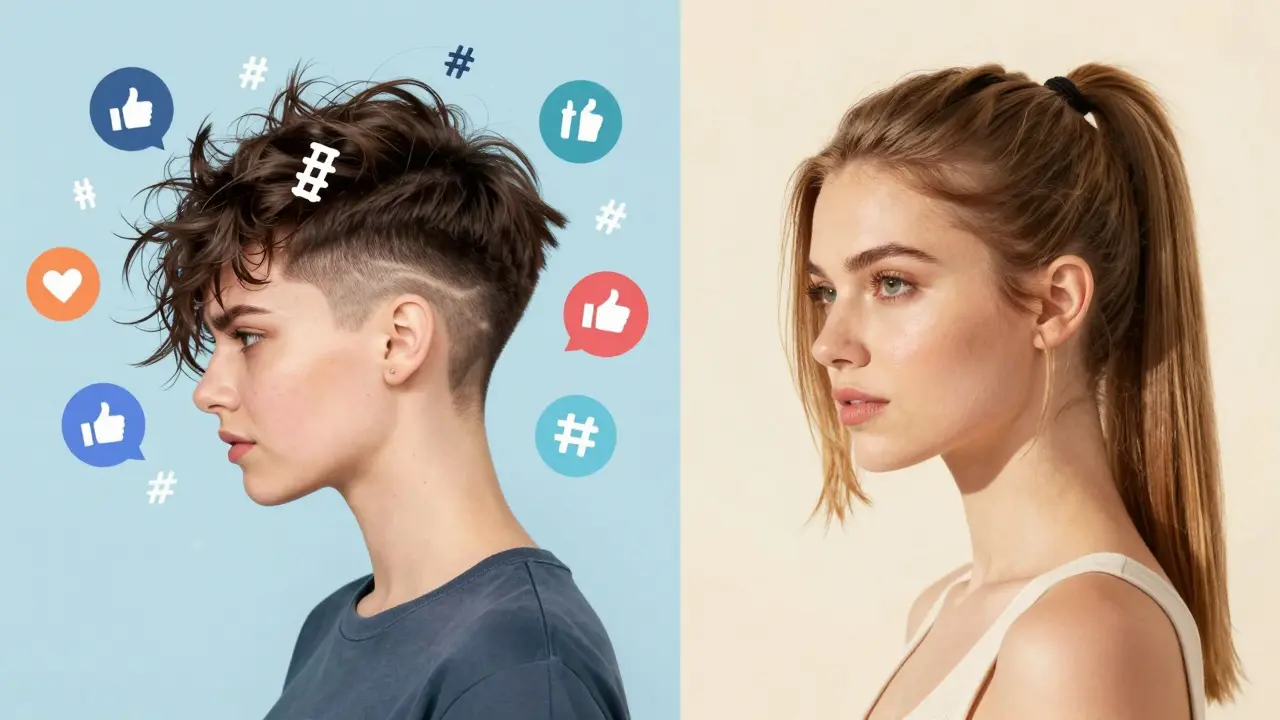
We chase faddish hairstyles because hair is one of the few aspects of our appearance we can change instantly. In a world where careers, relationships, and finances feel static, changing your hair provides a sense of control and renewal. Psychologists call this "enclothed cognition"-the idea that what we wear (or how we style ourselves) affects our mindset.
Social media accelerates this cycle. Algorithms reward novelty. If you post a photo with a slightly different haircut every month, you get more engagement. This creates a feedback loop where stylists push new cuts, and clients demand them. But there is a cost: decision fatigue. Constantly chasing the latest look leads to burnout and damaged hair from excessive chemical processing and heat.
In New York, I see this constantly. Clients come in wanting the "Pinterest look" they saw online. Often, their hair type is completely different from the model in the photo. A fad rarely accounts for individual variation. It assumes everyone has the same bone structure, hair density, and lifestyle. When reality sets in, the style becomes a burden.
How to Adapt a Trend Without Getting Trapped
You don’t have to avoid trends entirely. Many fads contain elements that can be adapted into your personal style. The key is moderation and customization.
- Soften the Edges: If a trend involves sharp lines, ask your stylist to soften them. For example, instead of a severe geometric bob, ask for a textured bob with soft ends. This makes it grow out better and reduces the "costume" effect.
- Adjust the Color: Extreme colors like pastel blue or platinum blonde are often faddish. Instead, try a subtle tonal shift. If ash brown is trending, ask for ash tones in your highlights rather than an all-over dye job.
- Keep Length Flexible:
- Test with Extensions: If you love a faddish length or style but aren’t ready to commit, use clip-in extensions or wigs. This lets you experience the trend without cutting or coloring your natural hair.
This approach allows you to participate in the cultural moment without sacrificing your hair’s health or your future convenience. It turns a fad into a playful experiment rather than a long-term commitment.
Classic Styles That Never Go Out of Style
If you want to avoid the fad trap, anchor yourself in classics. These styles have survived multiple generations because they are functional, flattering, and adaptable.
- The Pixie Cut: Popularized in the 1950s, the pixie remains chic. It works for fine hair (adding volume) and thick hair (removing bulk). As long as you keep the sides tapered and the top textured, it never looks dated.
- Layered Shag (Natural Version): Unlike the over-styled 2010s shag, a natural layered cut adds movement without requiring product. It grows out seamlessly into longer layers.
- Sleek Ponytail: Simple, professional, and effective. Whether high or low, a clean ponytail signals polish. It requires no cutting, just good hair ties and edge control.
- Blunt Cut: A one-length cut emphasizes hair health and thickness. It looks expensive because it shows off the quality of your strands. It works for both straight and wavy hair.
These styles succeed because they respect the hair’s natural state. They don’t fight gravity or texture. They enhance what you already have. When in doubt, choose simplicity. Complexity invites decay; simplicity endures.
Maintaining Your Style Beyond the Trend Cycle
Once you’ve chosen a style, maintenance determines its lifespan. Faddish styles often die because people neglect upkeep or stop caring about the look. Classic styles survive because they fit into a routine.
Ask your stylist for a "grow-out plan." How will the cut look in three months? Six months? If the answer is "it will look bad," walk away. A good stylist will design a cut that looks intentional at every stage of growth. This is especially important for bangs, which can become a nightmare if not trimmed regularly.
Invest in tools that protect your hair. Heat damage accelerates the aging of a hairstyle. Frizzy, split-ended hair makes even the best cut look cheap. Use a heat protectant, wash less frequently, and trim every eight to twelve weeks. Healthy hair carries any style better than perfect technique on damaged strands.
Finally, listen to your body. If a hairstyle causes headaches from clips, neck strain from weight, or anxiety from styling time, it’s not worth it. Your hair should serve you, not the other way around. A fad demands too much; a classic gives back.
How long does a typical hair fad last?
Most micro-trends driven by social media last between six and eighteen months. Larger cultural shifts, like the rise of natural curls or the return of the bob, can last five to ten years. If a style disappears from mainstream visibility within a year, it was likely a fad.
Is it okay to follow a faddish hairstyle?
Yes, if you understand it’s temporary. Treat it like fast fashion: fun for now, not meant to last. Just ensure you’re not damaging your hair with harsh chemicals or excessive heat to achieve the look. Keep expectations realistic about how long you’ll enjoy it.
What is the difference between a trend and a fad?
A trend evolves gradually and has staying power, often adapting to new contexts. A fad explodes quickly, reaches peak saturation, and then vanishes. Trends are like seasons; fads are like weather storms. Trends change slowly; fads change overnight.
How do I know if a hairstyle suits my face shape?
A faddish style often ignores face shape. To check suitability, take a selfie with your hair pulled back. Draw an imaginary line around your jaw, forehead, and cheekbones. If the style balances these proportions, it’s likely a good fit. Consult your stylist for a personalized analysis.
Can a faddish hairstyle become a classic?
Rarely, but it happens. The bob started as a radical statement in the 1920s and became a classic. For a fad to become classic, it must prove its versatility, ease of maintenance, and broad appeal over decades. Most fads lack this durability and fade away.

Saranya M.L.
July 8, 2026 AT 01:56It is intellectually lazy to categorize hair trends without considering the socio-economic implications of maintenance costs. The article suggests that high-maintenance styles are inherently 'faddish,' which ignores the reality that many individuals in developing nations lack access to professional styling tools entirely. Therefore, a style requiring heat tools is not merely a fad but an exclusionary practice rooted in privilege. Furthermore, the notion that classic styles are superior is a Eurocentric bias that disregards the rich history of intricate braiding and textural manipulation in African and Asian cultures, which have been systematically marginalized by Western beauty standards. We must deconstruct this hierarchy before we can truly understand longevity in aesthetics.
om gman
July 9, 2026 AT 08:39oh wow another article telling people what to do with their own heads lol. who made you the king of hair? i bet you look like a potato yourself. seriously though if someone wants to cut their hair into a beehive because they feel like it who cares if it lasts 5 minutes or 5 years. life is short why not wear the neon mesh top?
Jeanne Abrahams
July 10, 2026 AT 23:02From Johannesburg, I can tell you that humidity alone makes half these 'classic' suggestions impossible without industrial-strength product. The idea that a sleek ponytail is just 'simple' is laughable when your hair has a mind of its own due to climate. We adapt our styles to survive the environment, not just to follow Instagram algorithms. It’s less about vanity and more about practical survival against the elements.
Bineesh Mathew
July 11, 2026 AT 17:50The soul of man is reflected in his crown yet we treat it as a canvas for fleeting digital validation. This is the tragedy of modern existence. We chase the ephemeral spark of the new while ignoring the enduring flame of tradition. To cut one's hair according to the whims of the algorithm is to surrender one's identity to the machine. True style is not found in the mirror but in the alignment of inner truth with outer form. The beehive was not a failure it was a monument to structure in a chaotic world.
Oskar Falkenberg
July 12, 2026 AT 20:06i think the point about grow out plans is really spot on though. i used to get these sharp bobs that looked amazing for like two weeks and then just grew out looking like a mushroom. my stylist now always asks how i want it to look in three months which saves me so much hassle. it’s not about being boring it’s just about being realistic with time and effort. also typos happen when typing fast sorry about that
Caitlin Donehue
July 13, 2026 AT 23:46I’ve noticed that the 'Rachel' cut mentioned here was actually quite forgiving for some face shapes if done correctly. It wasn’t the cut itself that was the problem but the expectation that everyone could achieve Jennifer Aniston’s specific texture. I still see variations of layered cuts today that work well for adding volume to fine hair without needing constant blow-drying.
Stephanie Frank
July 14, 2026 AT 09:57This entire premise is flawed because it assumes that 'classics' are universally flattering. They aren't. A blunt bob looks terrible on thick wavy hair unless you spend hours straightening it. So isn't that also high maintenance? The distinction between fad and classic is arbitrary and often dictated by who holds power in the fashion industry at any given moment. Stop pretending there's an objective truth to hair.
Patrick Dorion
July 14, 2026 AT 18:36As a barber, I see this cycle every day. The undercut trend from the 2010s is a perfect example of something that looked great in photos but was a nightmare to maintain for clients who didn't shave their heads weekly. Now we're seeing a return to longer, textured styles which are easier to manage. The key is finding a style that fits your lifestyle, not just your aesthetic preference. If you don't have time to style it, don't get it.
Marissa Haque
July 14, 2026 AT 21:00OMG yes!!! The part about decision fatigue is SO true!! I used to change my hair color every month and it just ended up damaging my strands beyond repair. Now I stick to a simple trim and occasional highlights. It’s liberating! Also, the table comparing the Rachel to the Bob is super helpful for visualizing the difference in longevity. Thanks for sharing this!
Keith Barker
July 15, 2026 AT 12:31trends are weather classics are seasons. simple as that. most people dont understand the temporal nature of style. they want permanence in a transient world. hair grows. it changes. fighting it is futile. accept the flow.
Lisa Puster
July 16, 2026 AT 11:33interesting read but clearly written by someone who doesnt understand the cultural significance of certain styles. calling the beehive a costume piece is reductive. it was a statement of empowerment for women in the 60s. nowadays everything is dismissed as a fad if it requires effort. laziness masquerading as practicality. typical american mindset.
Joe Walters
July 17, 2026 AT 02:53lol yeah i tried the shag cut last year and it was a disaster. looked like i hadnt washed my hair in weeks even after styling. glad i went back to a simple lob. stylists push these trends because they make more money doing complex cuts. its all business. dont fall for it.
Robert Barakat
July 17, 2026 AT 05:53The psychological aspect of 'enclothed cognition' applied to hair is fascinating. It suggests that our external presentation directly influences our internal state. However, the pressure to conform to viral trends undermines this benefit by creating anxiety rather than confidence. True renewal comes from authenticity, not imitation. When we choose styles that reflect our true selves, regardless of trend cycles, we achieve a deeper sense of control and satisfaction.
Michael Richards
July 18, 2026 AT 11:13If you can't maintain it, you don't deserve it. Simple as that. People complain about high maintenance but refuse to put in the work. A classic style isn't just about ease; it's about discipline. The bob requires precision. The pixie requires regular trims. Stop making excuses and commit to your appearance properly.