

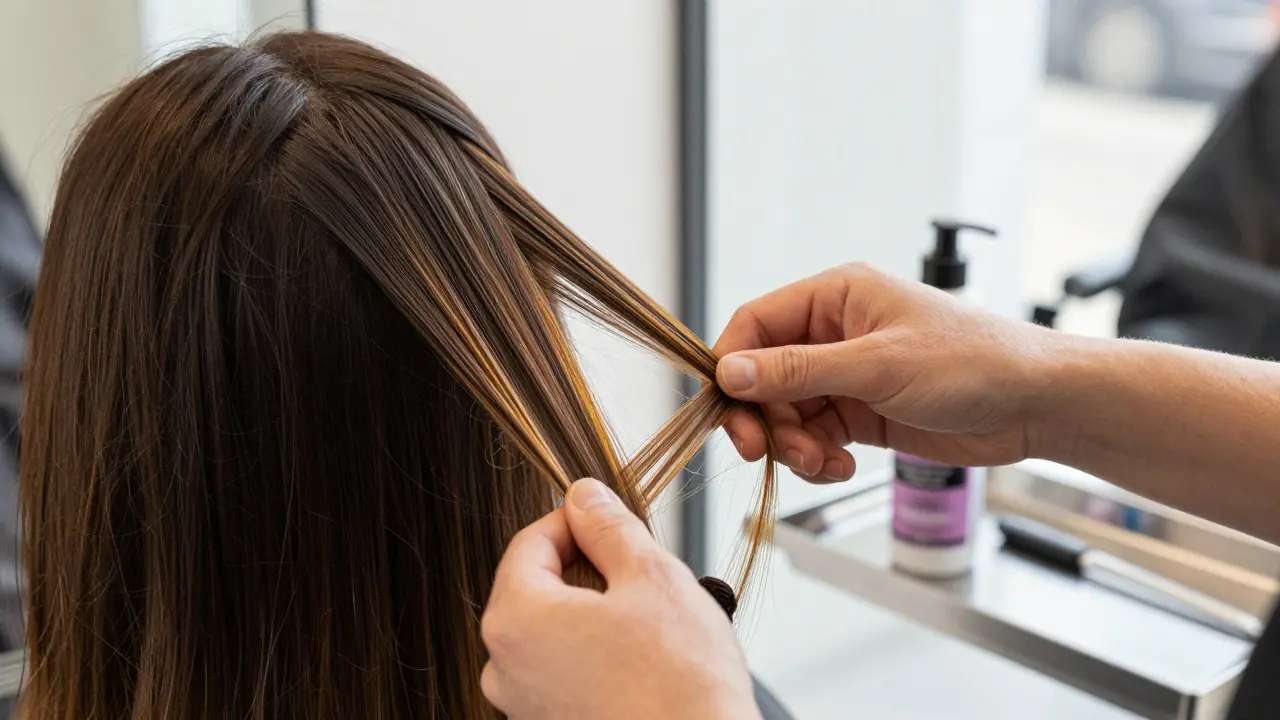
When you want to go from flat brown to sun-kissed blonde, or add dimension to your current color, you’re probably thinking: do I do highlights first or hair dye first? There’s no single answer that works for everyone. But there is a right sequence for your hair - and getting it wrong can leave you with orange streaks, patchy color, or hair that fades in weeks instead of months.
Why the Order Matters More Than You Think
Hair isn’t just a canvas. It’s a living structure that changes when you lift or deposit color. Highlights use lightener - usually 20 to 40 volume developer - to strip pigment from strands. Hair dye uses lower-volume developer (10 to 20 volume) to deposit color. When you mix the two, the order determines how they interact.If you dye first, your hair becomes a uniform base. Highlights then lift just enough to create contrast - like sunlight hitting a solid wall. But if you highlight first, those lifted strands become more porous. When you apply dye afterward, they soak up pigment faster and deeper than untouched hair. That’s why people end up with brassy roots or uneven tones - the color didn’t have a consistent starting point.
Scenario 1: You’re Going Lighter (Brunette to Blonde)
If your hair is dark and you want to go significantly lighter - say, from level 4 (medium brown) to level 8 (light blonde) - highlight first, then dye.Here’s why: Lightening dark hair in one step can cause severe damage. Professionals break it into stages. First, they apply foils to lift only the strands that need to be light. This gives you control. Once the highlights are processed, toned, and rinsed, they apply a full color over the rest of your hair to blend everything together.
This is the method used by colorists like Ally Spaulding, who works with clients who have grown-out roots and want a seamless blonde. She says, “You can’t just slap color on top of lightened hair without toning first. The brassiness will eat your color alive.”
After highlights, you’ll need a toner - usually a purple or ash-based product - to neutralize yellow or orange tones before applying your base color. Skipping this step is the #1 reason people say, “My hair turned orange after I dyed it.”
Scenario 2: You Have Color Already and Want to Add Dimension
If you’re already blonde, red, or another shade and just want to add depth, texture, or a sun-kissed glow, do the base color first.This is what Jean Louis David recommends: “Highlights must adapt to your color to contrast and enhance it.” If you’re a medium blonde with faded ends, applying color first gives you a clean, even base. Then, foils go in only where you want extra brightness - maybe around your face or crown. The result? A natural-looking, multi-tonal effect that doesn’t look like you’re wearing a wig.
Plus, applying color after highlights means you avoid re-lightening already processed hair. That’s huge for hair health. One study from the International Association of Haircolorists found that 38% of color correction cases came from re-lightening hair that had already been processed - often because the sequence was reversed.
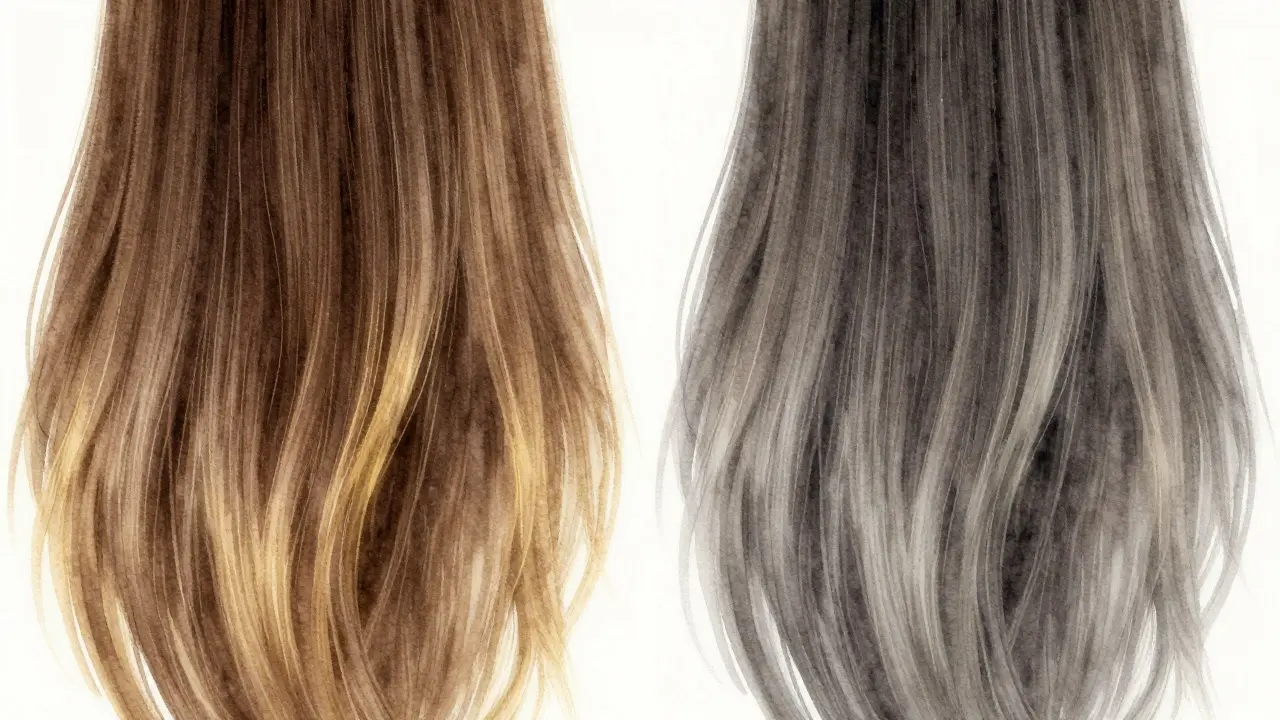
Scenario 3: You’re Fixing a Bad Color Job
If your last salon visit ended in disaster - say, your highlights turned green or your dye washed out too fast - the sequence depends on the problem.Most colorists start by assessing your hair’s condition. Is it dry? Brittle? Over-processed? If your hair is damaged, they’ll often do a deep conditioning treatment first. Then they’ll use a strand test: taking a small section and trying different sequences to see which gives the best result without further damage.
According to a 2023 survey by the American Hair Stylists’ Association, 78% of pros say they never use a fixed rule. They look at your history: When was your last color? Did you bleach before? Are you growing out a previous color? That’s why you should always bring your last receipt or photo to your appointment.
What About Cutting Your Hair?
Before any coloring - whether highlights or dye - trim your ends. This isn’t optional. Split ends absorb color unevenly. They’re already damaged, so they’ll soak up dye faster and look darker or patchy.Tribeca Salon in Tampa makes this a non-negotiable step. “We never color without a trim,” says senior stylist Lena Ruiz. “It’s not about style - it’s about control. You can’t predict how color will behave on frayed ends.”
Timing Between Steps
If you’re doing both in one visit - which most salons recommend - the whole process takes 4 to 6 hours. But if you’re doing them separately, wait 7 to 10 days between sessions.Why? Hair cuticles stay open after coloring or lightening. If you apply another chemical too soon, you risk over-processing. That means breakage, dryness, and unpredictable color results. Even if your hair looks fine, the internal structure is still recovering.
One Reddit user, u/ColorCatastrophe, shared: “My stylist did full color first, then highlights the next week. My hair snapped off at the roots.” That’s not normal. That’s damage from rushing.
What About at-Home Kits?
At-home kits are tempting. But mixing highlights and dye yourself? High risk. Most kits don’t account for how lightener and dye interact. You can’t control developer strength or processing time like a pro can.Madison-Reed’s 2023 survey of 5,300 customers found that 76% couldn’t tell the difference between a good and bad sequence - but they could tell when color lasted longer. People who followed professional sequencing rules (even if they did it themselves) saw color retention increase by 31%.
If you’re doing it yourself, stick to one process. Do a full color. Wait 10 days. Then do highlights. Or vice versa. Don’t try to do both in one weekend.
How Much Does It Cost?
A single-process color averages $75 to $125. Highlights alone run $100 to $180. When you combine them, you’re looking at $125 to $225 - and that’s just for the service. You’ll also need toner, conditioner, and maybe a bond builder.Salon Today’s 2023 report says 68% of salons charge 25% to 35% more for combined services. That’s because it’s not just more product - it’s more skill, more time, and more risk. A good colorist will assess your hair, plan the sequence, and adjust on the fly. That’s worth paying for.
What’s the Future of Hair Coloring?
Salons are moving away from one-size-fits-all rules. L’Oréal’s 2024 Color Research Report predicts AI-powered hair scanners will analyze your strand’s porosity, pigment level, and damage within seconds - then recommend the perfect sequence. By 2026, you might walk in and get a digital report before your chair even moves.For now, the smartest move is to let your stylist do the science. Bring photos. Tell them your history. Ask: “What’s the sequence for my hair?” Not “Should I do highlights or dye first?”
The right sequence doesn’t just look better. It lasts longer. It’s healthier. And it saves you money in the long run - because you won’t need a color correction.



TIARA SUKMA UTAMA
January 24, 2026 AT 11:33Just dye it all and be done.
Jasmine Oey
January 26, 2026 AT 10:14OMG I DID THE OPPOSITE AND NOW MY HAIR LOOKS LIKE A RAINBOW THAT GOT HIT BY A TRUCK 😭 I THOUGHT I WAS BEING SMART BY DYING FIRST THEN DOING HIGHLIGHTS BUT NOOOO-MY ENDS ARE ORANGE AND MY ROOTS ARE LIKE A GLOWING CANDY CANE. SALON COST ME $600 TO FIX IT. DON’T BE ME.
Marissa Martin
January 27, 2026 AT 23:47I’ve been doing highlights first for years. My hair’s not perfect, but it’s alive. I don’t care what the studies say-I trust what my strands tell me.
James Winter
January 29, 2026 AT 10:44Why are you listening to American stylists? In Canada we just cut it all off and start over. Simpler. Stronger. Less bullshit.
Aimee Quenneville
January 29, 2026 AT 23:32So… you’re telling me the whole thing is just… chemistry? Like… actual science? Who knew? 😏 I thought it was magic and glitter.
Cynthia Lamont
January 30, 2026 AT 05:00STOP. You missed the most important part: toner. Not ‘toner’ like the skincare thing. I mean the actual violet-based toner. If you don’t use it, your hair will look like a cheap 90s sitcom set. And yes, I’ve seen it. I’ve cried over it. I’ve written a 12-page essay on it. You’re welcome.
Kirk Doherty
January 31, 2026 AT 20:32Trim before. Always.
Dmitriy Fedoseff
February 2, 2026 AT 11:21In my culture, hair is sacred. We don’t just bleach it-we honor it. That’s why we always start with a prayer, then a deep oil treatment, then the lightener. Only after the hair is spiritually aligned do we proceed. Science is useful, but wisdom is older.
Meghan O'Connor
February 3, 2026 AT 12:09You say ‘7 to 10 days’ like it’s gospel. But you didn’t cite the journal. Also, ‘I’ve seen it’ is not evidence. And you misspelled ‘porosity’ twice. This whole thing is a mess.
Jennifer Kaiser
February 3, 2026 AT 20:57It’s not about sequence. It’s about intention. If you’re trying to escape your natural self, no amount of perfect timing will fix that. The color you choose reflects how you feel about your own skin. Highlights aren’t a technique-they’re a metaphor. Are you trying to reveal light… or hide from it?
Mark Nitka
February 4, 2026 AT 08:33My sister did highlights first, then dye. Hair looked amazing for 8 months. No brass, no patchiness. Just soft, natural light. She didn’t even use toner. Just a good conditioner. Sometimes the experts overcomplicate things.