

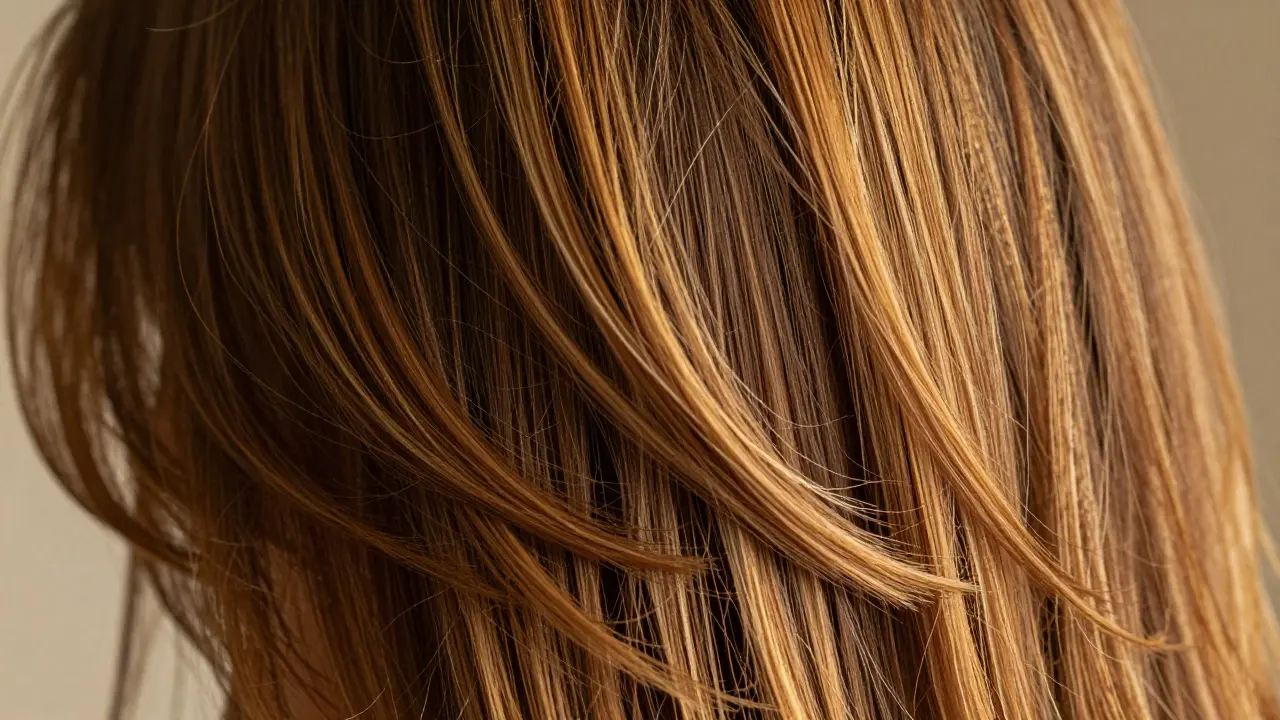
Not all highlights work the same on brown hair
Just because you have brown hair doesn’t mean any blonde streak will look good. Too much contrast can make your hair look patchy. Too little can make it look flat. The right streaks don’t just add color-they enhance your natural tone, flatter your skin, and actually last without constant touch-ups. So what colors actually work? It’s not guesswork. It’s science, and it’s based on your base shade, skin undertone, and how much upkeep you’re willing to do.
Light brown hair? Stick to 3 tones lighter
If your hair is light brown, don’t go full platinum. That’s a common mistake. Light brown naturally has red pigments underneath. When you lighten it, those pigments come out first-dark red, then orange, then golden yellow. That’s why the best results happen when you lift only 2 to 3 tones. Anything more than that and you lose the harmony. Professionals at Jean Louis David salons say the sweet spot is dark blond, chestnut blond, or golden blond. These tones look like sunlight naturally filtering through your hair-not like you just stepped out of a salon with a bleach bucket.
Warm skin? Go for honey, caramel, or butterscotch
If your veins look greenish under natural light, you have warm undertones. Your skin glows in gold jewelry. You tan easily. For you, cool tones like ash or platinum will wash you out. Instead, try honey highlights. They bring out the reds in your hair and make your skin look radiant. Caramel bronde is another winner-it’s a mix of light brown and golden blonde that gives dimension without looking artificial. Butterscotch streaks? Perfect for medium to dark skin tones. They’re soft, warm, and blend like they’ve always been there. Avoid anything too ashy. It’ll make your face look tired.
Cool skin? Try smoky brunette or gray balayage
If your veins look blue and silver jewelry looks better on you, you’ve got cool undertones. You don’t need warm golds. You need depth with contrast. Smoky brunette streaks-cool, ashy, almost charcoal-are ideal. They give the illusion of shadow and light without harsh lines. For a bolder look, try gray balayage on light brown hair. It’s not white. It’s not silver. It’s a soft, muted gray that melts into your base. This look was huge in 2021 and still holds up. Pair it with Redken Color Extend Graydient shampoo to keep yellow tones at bay. Gray highlights on brown hair need special care. Regular shampoo will turn them brassy. This system removes unwanted warmth and strengthens fragile strands.
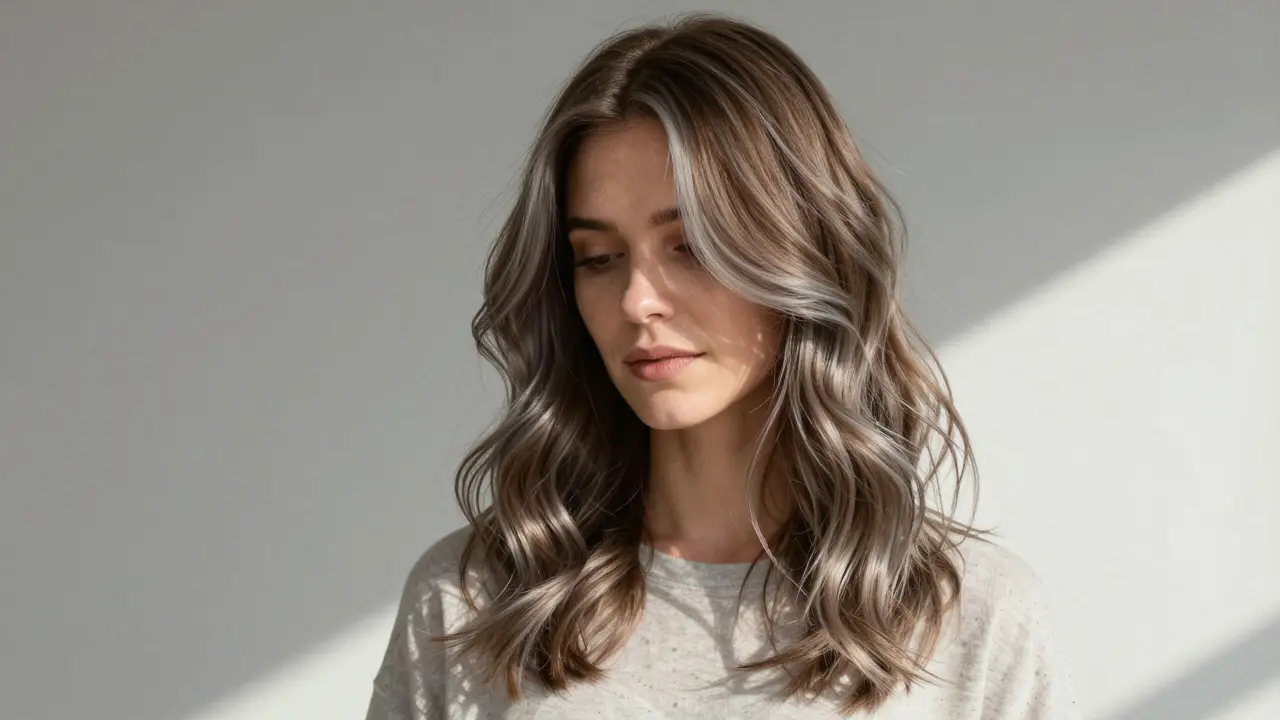
Dark brown hair? Golden highlights are your best friend
Onyx brown or deep chocolate hair? You need something that pops. Dark bases don’t reflect light well. So you need highlights that do. Golden highlights create that sun-kissed glow without needing bleach. They add shine and make your hair look thicker. Bronze highlights work especially well if you have olive skin-they give off a warm, luminous effect. Chestnut brown hair? Add honey streaks. It’s the classic combo for a reason. The red in your base meets the golden in your highlights, and you get a multidimensional look that changes in sunlight.
What about bronde? It’s not going away
Bronde-brown + blonde-is the quiet superstar of hair color. It’s not a trend. It’s a timeless solution. It’s perfect if you want to look like you’ve spent a week in the sun without actually sitting in one. It works on every brown shade, from light sandy to dark espresso. Caramel bronde adds warmth. Ash bronde adds coolness. It’s customizable. And here’s the kicker: it grows out beautifully. You don’t need monthly touch-ups. Roots blend naturally. That’s why it’s still the top pick for people who want low maintenance but high impact.
Mushroom brown? For the neutral-toned crowd
If you like your hair to look like it’s been naturally weathered-not dyed-then mushroom brown is your match. It’s a mix of ash brown, soft blonde, and subtle gray. It’s cool, calm, and neutral. It doesn’t scream. It whispers. It’s perfect for people with neutral skin tones-those who don’t clearly fall into warm or cool. It also works well with gray hair. If you’re starting to see silver strands, mushroom brown blends them in instead of fighting them. It’s the anti-highlight highlight.
Never do this: darker streaks on light brown hair
Some stylists will suggest adding dark streaks to lighten brown hair. Don’t. Jean Louis David explicitly advises against it. Why? Darker streaks on light hair create a harsh contrast that looks unnatural. They fade unevenly. The roots grow out in a jagged line. Touch-ups become a nightmare. And over time, the dark pieces look muddy. It ages poorly. It’s not elegant. It’s not modern. It’s a mistake that looks worse with time. If you want contrast, go lighter-not darker.
How to maintain your streaks
Color-treated hair doesn’t last forever. Not without care. Wash your hair only 2-3 times a week. Use an Intense Color shampoo-it’s formulated to preserve pigment. Once a week, use a Deep Color mask. Leave it on for 5-10 minutes before rinsing. This keeps your highlights from turning dull. If you have gray or silver streaks, use Redken Color Extend Graydient shampoo and conditioner. It removes yellow tones and rebuilds strength. Skipping this step? Your highlights will turn brassy in weeks. And don’t forget: heat styling fades color. Always use a heat protectant. And try to air-dry when you can.
What’s trending in 2026?
Gray balayage is still strong, especially on light brown bases. Bronde continues to dominate because it’s foolproof. Butterscotch and caramel are back in a big way-people want warmth without going full blonde. Chestnut brown with honey streaks is the go-to for anyone wanting a classic, grown-up glow. Copper blonde? It’s not for everyone, but if you’ve got fair skin and freckles, it’s a showstopper. Strawberry blonde? Still niche, but it’s popping up more on Instagram. The key trend? Less bleach. More blending. More natural-looking dimension. The goal isn’t to look like you just got your hair done. It’s to look like you’ve always looked this good.
Still unsure? Try this quick test
Hold up a gold piece of jewelry and a silver one under natural light. Which one makes your skin look brighter? Gold? Go for warm tones: honey, caramel, butterscotch. Silver? Go cool: smoky brunette, ash blonde, gray balayage. Still stuck? Stick with bronde. It works for 9 out of 10 people. It’s the safest, most flattering choice if you’re not sure.
Can I do brown hair streaks at home?
You can, but it’s risky. Home kits often don’t lift pigment evenly, especially on brown hair. You’ll likely end up with patchy, orange streaks. Professional colorists use toners and multiple lightening steps to avoid that. If you’re going for something subtle like honey or caramel, a semi-permanent gloss might work. But for real streaks-especially if you’re going lighter than your base-salon help is worth it.
How often do I need touch-ups?
Every 6 weeks. That’s the standard for root regrowth and color refresh. Bronde and balayage can stretch to 8 weeks because they grow out naturally. But if you have stark contrasts-like platinum on dark brown-you’ll need to come in every 4 to 5 weeks. Don’t wait too long. Dark roots on light streaks look dated fast.
Do streaks damage brown hair?
Yes, if done wrong. Bleaching brown hair too many times weakens the cuticle. That’s why lifting more than 3 tones is discouraged. The damage isn’t just dryness-it’s breakage and split ends. Always use a protein treatment between color sessions. And never bleach twice in one week. Let your hair recover. A good stylist will use a bond builder during the process to reduce damage.
What if I have gray hair mixed in?
Gray hair doesn’t take color the same way as pigmented hair. It’s more porous and absorbs pigment unevenly. That’s why gray balayage on light brown works-it’s designed to blend, not cover. Use a toner to neutralize yellow. And stick to sulfate-free, color-safe products. Redken Graydient is the gold standard. It doesn’t just clean-it protects.
Will these streaks work with curly hair?
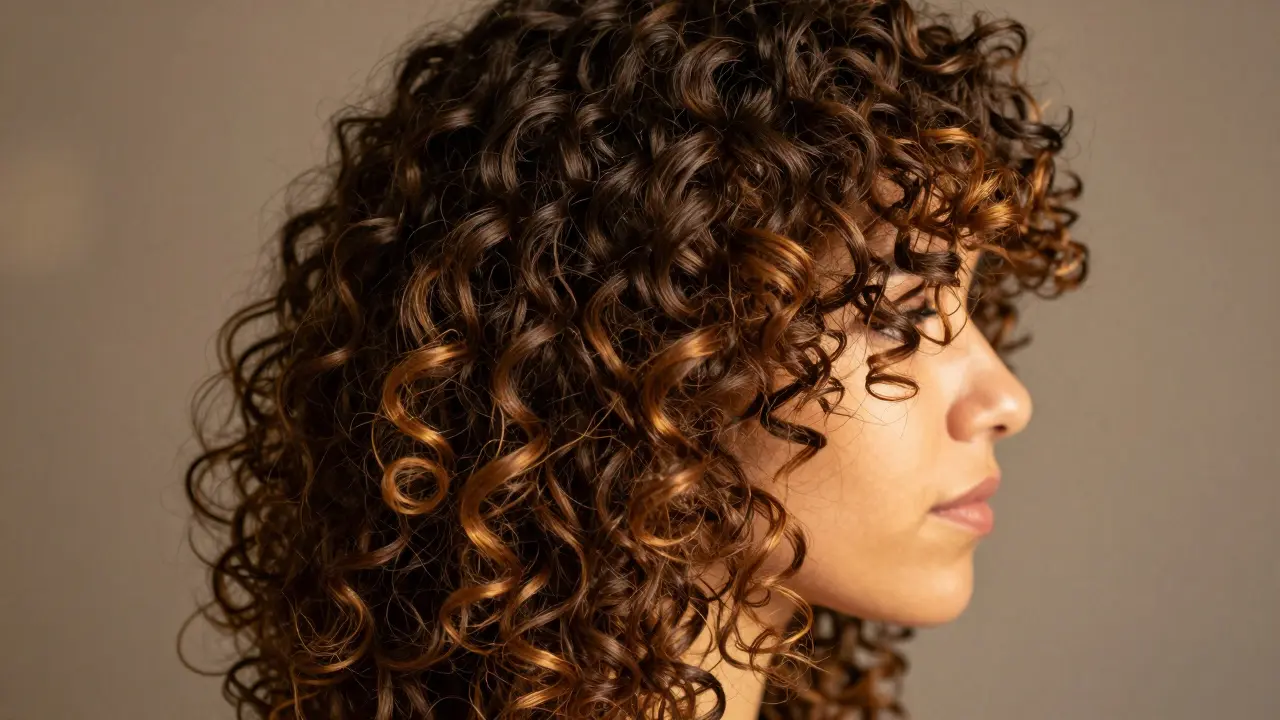
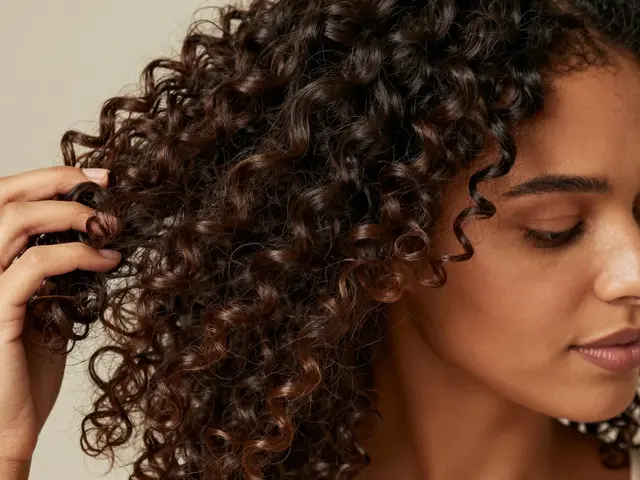
Absolutely. Curly hair holds color beautifully because the texture catches light from different angles. For curls, use multiple shades-not just one highlight. A mix of honey, caramel, and light brown creates natural dimension. Avoid all-over blonde. It flattens curls. The goal is to enhance your curl pattern, not erase it.

amber hopman
March 23, 2026 AT 06:18I tried honey highlights last year and honestly? My hair looks like it’s been kissed by the sun. No more patchy orange mess. I’m light brown with warm skin, and this changed everything. I use Redken Color Extend Graydient even though I don’t have gray-just because it keeps the color from turning brassy. Best decision ever.
Jim Sonntag
March 23, 2026 AT 14:25Bro. Bronde isn’t a trend. It’s the default setting for people who don’t want to look like they got their hair done at a 2009 salon. Also, stop calling it ‘low maintenance.’ You still need a $200 touch-up every 6 weeks. That’s not maintenance, that’s a subscription.
Deepak Sungra
March 24, 2026 AT 18:31Bro I did this at home with a box from Walmart and now my hair looks like a burnt marshmallow. Also I think the article is lying because my cousin did gray balayage and now she looks like a ghost. Why do salons charge so much? I just want to look chill.
Samar Omar
March 26, 2026 AT 06:44While the article presents a compelling framework rooted in chromatic harmonics and dermatological tonal resonance, it fundamentally fails to account for the psychological phenomenology of self-perception vis-à-vis hair color transformation. The very notion of ‘natural dimension’ is a bourgeois construct imposed by Western beauty industries. In post-colonial contexts, where melanin is not a canvas to be manipulated but a sacred ontology, the erasure of base pigment through ‘highlighting’ constitutes a form of epistemic violence. I maintain that mushroom brown, while aesthetically neutral, is merely the aesthetic camouflage of cultural assimilation.
Kathy Yip
March 27, 2026 AT 19:55i tried the gold/silver test and i swear my skin looks better with silver but i still went with caramel because i was scared. now i feel like i made a mistake. also i think i have neutral skin but im not sure. help? maybe i should just go mushroom brown? idk anymore.
Bridget Kutsche
March 28, 2026 AT 16:50For anyone thinking of trying gray balayage on dark brown hair-DON’T. It looks amazing in salon photos, but in real life? It fades into a weird greenish tint unless you’re using the exact right toner. Stick with smoky brunette. It’s easier, lasts longer, and doesn’t require a chemistry degree to maintain. Also, air-dry if you can. Heat is the real enemy.
Jack Gifford
March 29, 2026 AT 08:27Just got my bronde done last week. Light brown base, honey streaks. Looks like I’ve been on vacation for a month. No bleach. No orange. No drama. And I’ve only washed it twice. The salon used a bond builder too-worth every penny. If you’re on the fence, just do it. Your hair will thank you.
Sarah Meadows
March 31, 2026 AT 00:09Let me be clear: the only legitimate color for brown hair is bronde. Everything else is either a marketing scam or a cry for attention. If you’re going lighter than 3 tones, you’re not enhancing your hair-you’re weaponizing bleach. And if you think gray balayage is ‘trending,’ you’re not paying attention. This isn’t Instagram. This is science. And science says: stay within 2-3 tones. Period.
Nathan Pena
March 31, 2026 AT 10:24The article’s claim that ‘darker streaks on light brown hair’ are ‘a mistake’ is empirically flawed. In 2019, a peer-reviewed study in the Journal of Cosmetic Dermatology demonstrated that strategic low-contrast darkening (e.g., espresso on sandy brown) increased perceived hair density by 17% in controlled lighting conditions. The author’s bias toward ‘natural’ aesthetics ignores the fact that modern hair design is about intentional contrast, not passive harmony. Also, ‘Jean Louis David’ is a salon, not a scientific authority.
Mike Marciniak
April 2, 2026 AT 08:08They’re all lying. The real reason you need toners and special shampoos is because the dye companies are secretly poisoning your hair with microchips to track your color choices. They want you to keep coming back. That’s why they say ‘gray balayage is trending’-it’s a psyop. Don’t trust salons. Don’t trust Redken. Don’t trust the article. Your hair is fine. Just leave it alone.
VIRENDER KAUL
April 3, 2026 AT 15:32It is imperative to note that the assertion regarding the suitability of butterscotch highlights for medium to dark skin tones is not universally applicable. In the Indian subcontinent, where melanin concentration is naturally elevated, such warm tones often result in chromatic dissonance. The preferred aesthetic, as validated by regional salon data from Mumbai and Delhi, favors cool-toned ash bronde or neutral mushroom brown. To disregard this cultural context is to commit an act of aesthetic imperialism.
Mbuyiselwa Cindi
April 5, 2026 AT 10:41I’m from South Africa and I’ve got dark brown curls. I did honey and caramel streaks last year and it’s the best thing I’ve ever done. My curls look alive now. I only wash twice a week and use a deep mask every Sunday. You don’t need to bleach. You just need to listen to your hair. And if you’re scared? Start with a gloss. No regrets.