

You've probably heard it from a friend or a relative: "Don't dye your hair too often, or you'll turn gray faster." It's a common fear that the chemicals used to change your look might actually steal your natural color permanently. But does hair coloring actually cause hair whitening, or is this just another beauty myth passed down through generations?
The short answer is no. Scientifically speaking, dyeing your hair does not trigger the process of turning gray or white. To understand why, we have to look at where color actually comes from and where hair dye actually goes. When you apply a colorant, you are treating the dead part of the hair-the shaft. The "factory" that creates your color is tucked safely away deep inside your scalp.
| Feature | Hair Dye / Bleach | Melanin Production |
|---|---|---|
| Location of Action | Hair Shaft (Dead Tissue) | Hair Follicle (Living Cells) |
| Primary Goal | Change external pigment | Create internal pigment |
| Effect on Graying | None (Cannot reach follicle) | Determines when hair turns white |
The Biology of Why Your Hair Changes Color
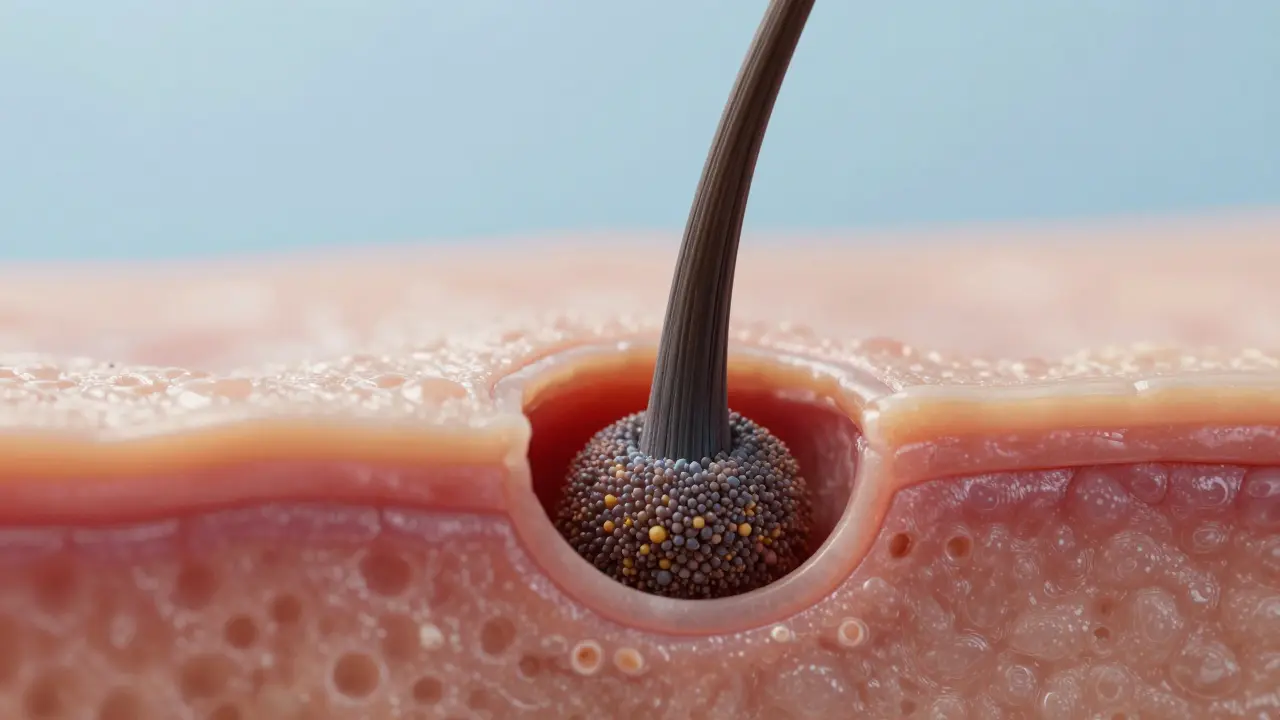
To get why dye isn't the culprit, we need to talk about Melanin is the natural pigment produced by melanocytes in the hair follicle that gives your hair its specific color . This pigment is injected into the hair as it grows. Once the hair emerges from your scalp, it is essentially a dead structure made of keratin.
When you use a permanent hair color, the chemicals penetrate the cuticle of the hair shaft to deposit color or strip existing pigment. However, these chemicals do not travel down into the living root. Because the Hair Follicle is the actual site of color production, and it remains undisturbed by the dye on the surface, the dye cannot tell your body to stop producing melanin. You can't "poison" the pigment cells with a surface treatment.
Why It Feels Like Dyeing Causes Gray Hair
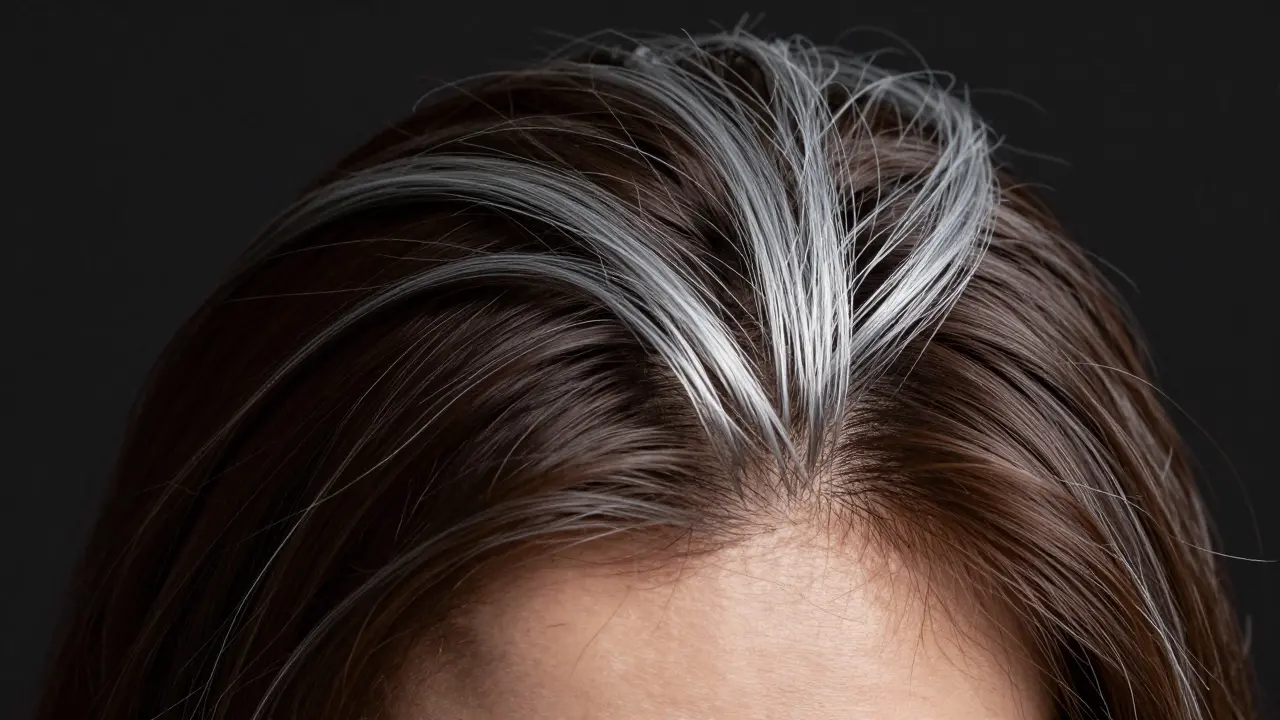
If the science says no, why do so many people swear they saw more gray hair after they started coloring? It usually comes down to a psychological or visual trick. When you dye your hair a solid, dark color, the contrast between the dyed hair and any new white hairs growing in from the root becomes incredibly sharp. A few silver strands that you might have ignored in your natural hair suddenly scream for attention against a deep brunette or black backdrop.
There's also the "stopping effect." Many people dye their hair for years to hide their grays. When they finally decide to stop, they are hit with a sudden realization of how much their hair has naturally aged. They mistake the biological progression of aging for a delayed reaction to the dyes they used years prior. In reality, the hair was turning white anyway; the dye was just the curtain hiding the truth.
The Real Culprits Behind Premature Graying
If it isn't the box of dye from the drugstore, what is actually causing those silver strands to appear early? It's usually a combination of internal biology and environmental stress. Here are the most common drivers:
- Genetics: This is the biggest factor. If your parents or grandparents went gray in their 20s or 30s, your DNA likely has a similar timer set for your melanocytes.
- Stress: Chronic stress can trigger a fight-or-flight response that affects the stem cells in your follicles, potentially depleting the pigment-producing cells.
- Vitamin Deficiencies: A lack of Vitamin B-12 is a well-documented cause of premature whitening. This vitamin is essential for healthy red blood cells, which carry oxygen to the hair cells. Without it, melanin production can drop significantly.
- Thyroid Issues: An overactive or underactive Thyroid Gland can disrupt the balance of hormones that regulate hair growth and pigmentation.

The Trade-Off: Damage vs. Color
While hair dye won't make you go gray, it's not without its risks. The chemicals used to lift color, specifically Hydrogen Peroxide, can be harsh. This developer opens the hair cuticle to allow pigment in, but if used too frequently or at too high a volume, it can damage the structural integrity of the hair.
This damage doesn't change your color, but it does change your hair's health. Over-processed hair often becomes brittle, thin, and dull. You might experience more breakage or splitting ends, especially if you have fine hair. The distance between your natural shade and your target color also matters; for example, trying to go from jet black to platinum blonde requires much more aggressive bleaching agents, which increases the risk of physical damage to the shaft.
How to Support Your Hair Health
If you're worried about your hair losing its color or becoming damaged from dyes, focus on the roots and the nutrients. Instead of fearing the dye, look at what's happening inside your body. Eating folic acid-rich vegetables and swapping some of your daily caffeine for antioxidant-rich green tea can support overall follicle health.
For those who want to cover grays without the harshness of permanent chemicals, there are gentler paths. Semi-permanent dyes don't penetrate as deeply, and natural options like Henna provide a way to add color while offering some conditioning benefits. If you suspect your graying is premature and not just genetic, a quick blood test to check your B-12 levels or thyroid function can provide answers that a bottle of hair dye never could.
Can bleaching hair make it turn white permanently?
No. Bleaching removes the pigment from the hair shaft (the dead part), but it does not kill the pigment-producing cells in the follicle. Your new hair growth will still be your natural color unless you have a medical condition or genetic predisposition to graying.
Can I reverse premature graying?
If the graying is caused by a nutritional deficiency (like Vitamin B-12) or a thyroid disorder, treating the underlying cause can sometimes slow down or even reverse the process. However, if the whitening is genetic or due to natural aging, it cannot be reversed.
Which is safer for hair: permanent or semi-permanent dye?
Semi-permanent dyes are generally safer because they don't use high concentrations of ammonia or peroxide to penetrate the hair shaft. They sit more on the surface, meaning less structural damage to the hair cuticle.
Does stress really cause gray hair?
Yes, scientific evidence suggests that severe or chronic stress can deplete the stem cells that replenish pigment in the hair follicles, leading to an increase in gray hairs.
Will using henna cause my hair to turn white?
Absolutely not. Henna is a plant-based dye that coats the hair shaft. It has no biological mechanism to affect the melanin production in your follicles.



Madeline VanHorn
May 2, 2026 AT 15:43Ugh, imagine actually believing your hair dye makes you go gray. Some people just love being ignorant.
Nicholas Carpenter
May 2, 2026 AT 22:47It's really encouraging to see the actual facts laid out here. It takes a lot of the anxiety out of the process for people who just want to feel confident with their look.
Glenn Celaya
May 3, 2026 AT 03:13wow such a shocker that genetics play a role lol like some people actually think thier box dye is a magic potion for agin lmfao
Kate Tran
May 5, 2026 AT 02:01I always thought it was the bleach but glad to know it isnt actually killin the follicles. My hair is a total mess from tryin to go blonde but at least it wont stay white forever i guess
Chuck Doland
May 5, 2026 AT 13:17One must contemplate the existential irony of attempting to mask the progression of time through chemical intervention, only to find that the very act of concealment heightens the visibility of the natural transition. It is a profound illustration of the human struggle against entropy, where our efforts to maintain a static aesthetic identity are perpetually undermined by the biological imperatives of our own genetic code. We seek to freeze a moment in time using synthetic pigments, yet the living follicle remains indifferent to such superficial alterations, continuing its predetermined trajectory toward senescence. This dichotomy between the dead shaft and the living root serves as a poignant metaphor for the broader human condition: the tension between the image we project to the world and the internal biological reality that ultimately dictates our physical manifestation. By understanding the mechanism of melanocytes, we can perhaps find a more harmonious relationship with aging, moving away from a culture of denial toward one of informed acceptance. The chemical bridge we build to the past is fragile, and the inevitable emergence of silver is not a failure of the product, but a victory of nature. It is high time we re-evaluated our societal obsession with pigment retention in favor of a more holistic appreciation for the biological narrative written into our DNA. The true essence of maturity is not found in the absence of gray, but in the wisdom gained as those hairs appear. Let us embrace the scientific clarity provided here to liberate ourselves from the shackles of beauty myths that serve only to instill unnecessary fear and insecurity.
Jim Sonntag
May 6, 2026 AT 23:30Oh wow, so you're saying my stress isn't from the dye but from my actual life? What a plot twist!
Deepak Sungra
May 7, 2026 AT 20:26I'm honestly just here for the drama of people arguing about this in the comments. It's so funny how some people treat a bottle of dye like it's a toxic waste spill. My hair is a disaster anyway so why do I even care?
Samar Omar
May 9, 2026 AT 14:26The sheer audacity of suggesting that a simple blood test could resolve the complex, multifaceted tragedy of premature whitening is almost as laughable as the notion that one could simply "eat vegetables" to counteract a genetic predisposition that has plagued my lineage for generations, leaving me to mourn the loss of my youth in a way that is far too profound for these simplistic summaries to possibly capture.
amber hopman
May 10, 2026 AT 10:27I totally agree with the point about the contrast making grays more visible. It happens every time I go darker!