


When you’re in prayer, every movement matters. Sujood-the act of prostrating-is one of the most sacred parts of Islamic worship. You’re meant to place your forehead and nose on the ground, along with your palms, knees, and toes. But what if someone asks: Can you do sujood with the eyebrows instead of the forehead? The answer isn’t just about comfort or habit. It’s about whether the act fulfills the religious requirement.
What Makes a Valid Sujood?
In Islam, sujood isn’t just bending down. It’s a physical act of submission, and Islamic scholars across all major schools of thought agree on the minimum requirement: the forehead must touch the ground. Not the hairline. Not the eyebrows. Not the nose alone. The forehead-the actual skin between the hairline and the bridge of the nose-must make direct contact with a clean surface.
This isn’t a modern rule. It comes from the Sunnah. The Prophet Muhammad (peace be upon him) was seen placing his forehead directly on the ground during prayer. His companions followed this exactly. There are multiple hadiths that describe how he would press his forehead firmly to the earth, even during long prayers. One narration from Sahih al-Bukhari says he would say, ‘I prostrate to the One who created me and shaped me, and brought forth my hearing and sight.’
That’s not symbolic. It’s physical. The forehead is the part of the body that connects you directly to the ground. It’s the most sensitive and central point of the face. That’s why it’s required.
Why Eyebrows Don’t Count
Some people think that if their eyebrows touch the ground, it’s enough-especially if they have thick hair or a high hairline. Maybe they’re wearing a hat or head covering that blocks the forehead. Or perhaps they’re praying on a soft carpet and think the eyebrows are close enough.
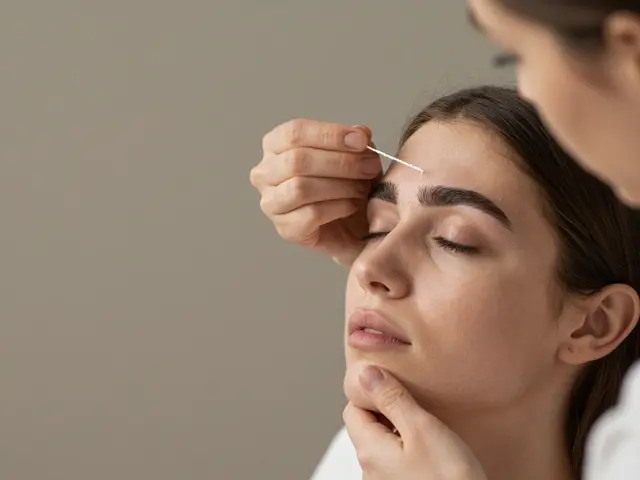
But here’s the issue: the eyebrows are not the forehead. They’re part of the facial structure, but they’re not the designated point of contact. If your forehead doesn’t touch the ground, even if your eyebrows do, you haven’t completed sujood as required.
Think of it like this: if you’re told to place your hand on a table, and you put your wrist instead, you haven’t done what was asked. The wrist isn’t the hand. Similarly, the eyebrows aren’t the forehead.
Islamic scholars from the Hanafi, Shafi’i, Maliki, and Hanbali schools all agree on this. Ibn Qudamah, a well-known Hanbali scholar, wrote in Al-Mughni: ‘The forehead must touch the ground. If only the hair or eyebrows touch, the prostration is invalid.’
What If You Can’t Touch Your Forehead?
There are exceptions. Islam doesn’t demand the impossible. If someone has a medical condition-like a severe burn, scar tissue, or neurological disorder-that prevents the forehead from touching the ground, they’re not held accountable. In such cases, they can use a clean cloth or a soft pad under the forehead to make contact. Or, if even that’s not possible, they can indicate the prostration with a gesture.
But this isn’t about convenience. It’s about necessity. If you can move your head down and your forehead touches the ground-even slightly-you’re obligated to do so. If you’re kneeling and your forehead is an inch above the ground, you’re not doing sujood. You’re just bending.
Some people try to cheat by tilting their head back slightly so their eyebrows brush the floor. That’s not valid. The forehead must be the point of contact. If you’re doing that, you’re not fulfilling the requirement, even if you think you’re close.

Common Misconceptions
One big myth is that ‘the nose counts as part of the forehead.’ That’s partially true-but only if the forehead is also touching. The nose is a secondary point. In fact, many scholars say the nose should touch along with the forehead, but not instead of it. If your nose touches but your forehead doesn’t, the sujood is still invalid.
Another myth is that ‘if I’m praying on a very soft surface, my eyebrows are fine.’ No. Softness doesn’t change the rule. Whether you’re on a hard tile or a thick prayer mat, the forehead must still make contact. The surface doesn’t change the requirement-it just makes it easier or harder to achieve.
Some people think that because they’re praying at home and no one is watching, it’s okay to skip the forehead. But prayer is between you and God. It’s not about being seen. It’s about being sincere. If you’re cutting corners in private, you’re not just missing a rule-you’re missing the point of worship.
How to Fix It
If you’ve been doing sujood with your eyebrows, here’s how to correct it:
- Check your prayer mat. Is it too thick? Try a thinner one or fold it in half.
- Adjust your head position. Tilt your head forward slightly so your forehead, not your eyebrows, lands first.
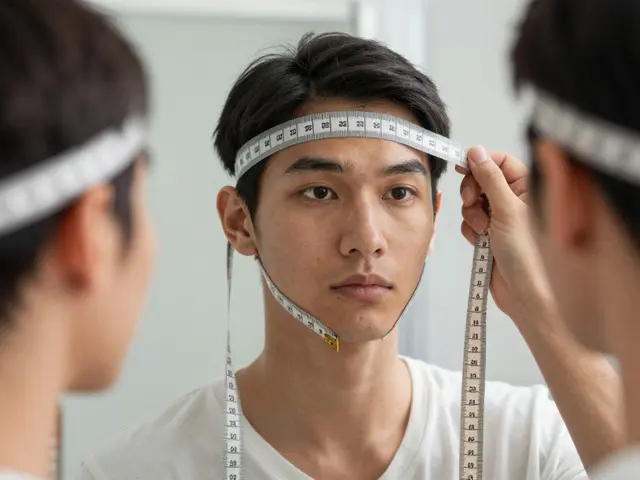
- Practice in front of a mirror. Watch where your forehead lands. If your eyebrows touch before your forehead, you’re tilting too far back.
- Use a small prayer board or a folded towel under your forehead if you have sensitive skin or pain.
- Ask someone to observe your prayer once. Sometimes, we don’t realize how we’re moving until we see it.
It might feel awkward at first. Your neck might strain. You might feel like you’re bending too far. But that’s part of the discipline. Sujood isn’t meant to be comfortable. It’s meant to humble you.

What Happens If You Miss It?
If you realize during prayer that your forehead didn’t touch the ground, you should repeat that sujood if you’re still in the same position. If you’ve already moved on, you don’t need to restart the whole prayer. But you should make up for it by being more careful next time.
Some scholars say if you did it unintentionally and didn’t know the rule, your prayer is still valid. But once you know, you’re responsible. Knowledge brings accountability.
The key is intention. If you’re trying to follow the Sunnah, you’ll make the effort. If you’re just going through the motions, you’ll find ways to cut corners. But prayer isn’t a checklist. It’s a connection.
Final Thought
There’s no shortcut in worship. You can’t substitute one body part for another just because it’s easier. Sujood with the eyebrows instead of the forehead doesn’t work. It’s not a gray area. It’s a clear rule.
Don’t let convenience override conviction. Your forehead is the bridge between your body and your soul in prayer. Let it touch the ground. Not your eyebrows. Not your hair. Not your hat. Just your forehead.
That’s how the Prophet did it. That’s how the believers have done it for over 1,400 years. And that’s how it should be done today.

Rakesh Kumar
December 14, 2025 AT 23:52I used to do this all the time-eyebrows on the mat, forehead hovering like I was trying to avoid a puddle. Then I got a thin prayer mat and suddenly my forehead was kissing the ground like it owed it money. Feels way more real now. Like actually bowing, not just pretending.
Also, the mirror trick? Game changer. I didn’t realize I was tilting my head back like I was trying to spot a fly on the ceiling until I saw it.
Don’t let convenience win. This ain’t yoga. This is submission.
Bill Castanier
December 16, 2025 AT 04:47The forehead must touch the ground. Not the eyebrows. Not the nose alone. Not the hairline. This is not ambiguous. The hadiths are clear. The scholars are unanimous. The act is physical, not symbolic.
Ronnie Kaye
December 17, 2025 AT 16:20So let me get this straight-you’re telling me if I’m praying on a cloud, I still gotta smush my forehead into it? What if I’m on a trampoline? Do I need a forehead-weighted anchor?
Jokes aside, this is actually beautiful. It’s not about the mat. It’s about the willingness to get low. To be humble. To put skin on the earth like the Prophet did. No shortcuts. No apps. Just forehead. Ground. Submission.
Priyank Panchal
December 19, 2025 AT 07:50People who try to skip the forehead are not just lazy-they’re disrespecting the entire structure of prayer. This isn’t a suggestion. It’s a command. If you can’t do it properly, sit down and learn. Don’t make up excuses like ‘my hairline is high’ or ‘the mat is soft.’ You think Allah cares about your comfort? He cares about your obedience.
Ian Maggs
December 19, 2025 AT 14:36It’s fascinating-how a single, minute physical act-forehead to ground-becomes the fulcrum of spiritual alignment. The eyebrow, being an organ of expression, of emotion, of movement, is inherently incompatible with the stillness required for true submission. The forehead, by contrast, is the anatomical nexus of will and surrender-it’s the part of us that, when pressed to earth, ceases to be merely human, and becomes, momentarily, a vessel.
And yet-we treat it like a checkbox. ‘Did I touch?’ ‘Was it enough?’-as if the soul can be measured in millimeters.
Perhaps the real sujood isn’t the contact-but the intention behind the willingness to make it.
Michael Gradwell
December 20, 2025 AT 18:27People who think eyebrows count are just making up Islam as they go. You don’t get to pick which rules to follow. If you’re not doing it right, your prayer is garbage. No sugarcoating. Stop fooling yourself.
Flannery Smail
December 22, 2025 AT 15:12Wait so if I put my forehead on a pillow but my eyebrows are on the floor… is that valid? Or do I need a forehead pillow and an eyebrow mat? This is getting complicated.
Emmanuel Sadi
December 23, 2025 AT 06:46Oh wow. So you’re telling me some people think they can pray with their eyebrows? That’s not just ignorance-that’s spiritual laziness with a side of arrogance. You think Allah doesn’t notice? You think He’s impressed by your ‘creative interpretation’ of worship? You’re not being spiritual. You’re being disrespectful. And you’re leading others astray. This isn’t a debate. It’s a warning.
Nicholas Carpenter
December 25, 2025 AT 04:34Thanks for laying this out so clearly. I’ve been praying for years and never realized how much I was cutting corners. I tried the mirror thing last night and wow-I was tilting back so far my nose was the only thing touching. I felt embarrassed. But also… lighter. Like I finally got it.
Small changes. Big impact. Just gotta keep trying.