

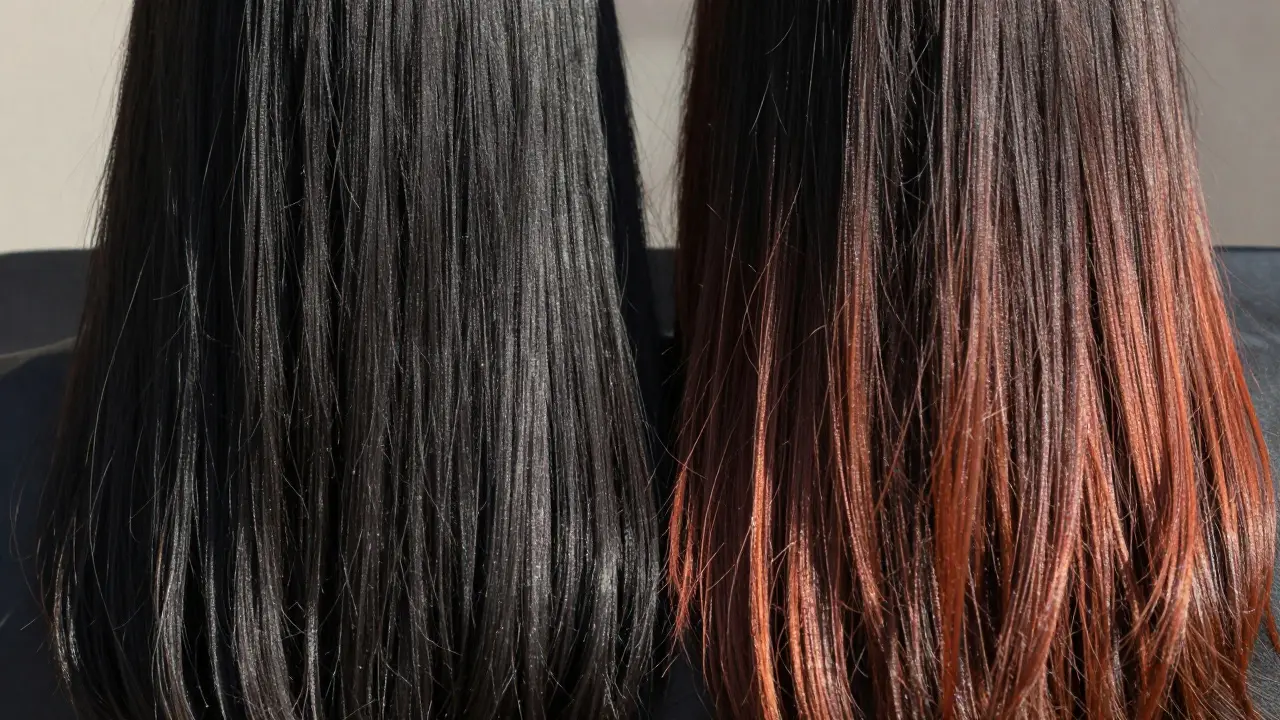
Black hair isn’t just ‘dark brown’ with extra pigment - but the difference is smaller than you think.
You’ve probably stood in front of a mirror and wondered: is my hair really black, or just really dark brown? Maybe you bought black hair dye and felt let down because it didn’t look as dramatic as you expected. Or maybe someone told you your hair was "dark brown," but you’ve always called it black. You’re not alone. This confusion happens every day - in salons, at the beach, in selfies under fluorescent lights.
The truth? Black hair is darker than dark brown hair. But not by much. And under normal lighting? You might not even notice.
Here’s how scientists measure the difference
Professional colorists and trichologists don’t guess - they measure. Hair color is ranked on a scale from 1 (black) to 10 (platinum blonde), based on how much light the hair reflects. True black hair sits at level 1. Dark brown? Level 3. That’s a two-level gap, which sounds big - until you realize that the jump from dark brown (level 3) to medium brown (level 5) is visually more obvious than black to dark brown.
Here’s what the numbers actually mean:
- Black hair reflects only 2-5% of visible light.
- Dark brown hair reflects 8-12%.
That’s a 15-20% difference in light reflection. In lab tests using spectrophotometers, black hair shows an L* (lightness) value of 15-22. Dark brown? 23-28. The human eye can detect a difference of about 5-8 points on this scale. So yes, black hair is objectively darker - but only by a narrow margin.
Why you can’t always tell the difference
Try this: Look at your hair under your bathroom light. Now look at a friend’s hair. Can you tell which is black and which is dark brown? Most people can’t. A 2022 study from the University of Southern California showed that 68% of participants couldn’t tell the difference when viewing the two shades separately under indoor lighting.
But change the conditions - step outside into direct sunlight - and everything changes. Black hair stays uniformly dark. No warmth. No red. No gold. It just absorbs light. Dark brown hair? It wakes up. You’ll start seeing hints of red, auburn, or even copper, especially near the ends or where the sun hits. That’s because dark brown hair has slightly less eumelanin and a tiny bit of pheomelanin - the pigment that adds warmth.
One Reddit user described it perfectly: “I thought my hair was black until I stood next to my Korean friend at the beach. Mine showed reddish tones. Hers? Pure black. No variation.”
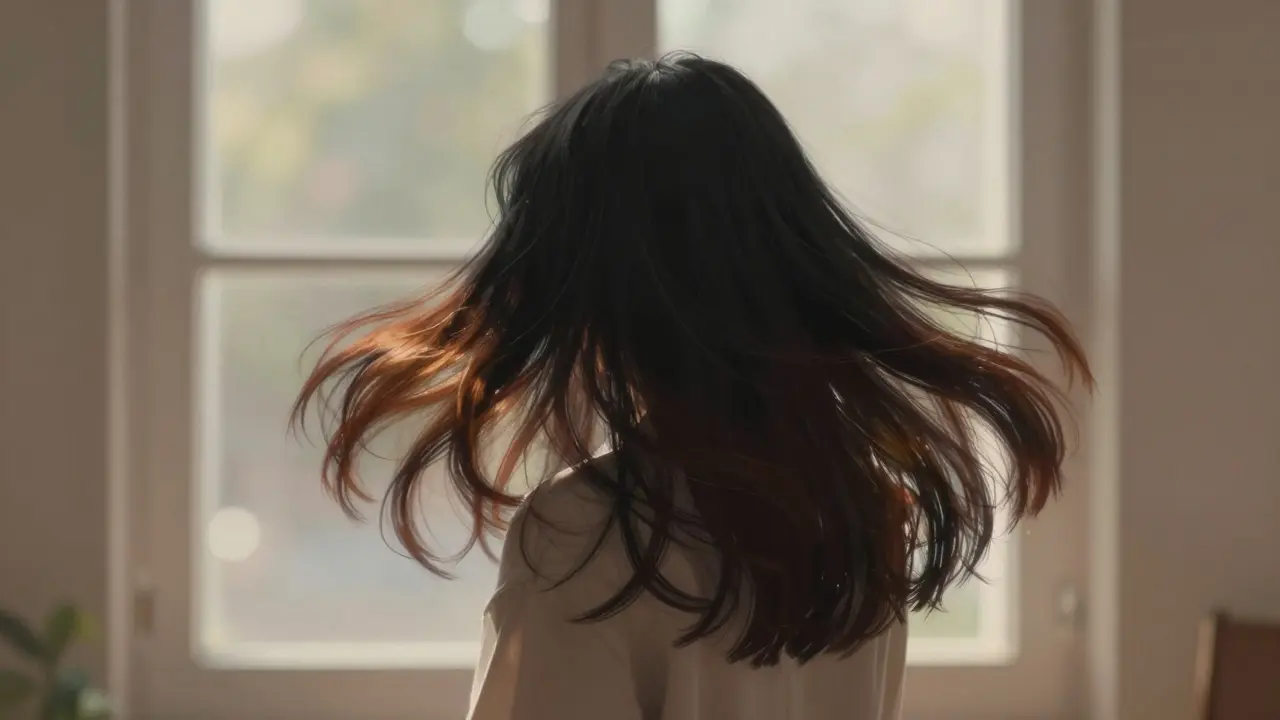
What’s really in your hair?
Genetics play a big role. True black hair - the kind that looks black under every light, in every season - is genetically rare outside of East Asian populations. Most people in Western countries who think they have black hair actually have very dark brown hair. A 2024 American Academy of Dermatology report confirmed that the majority of people calling their hair “black” in the U.S. have hair that’s technically level 2 or 3 on the color scale.
Why? Because of the MC1R gene. This gene affects how much eumelanin (the dark pigment) your body produces. People with certain variants of this gene naturally make slightly less eumelanin - enough to make their hair look black indoors, but reveal warm undertones in sunlight.
How to test your own hair
Don’t trust the mirror. Don’t rely on how you’ve always described it. Try this simple test:
- Wash and dry your hair. No product. No shine spray.
- Go outside on a bright, sunny day. Avoid shade.
- Hold a strand of hair against a pure black surface - like a black leather wallet or a black phone case.
- Look closely. Do you see any warmth? Any red, gold, or brown tones?
If you see even a hint of color variation? You’ve got dark brown hair. If it looks like a hole in the light - no reflection, no warmth, no dimension - then you’ve got true black hair.
Professional colorists also use a trick: compare your hair to a strand of known black hair (like someone with East Asian heritage). Side by side, the difference becomes obvious. That’s why salons keep reference swatches.
Why this matters when dyeing your hair
Here’s where this gets expensive. Every year, people spend $287 million on corrective hair color because they bought the wrong shade. They see “black” on the box and assume it’ll look like their favorite celebrity’s hair. But if your base is dark brown, applying level 1 dye won’t give you that jet-black, high-contrast look. It’ll just look… darker brown.
And here’s the kicker: black hair dye fades faster. It’s not because it’s “better” - it’s because it’s harder to maintain. Black dyes are packed with pigments that wash out quickly, often turning reddish or brassy. That’s why 37% of people who buy black hair dye return it - they don’t like how it looks after a few washes.
Dark brown hair? It holds color better. It’s more forgiving. And if you want to go darker, you only need to go one level down - not two.
What the pros are doing differently
Top colorists aren’t using plain black anymore. They’re using “near-black” shades - levels 1.5 to 1.8 - that look black in most lighting but have enough depth to avoid looking flat or artificial. L’Oréal’s “Espresso Black” and Schwarzkopf’s “INVISIBLE BLACK” are designed to mimic natural black hair without the harshness of pure level 1 dye.
These new formulas use micro-encapsulated violet pigments to neutralize warmth without making hair look ashy. That’s why they’re popping up in salons and online stores. They’re not trying to make you look like you’ve dipped your hair in ink. They’re trying to make you look like you were born with it.
What to do if you’re unsure
If you’re thinking about dyeing your hair and you’re stuck between black and dark brown, here’s the rule:
- Go one level lighter than you think you need.
- Test it on a small section first.
- Wait 48 hours. Watch how it looks in sunlight.
- If it looks too dark or flat, you can always lighten it later.
- If it looks perfect? You got it right.
And if you’re just trying to understand your natural hair? Stop calling it black unless it truly disappears in sunlight. Call it dark brown. It’s more accurate. And honestly? It’s more beautiful.
It’s not about being right - it’s about knowing what works for you
At the end of the day, labels don’t change how your hair feels or how it behaves. Whether you call it black or dark brown, what matters is how it looks in the light you live in - your kitchen, your office, your morning walk.
Most people don’t need pure black. They need depth. They need richness. They need a shade that doesn’t look like a wig.
So next time you’re in front of the mirror, ask yourself: Is this hair black - or is it just the kind of dark brown that makes people ask if you dye it?
Can you tell the difference between black and dark brown hair with the naked eye?
Yes - but only under the right conditions. Indoors or in dim light, the difference is barely noticeable. In direct sunlight, black hair stays uniformly dark with no warmth, while dark brown hair often shows red, copper, or gold undertones. Side-by-side comparisons make the difference obvious to most people.
Is black hair actually rare in Western countries?
Yes. True black hair (level 1) is genetically uncommon outside of East Asian populations. Most people in the U.S. and Europe who say they have black hair actually have very dark brown hair (level 2-3). Genetic studies show that MC1R gene variants in non-Asian populations naturally produce slightly less eumelanin, making pure black hair rare.
Why does black hair dye fade to red or orange?
Black hair dyes contain high levels of pigment to achieve deep color, but these pigments are unstable. As they fade, the red and orange undertones in the hair’s natural pigment become visible. This is why sulfate-free shampoos and color-depositing conditioners are recommended - they slow down fading and help neutralize warmth.
Should I dye my dark brown hair black?
Only if you want a high-maintenance look. Black dye requires frequent touch-ups, special products, and careful washing. If you want depth and richness without the upkeep, consider a level 1.5-1.8 shade - often labeled “espresso black” or “near-black.” These look black in most lighting but blend more naturally with your base color.
Do hair color apps really work?
Yes - but not perfectly. Apps like L’Oréal’s Color Expert use smartphone cameras to analyze hair color and have been shown to correctly identify 61% of users who mislabel their hair as “black” when it’s actually dark brown. They’re useful for guidance, but not replacements for professional analysis under natural light.



Scott Perlman
February 3, 2026 AT 08:32selma souza
February 5, 2026 AT 08:02Karl Fisher
February 7, 2026 AT 01:11Frank Piccolo
February 8, 2026 AT 21:42Buddy Faith
February 10, 2026 AT 11:30Eva Monhaut
February 11, 2026 AT 16:42mark nine
February 12, 2026 AT 16:03Rakesh Kumar
February 14, 2026 AT 13:58Sandi Johnson
February 16, 2026 AT 07:42James Boggs
February 18, 2026 AT 03:00Glenn Celaya
February 18, 2026 AT 10:25Madeline VanHorn
February 18, 2026 AT 15:22Tony Smith
February 20, 2026 AT 12:09