

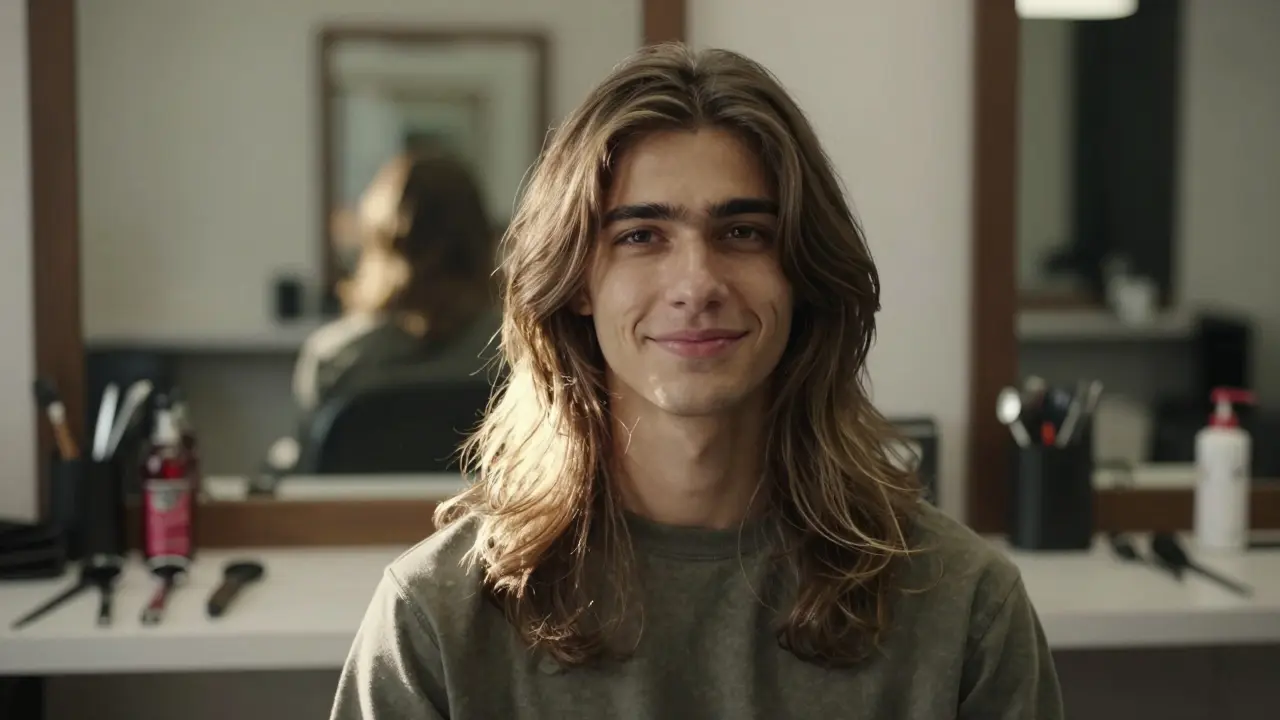
There’s a quiet revolution happening in barbershops, salons, and college dorms: guys are growing out their hair - not just to look cool, but to feel free. Long, soft layers, wispy bangs, gentle curls, even pastel highlights - styles once labeled "girlish" are now showing up on men’s heads across the country. And it’s not just fashion. It’s identity.
What Does "Girlish Hairstyle" Even Mean?
The term "girlish hairstyle" isn’t a technical category. It’s a social label. It usually refers to haircuts or styles that have been culturally coded as feminine: long hair, layered cuts, soft bangs, curls, ponytails, braids, or even hair dyed in pastel tones. But here’s the thing - those styles don’t belong to any gender. They belong to hair.
Think about it. A long bob? Worn by women for decades. Now worn by men like Harry Styles, Jaden Smith, and Timothée Chalamet. Soft waves? Once seen as "romantic" for women. Now seen as "artistic" on men. The difference isn’t in the cut - it’s in who’s wearing it.
When a guy wears a hairstyle that’s been labeled "girlish," he’s not copying women. He’s rejecting the idea that certain looks are off-limits. And that’s powerful.
Why Do Men Choose These Styles?
Some men grow out their hair because it’s low-maintenance. Others do it because they like how it feels - the weight, the movement, the way it frames their face. For many, it’s about self-expression.
Take Marcus, 28, from Asheville. He had a buzz cut for ten years. Then he grew his hair out over six months. "I didn’t want to look like a guy who was trying to be something else," he says. "I just wanted to look like me. And me has longer hair now. So what?"
Studies from the University of California, Los Angeles show that men who wear non-traditional hairstyles report higher levels of personal authenticity and lower social anxiety. Not because they’re defying norms for attention - but because they finally stopped hiding.
There’s no single reason. But the common thread? Comfort. Confidence. Freedom.
How to Pull Off a "Girlish" Hairstyle as a Guy
It’s not about copying a woman’s look. It’s about adapting it to your face, your texture, and your vibe.
- Know your hair type. Fine, straight hair? Try soft layers and side-swept bangs. Thick, curly hair? Let it fall naturally - no need to tame it. Coarse hair? A blunt cut can look sharp, not "girly."
- Keep it clean. Long hair on men looks intentional when it’s well-maintained. Wash it regularly. Use conditioner. Trim the ends every 6-8 weeks to avoid split ends.
- Style with purpose. Don’t just let it hang. Use a light pomade or sea salt spray to add texture. A middle part? Fine. A deep side part? Also fine. A loose ponytail? Absolutely.
- Own it. The biggest mistake? Looking like you’re apologizing for your hair. Stand tall. Don’t touch it nervously. Let it be what it is.
And if someone says, "That’s a girl’s haircut"? Smile. Say, "Yeah. And it looks good on me."
Breaking the Stereotypes - One Strand at a Time
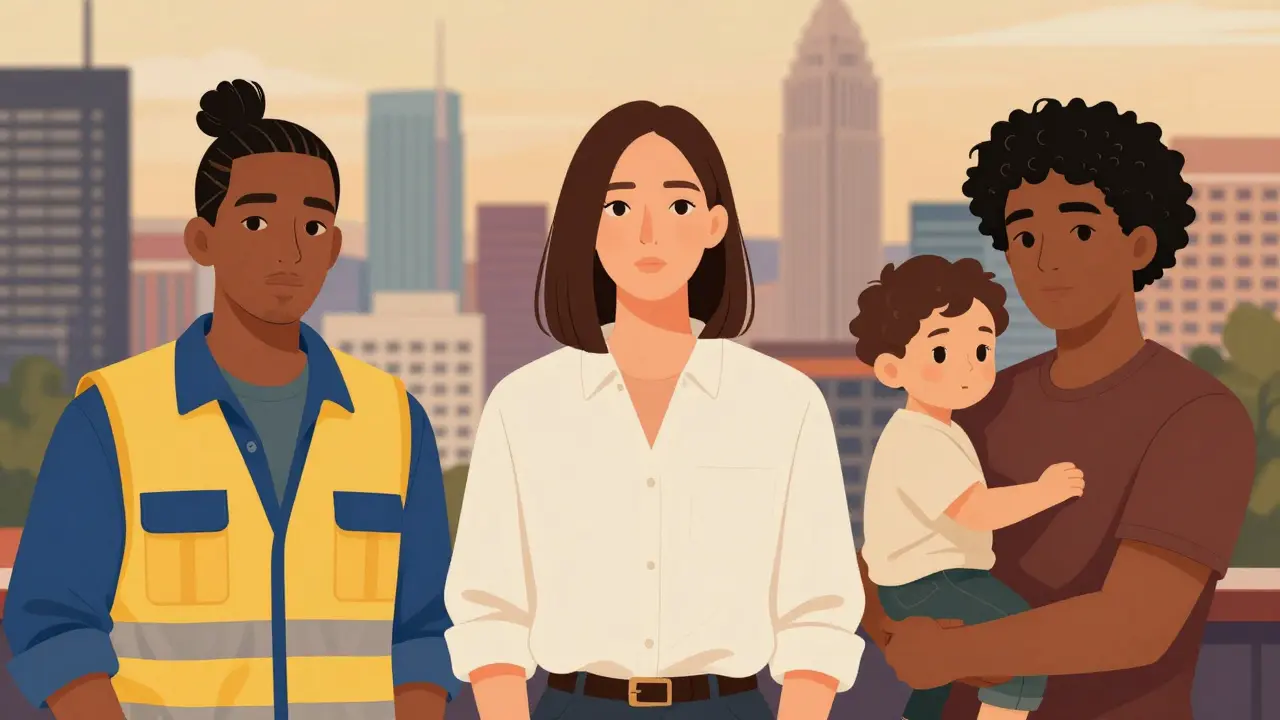
For generations, men’s hair was simple: short, neat, no frills. That wasn’t a rule - it was a restriction. And it came with invisible consequences. Men who wanted to experiment with texture, length, or color were told they were "confused," "trendy," or worse - "not real men."
But real men aren’t defined by their haircuts. Real men are defined by how they treat others, how they show up, and how they live their truth.
Today, more men are choosing hair that reflects who they are - not who society says they should be. And it’s changing the game.
Brands like Dove Men+Care and American Crew now feature men with long hair in their ads. Salons in cities like Nashville, Portland, and Austin have dedicated "gender-neutral styling" sections. Even military bases are updating grooming policies - some now allow long hair if it’s neatly tied back.
This isn’t a trend. It’s a correction.
What About Workplaces and Social Pressure?
Yes, some workplaces still have outdated rules. Some people still stare. Some relatives still ask, "When are you going to cut it?"
But here’s the reality: those voices are fading. A 2024 survey by the National Association of Professional Men found that 68% of employers now say hairstyle doesn’t impact hiring decisions - as long as it’s clean and professional.
And in schools? Teachers report fewer incidents of bullying around hair than five years ago. Kids are growing up seeing more variety. They’re learning that hair doesn’t define gender.
Still, if you’re in a conservative environment, you can start small. Grow it out slowly. Keep it tied back at work. Use a neutral color. Then, when you’re ready, let it breathe.
There’s no rush. Your hair, your timeline.
It’s Not About Gender - It’s About Choice
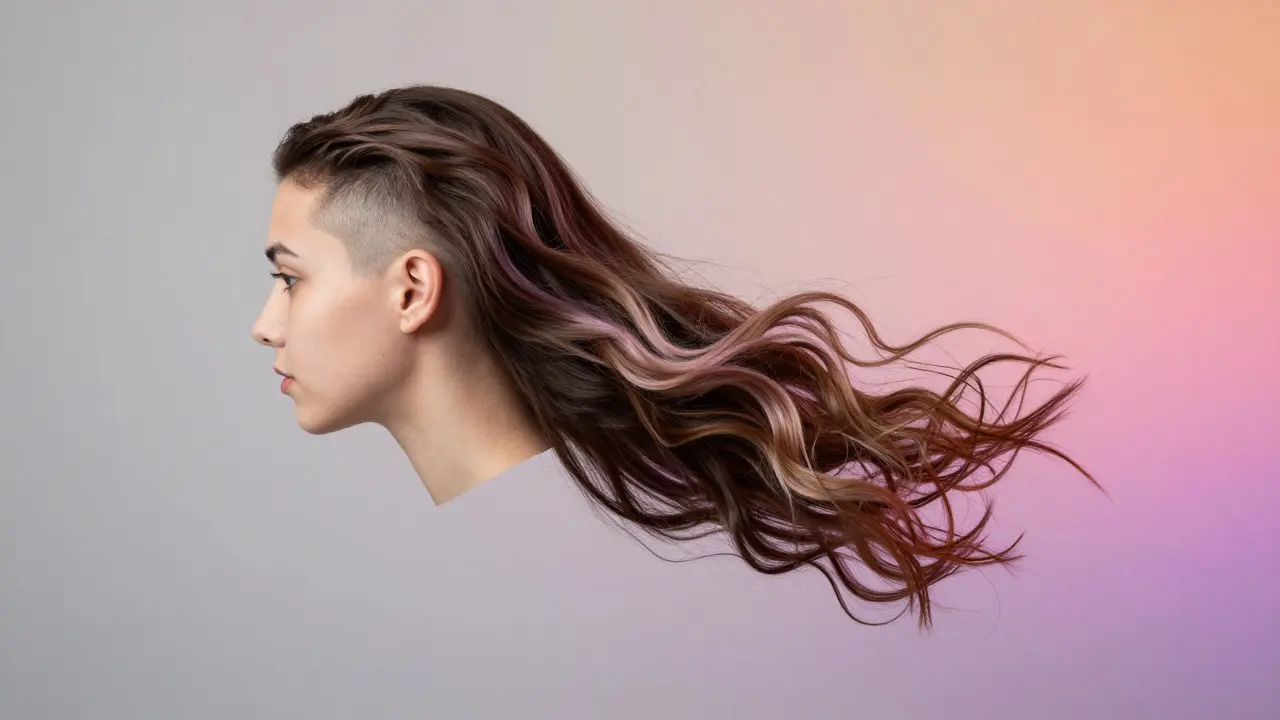
Let’s be clear: this isn’t about becoming a woman. It’s not about being androgynous. It’s not about performance. It’s about freedom.
Men have been told for too long that their hair has to be short to be strong, neat to be serious, simple to be masculine. But strength isn’t in a buzz cut. Seriousness isn’t in a flat top. Masculinity isn’t a hairstyle.
It’s in how you carry yourself. How you speak. How you listen. How you show up - with your hair long, short, curly, straight, dyed, or natural.
If you want a girlish hairstyle? Go for it. If you want to wear it with confidence? Even better.
Your hair is yours. Not society’s. Not your dad’s. Not your ex’s. Not your barber’s.
It’s yours.
Real Examples, Real People
Here are three men who wear styles labeled "girlish" - and they don’t care what you call them:
- Diego, 31, Atlanta: Long, wavy hair, dyed ash brown. Works in construction. Keeps it in a low bun at the job site. "My tools don’t care if my hair’s long. My coworkers? They started asking me how I style it. Now we swap tips."
- Rafael, 24, Chicago: Shoulder-length, straight hair with a middle part. Works in graphic design. Wears it loose. "I used to hide my hair under beanies. Now I wear it out. My clients say I look more creative. I think I just look like myself."
- James, 45, Seattle: Shoulder-length curls, natural black. A father of two. "My daughter says I look like a wizard. My son says I’m cool. That’s all I need."
They don’t ask permission. They don’t explain. They just live.
Final Thought: Hair Doesn’t Define You - But It Can Set You Free
There’s no right way to wear your hair. Only the way that feels true to you.
If you’ve been thinking about growing it out - or trying a new cut - don’t wait for permission. Don’t wait for the world to catch up. The world is already changing. You just have to be brave enough to let your hair do the talking.
It’s not girlish. It’s not masculine. It’s not binary.
It’s just hair.
And you get to decide what it looks like.
Is it okay for a guy to have long hair?
Yes. There’s no rule that says men must have short hair. Long hair on men has been worn for centuries across cultures - from ancient Greeks to Native American tribes to 1970s rock stars. Today, it’s a personal choice, not a gender statement. What matters is how you feel in it.
Will people judge me if I grow my hair out?
Some might - especially if they’re used to traditional styles. But judgment says more about them than you. Most people are too busy worrying about their own hair to care about yours. And as more men wear longer styles, the stigma keeps shrinking. Confidence makes the biggest difference.
What’s the best way to start growing out short hair?
Start by trimming your ends every 6-8 weeks to avoid split ends and keep your hair healthy. Avoid cutting it yourself during the transition - let a stylist who understands growth phases help you shape it. Use a leave-in conditioner and avoid heat tools until your hair is strong enough. Be patient. It takes 6-12 months to get past the awkward stage.
Can I still look professional with a girlish hairstyle?
Absolutely. Professionalism isn’t about hair length - it’s about neatness and grooming. Tie long hair back if needed. Wash it regularly. Keep it free of tangles. Many corporate environments now accept long hair on men, especially if it’s clean and styled with intention. Look at CEOs, lawyers, and doctors with long hair - they’re everywhere.
Are there any hairstyles that work better for men with round faces?
Yes. Long layers that start below the jawline add vertical length. Side-swept bangs draw attention away from width. Avoid blunt cuts at the chin - they can make your face look wider. Instead, go for movement and texture. A loose ponytail or half-up style also helps elongate the face.

kelvin kind
December 22, 2025 AT 04:39My cousin has shoulder-length hair and works as a CFO. No one cares. He just washes it and goes.
lucia burton
December 23, 2025 AT 15:35The cultural codification of aesthetics into binary gendered frameworks is a deeply entrenched sociolinguistic artifact rooted in post-industrial patriarchal norms. When men adopt stylistic markers historically assigned to femininity, they’re not merely engaging in sartorial expression-they’re destabilizing the hegemonic gaze that polices bodily autonomy through superficial signifiers. This isn’t fashion. It’s epistemic resistance.
The data from UCLA corroborates what qualitative ethnographies have long suggested: authenticity in self-presentation correlates directly with reduced cognitive dissonance and elevated psychological well-being. The haircut isn’t the variable-it’s the proxy for agency.
Barbershops are becoming sites of reclamation. The salon chair is no longer a gendered institution. It’s a neutral zone of self-actualization. And the resistance? It’s not from the young. It’s from the elderly who still believe grooming = morality.
Corporate policies are catching up because HR departments now understand that compliance with arbitrary aesthetic standards doesn’t correlate with productivity. In fact, it suppresses innovation. People who aren’t policing their hair are more likely to police their biases.
Let’s not romanticize this as ‘bravery.’ It’s not bravery to exist as yourself. It’s basic human dignity. The real anomaly is the expectation that men must shrink themselves to fit a 1950s mold.
And yes, the ‘awkward stage’ is real. But it’s temporary. And it’s not ugly-it’s transitional. Growth isn’t linear. Neither is identity.
Stop asking if it’s ‘appropriate.’ Ask if it’s authentic. The rest is noise.
Denise Young
December 24, 2025 AT 14:07Oh wow, another ‘hair is freedom’ manifesto. How original. Let me guess-next you’ll tell us that wearing socks with sandals is a revolutionary act of self-expression? The performative wokeness here is almost cute. You’re not breaking stereotypes-you’re just swapping one set of rules for another. ‘Girlish’ is still a label you’re clinging to. Just call it ‘long hair’ and move on.
Also, ‘real men’? Please. You’re not defining masculinity. You’re just trying to sound profound while wearing a silk shirt and a middle part. The fact that you need to justify this with ‘studies’ and ‘CEOs’ says more than you realize.
My dad had a buzz cut. He fixed cars, raised three kids, and never once said his hair defined his worth. Guess what? He was right. You don’t need a ponytail to be a good person.
Sam Rittenhouse
December 24, 2025 AT 20:34I’ve seen guys grow their hair out and it’s one of the most quietly powerful things you can do. Not because it’s bold or shocking-but because it’s quiet. No fanfare. No manifesto. Just… letting it grow.
I remember my brother doing it after his divorce. He didn’t say anything. Just stopped cutting it. Six months later, he walked into family dinner with his hair down to his shoulders. No one said a word. But we all noticed. And we all felt it.
It’s not about being ‘girlish’ or ‘masculine.’ It’s about not being afraid to change. And that’s something every man should feel free to do.
There’s a dignity in not explaining yourself. In just being. And that’s what these guys are doing.
Peter Reynolds
December 25, 2025 AT 00:06long hair on men is fine
just keep it clean
no need to make it a thing
Fred Edwords
December 25, 2025 AT 00:19While the sentiment expressed herein is largely laudable, it is imperative to clarify several semantic and syntactic inaccuracies. The term 'girlish' is not, in fact, a 'social label'-it is a colloquial descriptor rooted in historical gendered associations, which, while increasingly obsolete, remain linguistically embedded. Furthermore, the assertion that 'styles don't belong to any gender-they belong to hair' is ontologically sound, yet pragmatically idealistic, as social perception does not operate on abstract principles, but on conditioned responses.
Moreover, the reference to 'studies from UCLA' lacks citation; without DOI or journal attribution, this constitutes an appeal to authority without evidentiary rigor. Similarly, the claim that '68% of employers now say hairstyle doesn’t impact hiring decisions' is statistically compelling-but without sample size, methodology, or confidence interval, it is merely an anecdote dressed in percentages.
That said, the underlying ethos-that personal autonomy in grooming should be unencumbered by archaic norms-is not only correct, but essential to the evolution of inclusive social structures. I commend the author for this contribution, and urge future iterations to anchor assertions in verifiable data.
Sarah McWhirter
December 25, 2025 AT 13:12Let me guess-you’re one of those people who think this is all about ‘freedom’ and ‘choice’… but what if it’s just corporate marketing? Dove Men+Care didn’t suddenly care about your hair. They saw a demographic shift and monetized it. Same with American Crew. Same with every ‘gender-neutral’ salon. This isn’t rebellion-it’s rebranding.
And don’t get me started on the ‘real men’ nonsense. You think you’re breaking the system? Nah. You’re just the new face of the same old machine. The system doesn’t care if you have long hair. As long as you buy the right conditioner, wear the right shirt, and post it on Instagram, you’re still playing the game.
Meanwhile, real men are working two jobs, raising kids, and still getting paid less than women for the same work. But hey-your middle part is ‘artistic.’
It’s not about hair. It’s about distraction. And you’re the distraction.
Ananya Sharma
December 27, 2025 AT 10:18You call this a revolution? Please. In India, men have worn long hair for centuries-sadhus, rishis, kings, warriors. And yet, here you are, acting like you discovered it. Western individualism at its finest: take something ancient, strip it of context, slap a hashtag on it, and call it progress.
And who are you to say this is about ‘freedom’? What about the men in conservative communities who get beaten for growing their hair? What about the boys in schools who get suspended? You’re not talking about liberation-you’re talking about privilege.
And don’t even get me started on the ‘pastel highlights’ nonsense. That’s not identity. That’s a TikTok trend dressed up as philosophy. You’re not rejecting gender norms-you’re just performing a new version of them for likes.
Real change doesn’t come from Instagram captions. It comes from systemic shifts. Until men in rural America aren’t fired for having shoulder-length hair, this is just aesthetics with a moral veneer.
And let’s not pretend this is new. Men wore long hair in the 70s. They got mocked then too. Now it’s ‘cool.’ Because capitalism needs a new way to sell shampoo.
Don’t mistake trend for truth. Don’t mistake visibility for justice.
Ian Cassidy
December 27, 2025 AT 17:19the awkward stage is real. 3 months in you look like a confused raccoon.
after 8 months? you look like a wizard.
just keep washing it.
Zach Beggs
December 28, 2025 AT 08:47my roommate grew his out last year. now he’s got this wild curly thing down to his shoulders. people stare. he doesn’t care. he’s the calmest guy I know.
Denise Young
December 29, 2025 AT 13:47And yet here we are, turning a simple haircut into a TED Talk. The fact that you need to write a 1200-word essay to justify a hairstyle says everything. I don’t need a study to tell me that people are weird about hair. I just need to look at my uncle’s face when I showed up with bangs.
Maybe the real revolution isn’t the hair. It’s that we’re finally tired of over-explaining ourselves.