

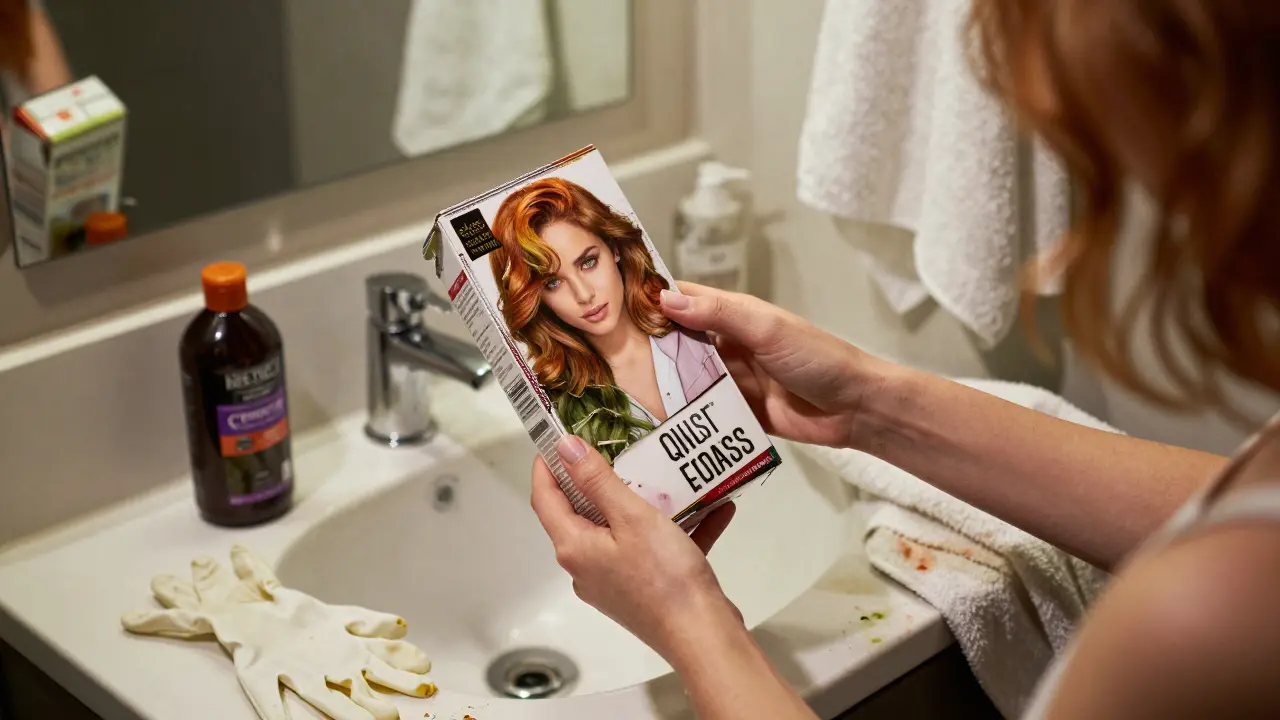
Let’s cut to the chase: drugstore box hair color is not the same as salon hair color. Not even close. You might save $50 upfront, but if your hair ends up orange, patchy, or brittle, you’ll end up spending way more to fix it. And that’s not even counting the time, stress, and ruined towels.
Back in 2023, I helped a client in Houston who tried to go from dark brown to platinum blonde using a box dye she bought on sale. She thought, "It’s just color, how hard can it be?" Two weeks later, she walked into my salon with hair that looked like a burnt caramel disaster. The roots were brassy, the mid-lengths were greenish, and the ends were snapping off. She didn’t need a touch-up-she needed a full repair treatment, which cost her $320. That’s more than three salon visits.
It’s Not Just Color-It’s Chemistry
Box dyes are made with one-size-fits-all formulas. They assume your hair is average-medium texture, no previous color, no sun damage, no gray. But real hair? It’s never average. Your hair might be porous from heat styling, resistant because of relaxer history, or fine from years of bleaching. Box dyes can’t adjust. They dump the same chemicals on everyone.
Salon color? It’s custom. A professional mixes pigments based on your hair’s current condition, porosity, and natural undertones. They know that if your hair is high-porosity from past coloring, it’ll absorb color too fast and turn muddy. So they adjust the developer strength, use a toner to neutralize warmth, and apply the color in sections to avoid overlap. Box dyes don’t have that option. You get what’s in the bottle-no tweaks, no science, no second chances.
Gray Coverage? Don’t Even Try
If you’re covering gray, this is critical: box dyes are terrible at it. Most gray hair is coarse and resistant. It needs stronger lift and deeper penetration to take color. Box dyes often use weaker formulas to be "gentler," which means they leave behind patchy, streaky gray. I’ve seen clients with 70% gray who used box dye for six months and still had visible roots that looked like a zebra stripe.
Salon professionals use professional-grade formulas designed specifically for gray coverage. Products like Madison Reed a professional-grade, ammonia-free hair color brand used in salons and available for at-home use with expert guidance have pigments that penetrate thick gray strands without the harsh ammonia smell. But even their at-home kits are paired with instructions and tools designed for precision-something you won’t find in a $10 box.
Application Is Everything
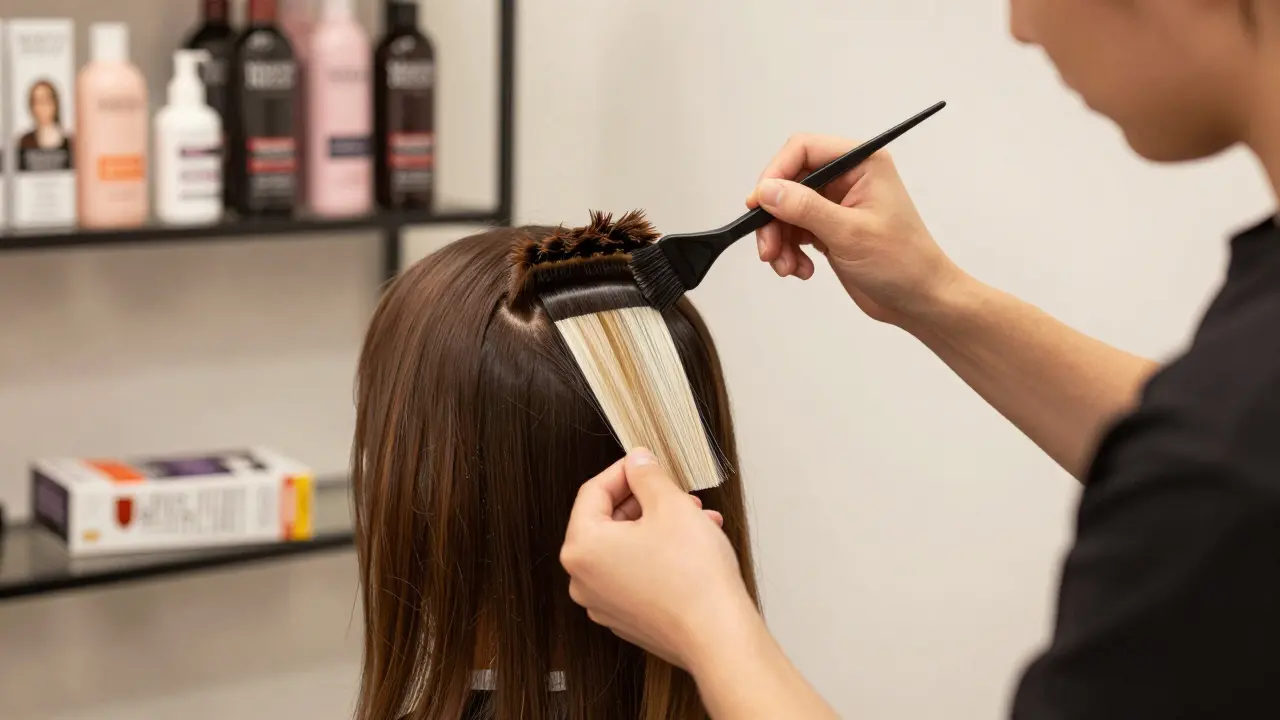
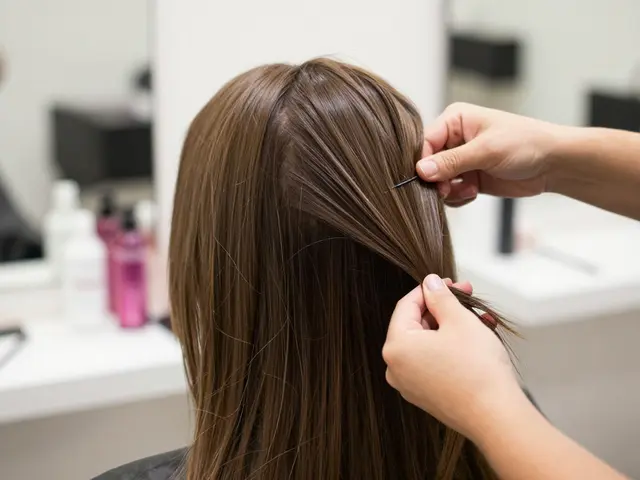
Applying hair color isn’t like painting a wall. You can’t just slop it on and hope for the best. Salon stylists section hair into precise parts-usually 4 to 8 sections-to ensure even coverage. They use applicator brushes, foils, and timers to control how long the color sits. They know that the roots process faster than the ends, so they apply color in stages.
With a box dye? You get a plastic applicator that leaks, a pair of gloves that tear, and a timer that’s either too short or too long. Most people rush. They leave it on for 15 minutes when it needs 30. Or they forget to rinse thoroughly, leaving residue that turns their hair dull. I’ve seen clients with color that’s darker on top and lighter on the bottom because they didn’t section properly. It’s not just messy-it’s permanent.
Longevity: What Really Happens After 4 Weeks?
Box dyes fade fast. Like, really fast. The pigment molecules are larger and sit on top of the hair shaft instead of bonding inside. That means they wash out quickly, leaving behind a muddy, dull tone. After three washes, your rich chestnut brown might turn into a washed-out ginger. And if you’ve layered color over time? You get buildup. Dark patches. Uneven tones. It’s like painting over old paint without sanding first.
Salon color? The pigments are smaller and designed to penetrate the cortex. They’re stabilized with conditioning agents that lock in color and reduce fading. A good salon color can last 6-8 weeks with proper care. Plus, professionals give you a post-color routine-shampoo recommendations, color-safe conditioners, heat protectants. Box dyes? They don’t tell you anything. Just "rinse and go."
The Hidden Cost of "Saving Money"
Yes, a box dye costs $12. A salon visit costs $150. But here’s the math: if you mess up, you’ll need a corrective color. That’s $100-$300. If you do it twice? That’s $200-$600. And if your hair is damaged? You’ll need deep treatments, protein rebuilders, maybe even a trim every 6 weeks. That adds up.
Salon color is an investment. It lasts longer, looks better, and keeps your hair healthier. You’re not just paying for the color-you’re paying for expertise, precision, and damage control. One salon visit can prevent three box dye disasters.
When Box Dye Might Be Okay
Let’s be fair-box dyes aren’t all bad. If you’re just touching up roots between salon visits and your hair is in great condition, they can work. Same if you’re experimenting with a temporary change, like a red tint for Halloween. Or if you’re on a tight budget and just need to cover a few grays until you can afford a salon.
But here’s the rule: if your hair has been colored before, has highlights, is chemically treated, or is gray-heavy, skip the box. And if you’ve ever had a bad experience with a box dye? Don’t try again. You’re not a guinea pig. Your hair deserves better.
What You’re Really Buying
When you buy a box dye, you’re buying convenience. When you go to a salon, you’re buying confidence. You’re buying a result that matches your skin tone, your lifestyle, and your hair’s needs. You’re buying someone who’s seen 100 different hair types and knows exactly what to do.
Salon professionals don’t just pour color. They diagnose. They adjust. They protect. They follow up. They know that color isn’t just about shade-it’s about health, tone, and how light hits your face. A good stylist will tell you if your chosen color will make you look washed out or if it’ll clash with your undertones. Box dyes? They just say "for all hair types."
| Feature | Box Dye | Salon Color |
|---|---|---|
| Formula | One-size-fits-all, harsh chemicals | Custom-mixed, gentler ingredients |
| Gray Coverage | Patchy, inconsistent | Even, deep penetration |
| Application | Basic applicator, no sectioning | Professional tools, precise timing |
| Longevity | Fades in 3-4 weeks | Lasts 6-8 weeks |
| Damage Risk | High-dryness, breakage | Low-conditioning agents included |
| Corrective Options | None-must go to salon anyway | Immediate fixes available |
Final Verdict
If you want color that lasts, looks natural, and doesn’t destroy your hair? Go to a salon. If you’re okay with a temporary fix that might leave your hair damaged and your color looking like a traffic cone? Then go ahead and buy the box.
There’s no shame in saving money. But there’s shame in spending more later because you thought you were saving. Your hair isn’t a project. It’s part of you. Treat it like it matters.
Can I use a box dye to touch up my roots if I got my hair colored at a salon?
Only if you’re very careful. If your salon color was done with a professional formula, using a box dye on roots can cause patchiness or unwanted tones. It’s better to use a root touch-up product from the same brand your stylist used-or better yet, book a $40 root touch-up appointment. It’s cheaper than fixing a mismatch.
Why do some people say box dyes work fine for them?
They usually have virgin hair-no previous color, no damage, no gray. Their hair is naturally porous enough to take the dye evenly. But even then, the color fades faster and doesn’t blend well with natural highlights. It works for a few weeks, but it’s not sustainable.
Is Madison Reed really better than drugstore brands?
Yes, if you’re using it correctly. Madison Reed is formulated like salon color-ammonia-free, infused with keratin and oils, and designed for even coverage. But it’s still an at-home kit. Without professional application, you risk uneven results. It’s a step up from L’Oréal, but not a replacement for a stylist.
How often should I go to the salon if I color my hair?
Every 4 to 6 weeks for full color. If you’re only covering gray, every 6 to 8 weeks. If you have highlights, every 8 to 10 weeks. Going too often can damage hair. Going too long leads to harsh regrowth lines. A good stylist will tell you the right schedule for your hair type.
Can I fix a box dye disaster myself?
Almost never. Trying to correct a box dye mistake with another box dye almost always makes it worse. If your hair is orange, green, or brassy, you need a professional toner or color correction. Don’t waste money on more boxes-book a consultation instead.
Next Steps
If you’ve been using box dyes and your hair feels dry, looks dull, or won’t hold color? Stop. Start with a deep conditioning treatment. Then, book a consultation with a stylist. Bring your box dye box with you-they’ll tell you exactly what went wrong and how to fix it. You don’t need to go back to square one. You just need the right information.
And if you’re thinking about trying a new color? Ask your stylist to do a strand test. It’s free, takes five minutes, and saves you from a $200 disaster. Your hair will thank you.



Seraphina Nero
March 10, 2026 AT 17:27Megan Ellaby
March 10, 2026 AT 17:30Rahul U.
March 11, 2026 AT 10:06E Jones
March 13, 2026 AT 02:03Barbara & Greg
March 14, 2026 AT 23:44selma souza
March 15, 2026 AT 04:33Frank Piccolo
March 16, 2026 AT 13:22James Boggs
March 17, 2026 AT 07:35Addison Smart
March 17, 2026 AT 12:53