

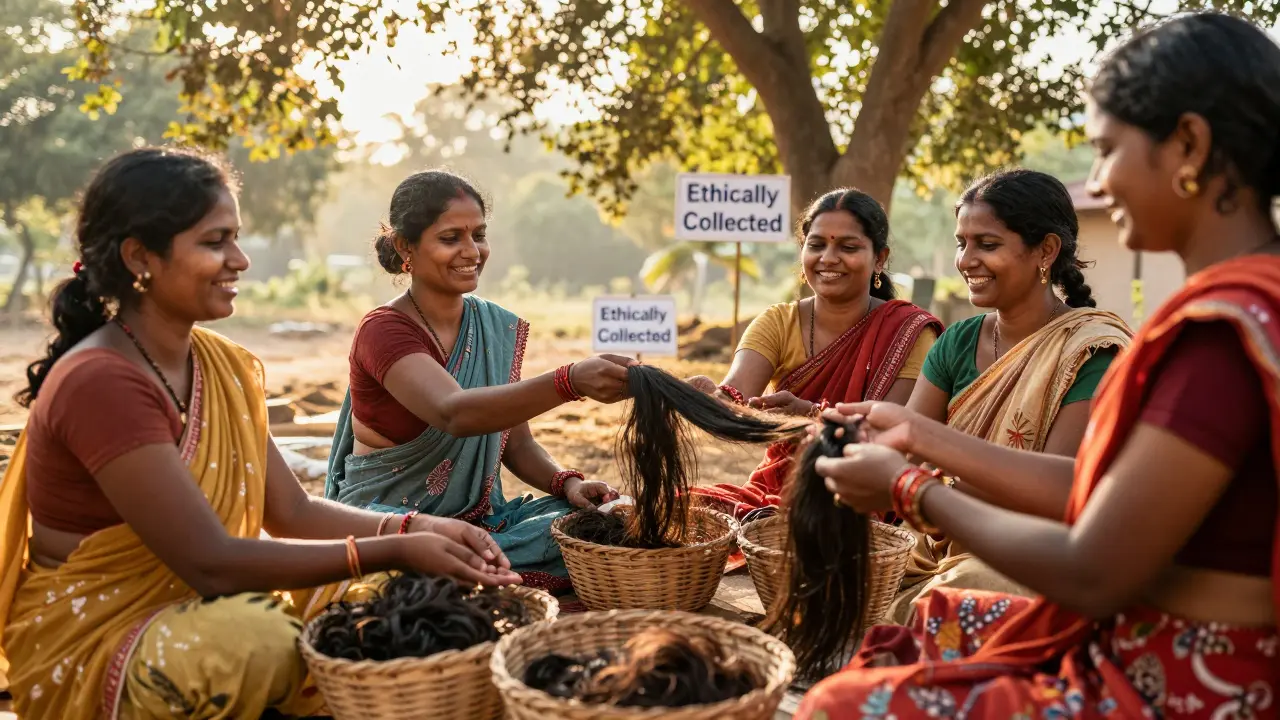
When you think about hair extensions, you probably picture longer, fuller hair in seconds. But if you’re choosing ethically sourced hair extensions, you’re doing more than changing your look-you’re making a stand for people and the planet. Not all hair extensions are created equal. Some come from factories with poor labor conditions. Others are harvested without consent or fair pay. Ethically sourced hair extensions change that. They’re grown, collected, and processed with respect-for the donor, the environment, and the workers involved.
1. You Support Fair Wages and Safe Working Conditions
Behind every bundle of human hair extensions is a real person. In many parts of the world, women sell their hair to survive. Without ethical standards, they’re often paid pennies. Some are even tricked into selling their hair for far less than its market value. Ethically sourced hair extensions ensure donors are paid fairly-sometimes up to 10 times more than in unregulated markets. Companies that follow ethical practices work directly with cooperatives or verified suppliers. They document the origin of every strand. You can trace your hair back to the village where it was collected. That transparency means real change. Women in rural India, Vietnam, or Eastern Europe aren’t just selling hair-they’re building savings, sending kids to school, and gaining financial independence.
2. The Hair Is Higher Quality and Lasts Longer
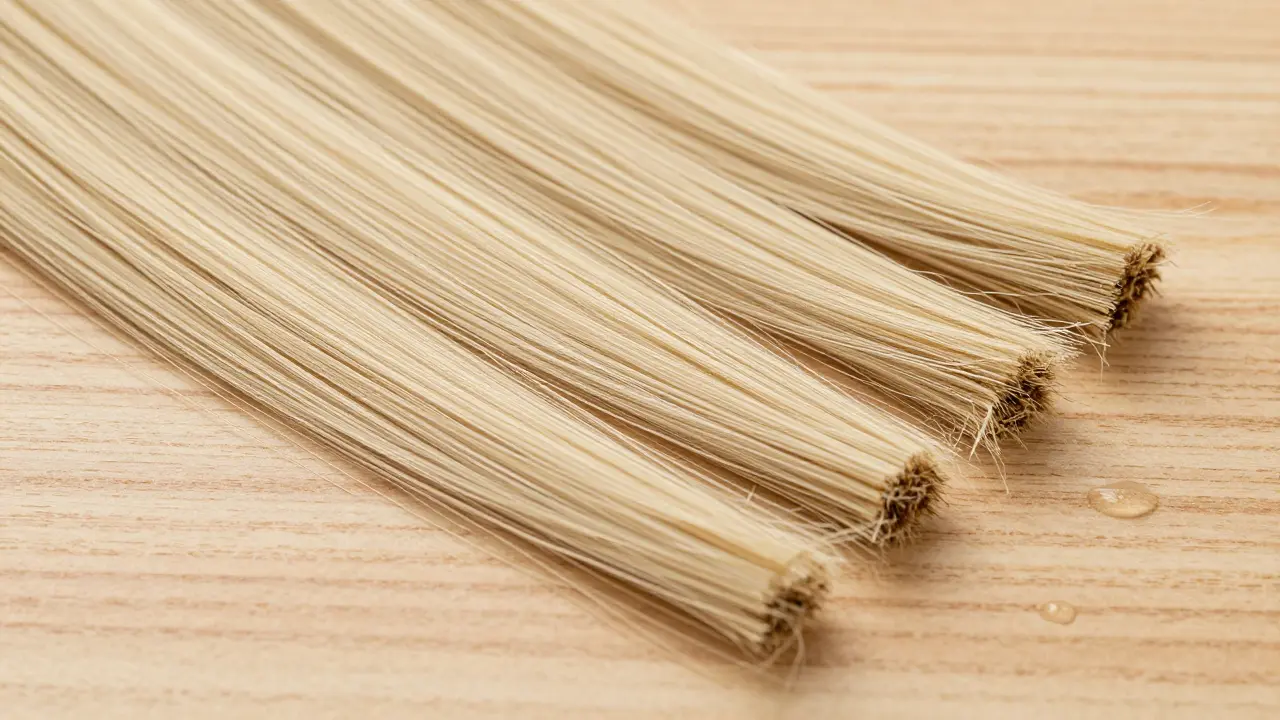
Here’s the truth: unethical hair often gets mixed with synthetic fibers or treated with harsh chemicals to make it look better. That’s why some extensions tangle after one wash or shed like crazy. Ethically sourced hair avoids all that. Reputable vendors only use 100% human hair, collected in a way that preserves the cuticle. The cuticle is the outer layer of the hair shaft. When it’s intact, the hair lies flat, shines naturally, and resists tangling. Ethical suppliers hand-sort each strand, keeping the root-to-tip direction consistent. That means your extensions blend seamlessly with your own hair. They don’t mat, they don’t break, and they last 6 to 12 months with proper care. That’s not just convenience-it’s value. You’re not buying a quick fix. You’re investing in hair that looks real and lasts like real hair should.
3. You Avoid Harmful Environmental Practices
Most cheap hair extensions come from mass production lines that dump toxic chemicals into rivers. The dyeing, bleaching, and processing of low-quality hair often involves formaldehyde, ammonia, and heavy metals. These pollutants don’t disappear-they end up in water systems, harming fish, crops, and drinking water. Ethical brands use non-toxic, biodegradable treatments. They recycle water used in processing. Many partner with organizations that plant trees for every bundle sold. One major ethical supplier in Vietnam, for example, plants 10 trees per kilogram of hair processed. That’s not marketing fluff-it’s measurable impact. Choosing ethically sourced hair means you’re not contributing to pollution. You’re helping clean up the industry one strand at a time.
4. You Build a More Honest Beauty Industry
The beauty industry has long hidden behind vague terms like “virgin hair” or “Remy.” These labels mean nothing without proof. Ethically sourced hair extensions force accountability. Brands that are transparent about their supply chain are the ones you can trust. They publish photos of donors, share stories from collection centers, and even let customers tour facilities (virtually or in person). This transparency isn’t just good PR-it’s a shift in power. It tells the industry: consumers won’t accept ignorance anymore. When you choose ethical hair, you’re voting with your wallet. You’re telling companies that profit shouldn’t come at the cost of human dignity. And that ripple effect? It’s already changing how big retailers source their products. Major salons in New York and Los Angeles now refuse to stock non-ethical extensions. Why? Because their clients asked for better.
Using ethically sourced hair extensions isn’t just about looking good. It’s about doing good. You get longer, healthier-looking hair while supporting fair wages, reducing pollution, and pushing the beauty world toward honesty. It’s rare to find a beauty product that does so much more than cover up flaws. This is one that actually fixes something broken.



allison berroteran
March 14, 2026 AT 10:10It’s wild how something as simple as hair extensions can carry so much weight-economic, environmental, ethical. I never thought about the women behind the hair until I read this. The fact that they’re getting paid up to 10 times more in ethical systems? That’s not charity, that’s justice. And the cuticle alignment detail? I’ve had extensions that looked like straw after a week, and now I know why. It’s not just about aesthetics-it’s about dignity woven into every strand.
Also, the tree-planting thing? I’m not usually into ‘greenwashing,’ but when a company ties each kilogram to 10 actual trees, that’s accountability. I’ve started asking my stylist for certification docs now. Small act, big ripple.
I wonder if there’s a way to map this to other beauty products. Lipstick? Nail polish? We’re so quick to judge fast fashion, but hair? We just want it long and shiny. Maybe this is the entry point for a bigger shift.
Anyway, thank you for writing this. It didn’t just inform me-it changed how I shop.
Gabby Love
March 14, 2026 AT 19:55Just want to clarify one thing: Remy hair isn’t meaningless. It means the cuticles are aligned in one direction. That’s a technical standard, not marketing fluff. Ethical sourcing just adds transparency to that standard. Also, 100% human hair doesn’t automatically mean ethical-some unethical suppliers still sell Remy. So don’t confuse the two.
Jen Kay
March 15, 2026 AT 08:59Oh, so now we’re supposed to feel good about spending $300 on hair because it’s ‘ethical’? How charming. Meanwhile, the women in rural India are still paying for their kids’ school supplies with hair they sold at a fair wage-while I’m sitting here debating whether to get a full set or a clip-in. How noble. How utterly performative.
But hey, at least I’m not buying from ‘unethical’ brands. I guess that’s something.
Michael Thomas
March 16, 2026 AT 03:54USA makes better hair than all those countries combined. Why not just use synthetic? Cheaper. Cleaner. No drama.
Abert Canada
March 17, 2026 AT 15:31As a Canadian who’s seen the hair trade from both sides-yup, we export a lot too. But here’s the thing: most of the ‘ethical’ brands? They’re still using American or European middlemen. The real change is when donors get direct access to buyers. Like that co-op in Hanoi that sells via Instagram. No markup. No middleman. Just women, their hair, and a PayPal link.
Also, the tree thing? Yeah, it’s real. I’ve been to their nursery. 10 trees per kg? They’re planting mangroves. That’s coastal protection. That’s climate resilience. That’s not a sticker. That’s a lifeline.
Xavier Lévesque
March 18, 2026 AT 22:06So let me get this straight. I’m supposed to pay $250 for hair so I can feel like a woke angel while some woman in Odisha gets paid $15 instead of $1.50? Wow. That’s… actually kind of beautiful. Like, if I’m going to be a hypocrite, at least it’s a pretty one.
Also, the fact that you can trace your hair back to a village? That’s more than I can say for my ex.
Thabo mangena
March 19, 2026 AT 02:46It is with profound respect and deep admiration that I acknowledge the transformative power of ethical sourcing in the global hair industry. The dignity afforded to women who have historically been marginalized in economic systems cannot be overstated. This is not merely a commercial transaction; it is a reclamation of agency, a quiet revolution in the form of a braid.
The environmental stewardship demonstrated by sustainable processing methods reflects a moral imperative that transcends borders. When water is recycled, when toxins are banished, when trees are planted with intention-these are acts of cosmic responsibility.
Let us not mistake this for a trend. This is evolution. This is the quiet dignity of human labor honored. And for that, we owe more than our dollars-we owe our attention, our awareness, our unwavering commitment to truth.
Karl Fisher
March 21, 2026 AT 02:25Okay but have you seen the Instagram feed of the woman who sold her hair in Bihar? She’s got 80k followers now. Her own brand. She’s doing yoga in front of her new house. She’s got a golden retriever named Karma. I’m not crying, you’re crying.
Also, my extensions are from a ‘verified ethical’ supplier and I swear they glow in moonlight. I’ve been told I look like a goddess. I didn’t ask for this. I just wanted volume.
Also, I got a custom hair halo with a tiny pendant that says ‘I chose compassion.’ It cost $400. Worth it. #EthicalGlow
Buddy Faith
March 21, 2026 AT 05:08They’re lying. All of it. The ‘fair wages’? The ‘village origins’? The ‘tree planting’? It’s all staged. The hair comes from China. The trees are fake. The women are actors. They just want you to pay more so they can buy more yachts. You think you’re helping? You’re funding a pyramid scheme with glitter.