

Ever stared at a mirror, running your fingers through your hair, wondering why that trendy bob looks nothing like it did on the model? You’re not alone. The right hairstyle doesn’t just make you look good-it makes you feel like yourself, but better. The secret isn’t in the latest salon trend or a viral TikTok video. It’s in your face shape.
Know Your Face Shape First
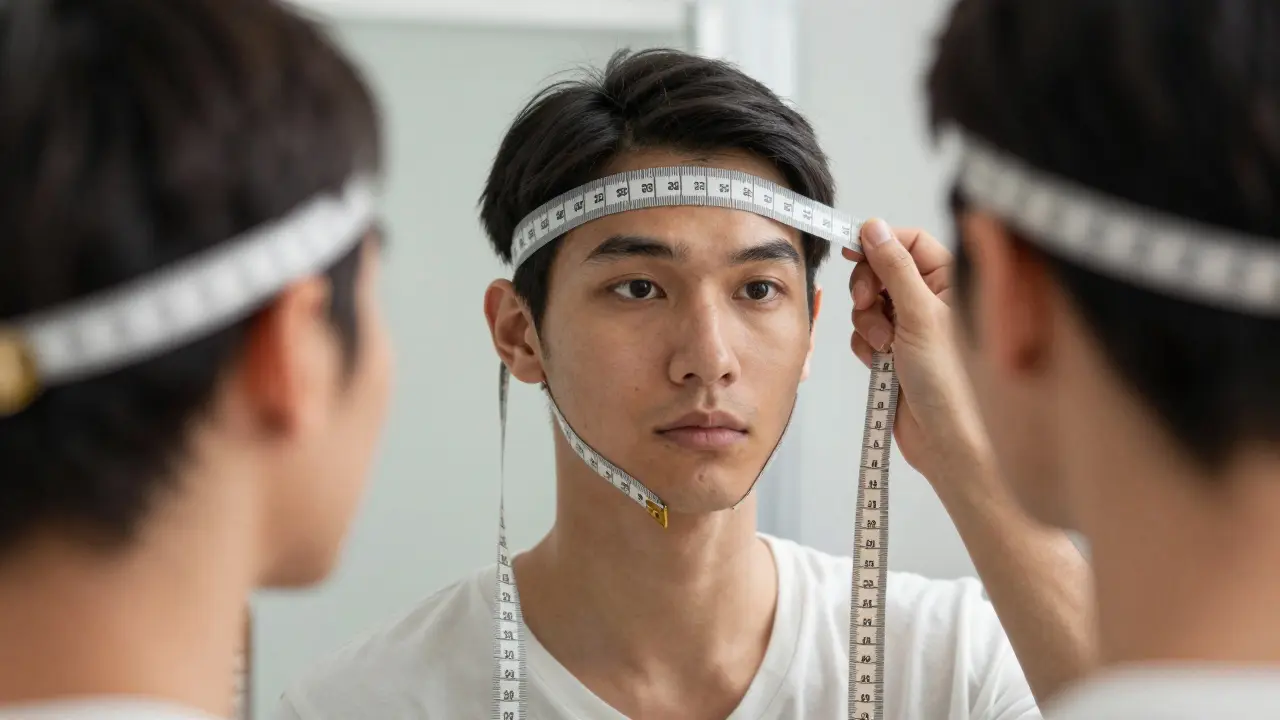
You can’t pick a hairstyle that works for you if you don’t know what you’re working with. Face shapes fall into five main categories: oval, round, square, heart, and long. Most people fall into one of these, though some have a mix. Here’s how to figure it out:- Wash and dry your hair so it lies flat against your head.
- Stand in front of a mirror with good lighting.
- Use a flexible measuring tape or a piece of string to measure:
- The width of your forehead (widest part)
- The width of your cheekbones (widest part)
- The width of your jawline
- The length of your face (from hairline to chin)
- Compare the numbers.
Here’s what the numbers mean:
- Oval: Face length is about 1.5 times the width. Cheekbones are wider than the forehead and jaw. This is the most balanced shape and works with almost anything.
- Round: Width and length are nearly equal. Soft curves, full cheeks. You want to add length and reduce width.
- Square: Forehead, cheekbones, and jaw are all similar in width. Strong jawline. You want to soften angles.
- Heart: Forehead is widest, jaw is narrow. Often a pointed chin. You want to balance the top with volume below.
- Long: Face length is much greater than width. Forehead, cheekbones, and jaw are similar in width. You want to add width and shorten the appearance of length.
Best Hairstyles for Oval Faces
If you’ve got an oval face, you’re lucky. This is the gold standard. Almost every style looks good. But that doesn’t mean you should just pick the first one you see.Stick to styles that maintain balance. Avoid extreme bangs or super short crops that make your face look too long. Try:
- Medium layers with soft waves
- Side-swept bangs
- Long bobs that hit at the collarbone
- Textured pixie cuts (not too short)
Why these work? They keep the natural proportions. Oval faces don’t need to be fixed-they need to be highlighted. A slight layering around the chin adds movement without throwing off balance.
Best Hairstyles for Round Faces
Round faces have fullness in the cheeks and a soft jawline. The goal? Create angles and length to make your face look slimmer and more defined.Avoid:
- Blunt bangs
- Center parts that split your face evenly
- Curly hair that ends at cheek level-it adds width
Go for:
- Asymmetrical bobs (one side longer than the other)
- Long layers that fall past the shoulders
- Deep side parts
- Textured shags with volume on top
- Hairstyles with height at the crown
Think of it like stretching your face vertically. Volume on top pulls the eye upward. Long layers draw the eye down, making your face appear longer. A side part breaks up the roundness. Even a slight undercut adds structure.
Best Hairstyles for Square Faces
Square faces have strong, angular jawlines and broad foreheads. The aim is to soften those hard edges without losing definition.Avoid:
- Short, blunt cuts that end right at the jaw
- Super straight hair that frames the jawline like a box
- High ponytails that emphasize the square shape
Go for:
- Soft, face-framing layers
- Long, wavy hair that falls past the jaw
- Curly bob cuts with loose curls
- Side-swept bangs
- Textured layers that start at the cheekbones
The trick is to break up the angles. Waves and curls add softness. Layers that start below the jawline draw attention away from the jaw and toward the eyes. A little volume at the crown helps balance the width of the forehead and jaw.
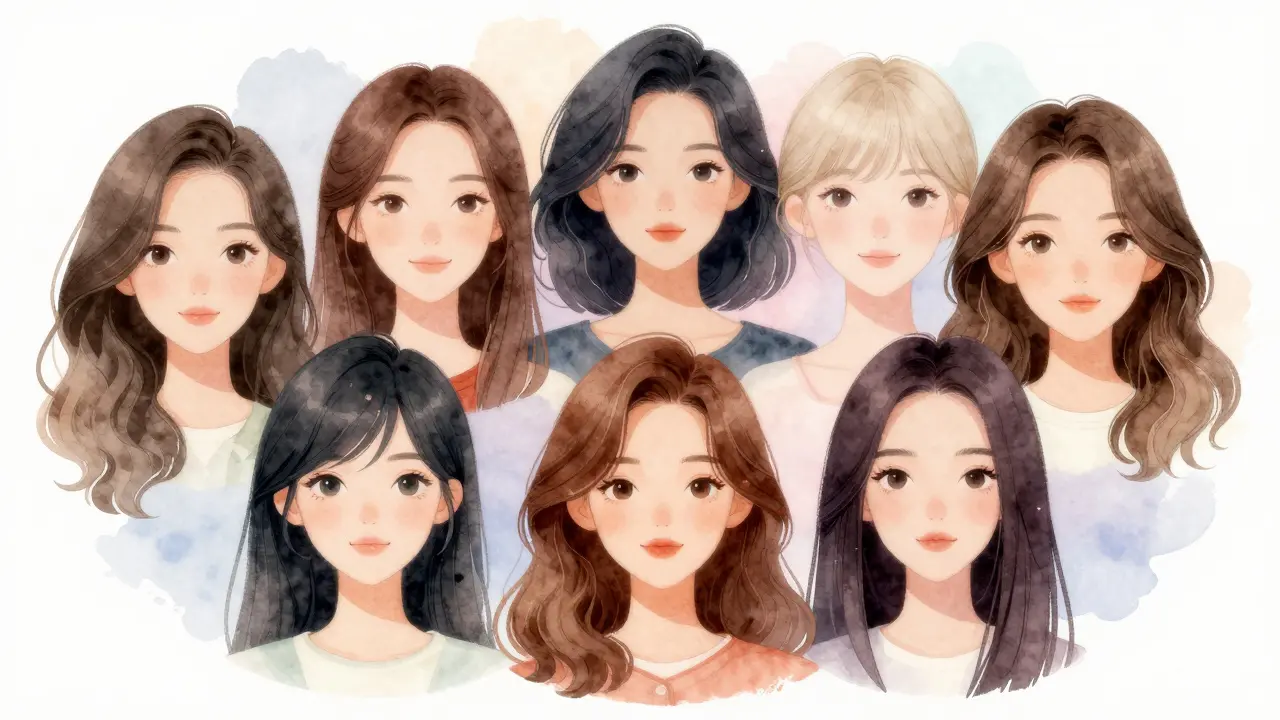
Best Hairstyles for Heart-Shaped Faces
Heart-shaped faces are wider at the forehead and temples, narrowing down to a pointed chin. The goal? Add weight to the bottom half and reduce volume on top.Avoid:
- Heavy bangs
- High ponytails
- Volume on top of the head
- Super short cuts that make the chin look even smaller
Go for:
- Shoulder-length bobs with layers
- Side-swept bangs (not full bangs)
- Long, layered waves
- Chin-length pixies with texture
- Hairstyles with volume at the jawline
Think of it like a visual seesaw. You’re balancing a wide top with a fuller bottom. Layers around the chin add width where it’s needed. Soft waves at the ends help widen the lower face. Even a few tendrils framing the jaw can make a big difference.
Best Hairstyles for Long Faces
Long faces are narrower and stretched vertically. The goal? Add width and create the illusion of a shorter face.Avoid:
- Center parts
- Super long, straight hair
- High ponytails or buns
- Hairstyles that add height
Go for:
- Blunt cuts that hit at the jaw or chin
- Layered shags with volume on the sides
- Side-swept bangs
- Waves that start at the cheekbones
- Curly or wavy hair that ends at the shoulders
You want to break up the length. A blunt cut at the jawline stops the eye from going down. Side volume adds width. Bangs shorten the forehead. Even a slight curl at the ends creates horizontal lines that make your face look less narrow.
Common Mistakes to Avoid
Even with the right shape in mind, people still make the same mistakes:- Blindly copying celebrities: Just because Jennifer Aniston’s bob looks great on her doesn’t mean it’ll work on your round face.
- Ignoring hair texture: Thick hair needs different cuts than fine hair. Curly hair needs layering to avoid bulk.
- Going too extreme: A drastic change can look jarring. Try subtle changes first.
- Forgetting hairline: If you have a high forehead, avoid bangs that sit too high. If your hairline is receding, avoid slicked-back styles.
Also, don’t forget your hair’s natural behavior. If your hair is naturally curly, a straight bob won’t look like the photos. Talk to your stylist about how your hair behaves when dry-not just when wet.

Quick Reference Guide
| Face Shape | Goal | Best Cuts | Avoid |
|---|---|---|---|
| Oval | Maintain balance | Medium layers, side-swept bangs, collarbone bob | Extreme crops, blunt bangs |
| Round | Add length, reduce width | Asymmetrical bob, long layers, side part | Blunt bangs, chin-length curls |
| Square | Softens angles | Wavy bob, side-swept bangs, layered shag | Blunt cuts at jawline, high ponytails |
| Heart | Balance top and bottom | Chin-length pixie, shoulder-length layers, side bangs | Heavy bangs, volume on top |
| Long | Add width, shorten appearance | Blunt bob, side volume, wavy layers | Center part, super long hair, high buns |
What If My Face Shape Is Mixed?
Many people have features from more than one shape. Maybe you’ve got a square jaw but a round forehead. Or wide cheekbones with a long face. That’s normal.Focus on the most dominant feature. If your jaw is your strongest trait, treat it like a square face. If your forehead is wide and your chin is narrow, lean into heart-shaped advice. You can also blend styles: try a long bob with side-swept bangs if you’re between oval and heart.
When in doubt, go for softness. Layers, waves, and movement are forgiving. They work across shapes and adapt as your face changes with age or weight.
Final Tip: Try Before You Cut
You don’t have to commit to a new look right away. Use apps like YouCam Makeup or ModiFace to try on different styles digitally. Or, grab a wig or hair extensions for a day. See how you feel walking around with volume at your jawline or bangs sweeping across your forehead.Hairstyles aren’t just about looks-they’re about confidence. The right cut doesn’t just fit your face. It fits your life.
How do I know if I have an oval face?
An oval face is longer than it is wide, with cheekbones slightly wider than the forehead and jaw. The jawline is gently rounded, not angular. If your face length is about 1.5 times the width, and your features are balanced, you likely have an oval face.
Can I change my face shape with a haircut?
No, you can’t change your actual bone structure. But a good haircut can dramatically alter how your face appears. Layers, volume, and angles create optical illusions that make your face look slimmer, shorter, or more balanced-even if your shape hasn’t changed.
Do bangs work for all face shapes?
Not all bangs work for everyone. Full, blunt bangs can make round faces look wider and long faces look even longer. Side-swept or wispy bangs are more universally flattering. They break up the forehead without adding bulk where it’s not needed.
Is there a hairstyle that works for every face shape?
Long, layered hair with soft waves is the closest thing. It adds movement, works with most textures, and can be styled to suit any shape. It’s not magic, but it’s flexible enough to adapt whether you’ve got a round, square, or long face.
Should I trust salon recommendations?
A good stylist will ask about your face shape, hair texture, and lifestyle-not just your Instagram feed. If they push a trend without considering your features, find someone else. The best stylists listen more than they talk.


kelvin kind
January 26, 2026 AT 03:05Just tried the string measurement trick-turns out I’m a long face with round cheekbone vibes. Who knew?
lucia burton
January 26, 2026 AT 15:31From a structural aesthetics standpoint, the alignment of craniofacial proportions with volumetric hair dynamics is a critical variable in facial harmonization. The oval template serves as the anthropometric baseline because it minimizes asymmetry indices across the Z-axis and horizontal plane. When applying layering algorithms to a square mandibular contour, the angular dissipation is achieved through strategic gradation gradients that disrupt the geometric rigidity of the jawline-essentially creating a softening vector through phototropic density modulation. Long bobs with lateral volume displacement work because they exploit the optical illusion of elongation without altering the underlying skeletal architecture. The key is not symmetry, but proportional counterbalance.
Fred Edwords
January 28, 2026 AT 14:15I appreciate the thorough breakdown, but I noticed a minor inconsistency: in the ‘Best Hairstyles for Square Faces’ section, you list ‘side-swept bangs’ as recommended, yet in the ‘Common Mistakes’ section, you warn against ‘blunt bangs’-but you don’t clarify whether side-swept bangs are considered blunt or not. Also, in the table, ‘collarbone bob’ is listed for oval, but ‘chin-length pixie’ for heart-shouldn’t those be cross-referenced for clarity? Minor, but important for precision.
Sarah McWhirter
January 29, 2026 AT 07:35Did you know the government uses facial shape data to classify citizens for hair product subsidies? They’ve been tracking this since the 90s-TikTok’s just the new front. They know your face shape, your shampoo brand, and whether you’ve ever used a curling iron. That’s why they push ‘blunt bangs’ on round faces-it keeps you buying root touch-up kits. The real secret? The military uses face-shape algorithms to predict compliance. Oval faces are easiest to recruit. Long faces? Too skeptical. Heart-shaped? Too emotional. You’re being styled… for control.
Ananya Sharma
January 31, 2026 AT 02:11Let’s be real-this entire guide is a capitalist fantasy sold by salons to keep you spending. Face shape? That’s a Eurocentric construct. Most people in India have a ‘mixed’ shape, but the guide ignores that entirely. And why are all the examples thin, white women? What about thick, curly hair? What about men? This isn’t science-it’s aesthetic colonialism dressed up as ‘self-care.’ You don’t need a bob to feel confident. You need to stop buying into beauty industrial complexes that profit from your insecurity. I’ve worn the same buzzcut for 12 years. I’m happier than anyone with a ‘perfect’ layering gradient.
Ian Cassidy
January 31, 2026 AT 22:13Yeah, I’ve been doing the cheekbone vs jaw thing for years. Turns out I’m a round-square hybrid. My stylist said ‘go long and layered’-best decision ever. No more looking like a bowling ball with hair.
Zach Beggs
February 2, 2026 AT 05:33Good read. I’m oval, and I’ve been rocking a medium bob with side-swept bangs for months. Feels like me, but upgraded.
Kenny Stockman
February 3, 2026 AT 06:52Man, I used to think my face was ‘weird’ until I read this. Now I get why my last haircut made me look like a confused badger. Side-swept bangs + long layers = instant confidence boost. Thanks for the clarity.
Antonio Hunter
February 4, 2026 AT 04:07One thing I’d add-especially for those with mixed face shapes-is that your hair texture matters as much as your bone structure. If you have fine, straight hair, a layered shag might look flat and limp. If you have thick, curly hair, too many layers can create a ‘helmet’ effect. The real trick is matching the cut to your hair’s natural behavior, not just your face. I’ve seen too many people come in with Pinterest pics and leave disappointed because the stylist didn’t account for how the hair actually falls when dry. Ask your stylist: ‘How does this look when it’s not wet?’ That question changes everything.
Paritosh Bhagat
February 5, 2026 AT 11:02Wow, this is so well-written, I almost forgot you’re probably just another influencer pushing salon products. But hey, I’m glad you mentioned hair texture-most people don’t. I’ve got a heart-shaped face and thick curls, and I used to get told ‘you need more volume on top’-which made me look like a startled owl. Once I started putting volume at the jaw and keeping the crown sleek? Game changer. Honestly, I wish more stylists had this level of awareness. You’re doing God’s work.