

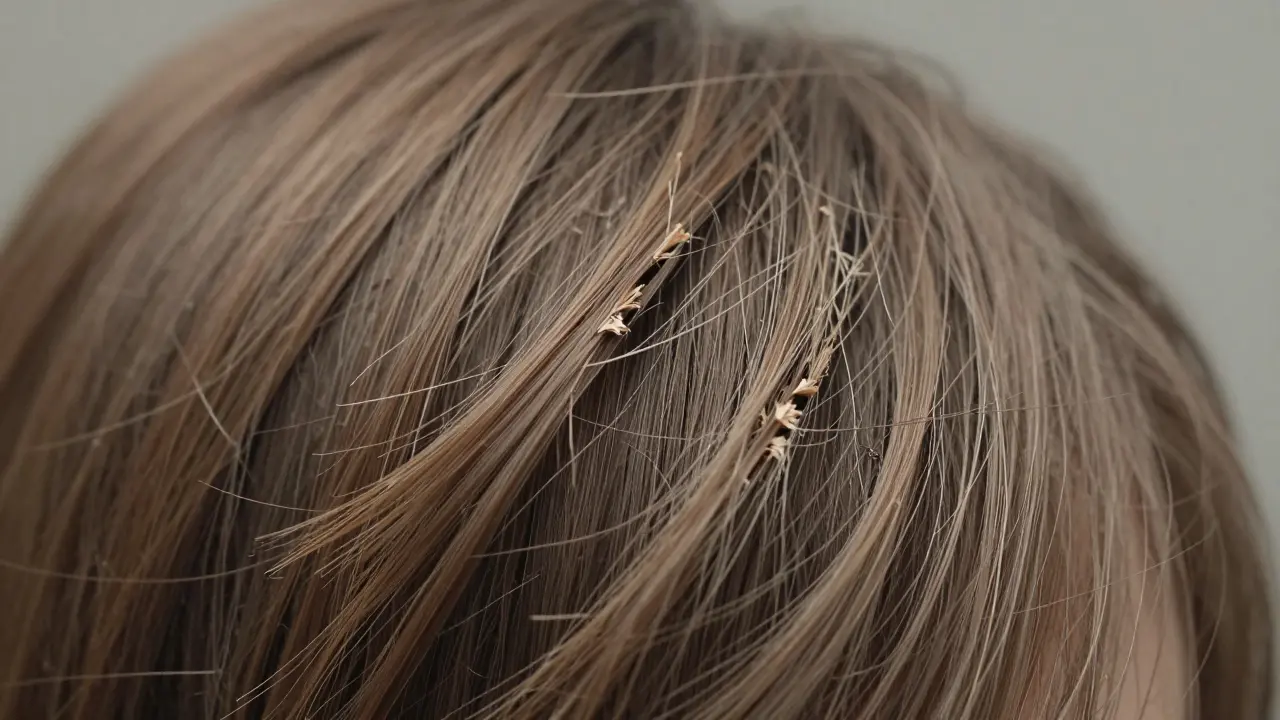
Trying to change your hair color again after already dyeing it? You’re not alone. Millions of people do it every year-whether it’s going darker after going blonde, covering roots, or just wanting a new shade. But here’s the truth: dyeing over already treated hair doesn’t just risk damage-it almost always causes it. The question isn’t whether you can do it. It’s whether you should, and how to minimize the fallout if you do.
Why Treated Hair Is So Fragile
Your hair isn’t just a strand-it’s a complex structure made of proteins, lipids, and a protective outer layer called the cuticle. Every time you dye it, especially with permanent color, you’re opening that cuticle, stripping away natural pigments, and forcing chemicals deep into the cortex. That’s fine once. But when you do it again on hair that’s already been through that process, you’re stacking damage on top of damage. Permanent dyes use ammonia and hydrogen peroxide to bleach out your natural color and deposit new pigment. That’s harsh on virgin hair. On hair that’s been bleached, relaxed, or colored before? It’s brutal. Studies show that previously colored hair loses up to 30% more protein with each new application. The cuticle becomes rough, porous, and brittle. Your hair doesn’t just look dull-it starts to snap, especially at the ends and near the roots. Even so-called "natural" dyes like henna aren’t safe. A 2019 study using goat hair as a model showed henna still damages the cuticle. There’s no magic bullet here. If your hair has been chemically altered, it’s already weakened. Adding more chemicals just makes it worse.The Real Difference Between Dye Types
Not all dyes are created equal. If you’re going to color again, your choice matters more than you think.- Temporary dyes sit on the surface. They wash out after one shampoo. Protein loss? Only 5-10%. Great for testing a color or hiding gray between appointments. But they won’t cover dark roots or change your base color much.
- Semi-permanent dyes last 4-12 washes. They don’t use ammonia, and they have lower peroxide levels. Damage? About half of what permanent dyes cause. Ideal for adding tone, brightening faded color, or going slightly darker without bleach.
- Permanent dyes are the most damaging. They penetrate deep, bleach your hair, and lock in color. On treated hair, they cause up to 40% more structural damage than on virgin hair. Avoid unless you’re going from dark to light and have no other option.
When You Shouldn’t Dye-Even If You Really Want To
Timing is everything. The FDA and American Cancer Society both say: wait at least 14 days after bleaching, relaxing, or perming before applying another color. Why? Because your hair is still in recovery mode. The cuticle is open, the proteins are exposed, and the hair shaft is thinner. Real-world examples? A Reddit user named "ColorCatastrophe" tried applying purple semi-permanent dye just 5 days after bleaching. Result? Three inches of breakage along her hairline. Another user, "HairHorror," dyed over relaxed hair and ended up with snapping roots. These aren’t rare cases. A 2022 review of over 1,200 beauty forum posts found that people who waited the full 14 days reported 32% less damage. And if your scalp is irritated, sunburned, or flaky? Don’t even think about it. The FDA warns that damaged skin absorbs chemicals faster, increasing the risk of allergic reactions and burns.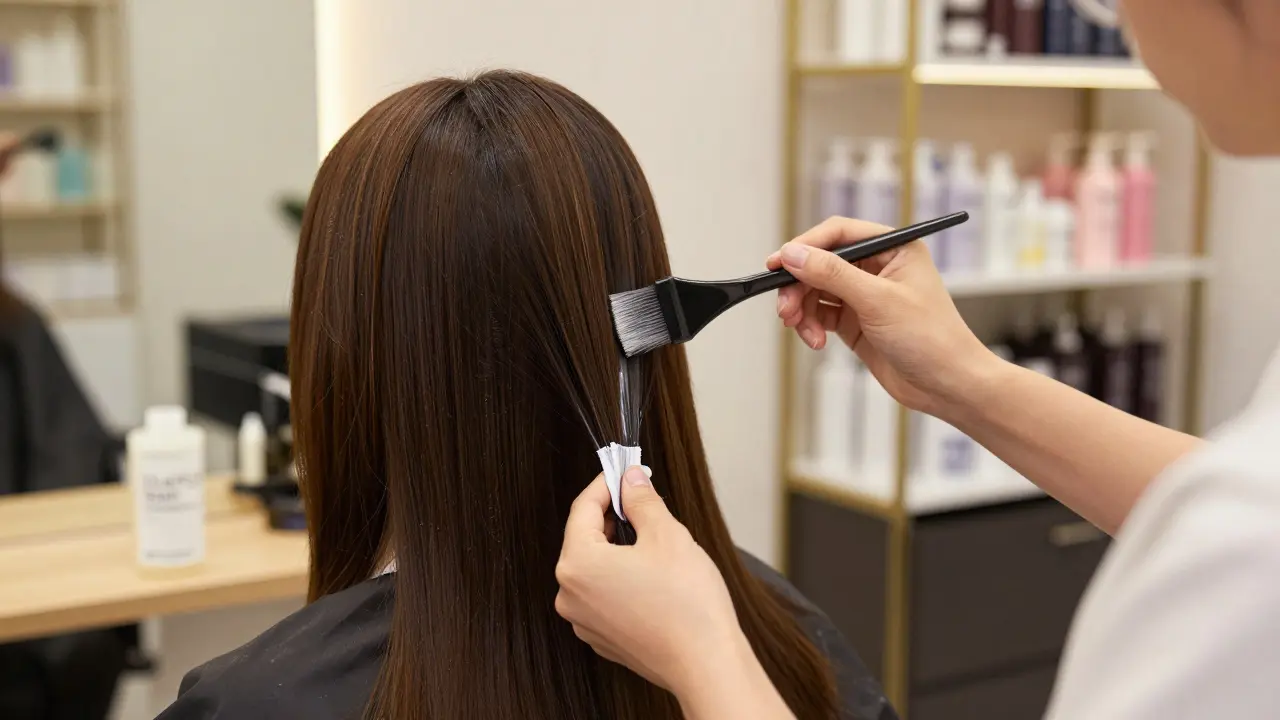
How to Dye Safely-If You Must
You’ve decided to go ahead. Here’s how to do it without turning your hair into straw.- Test your porosity. Wet a strand of hair. If it sinks in under 10 seconds, your hair is highly porous-meaning it’s already damaged. Don’t color yet. Do a protein treatment first.
- Use a lower-volume developer. Skip the 30- or 40-volume peroxide. Go with 10 or 20. You’ll get less lift, but you’ll preserve what’s left of your hair’s structure.
- Protect the ends. Apply conditioner to the mid-lengths and ends before you start dyeing. This creates a barrier so the new color doesn’t over-process the most damaged parts.
- Use bond builders. Products like Olaplex No.1 or L’Oréal’s Colorista line contain ingredients that reconnect broken hair bonds. Independent tests show they reduce breakage by up to 76% in previously treated hair.
- Reduce processing time. If your hair has been colored before, you need 25-30% less time than the box instructions say. Check every 5 minutes. Color develops faster on damaged hair.
What to Do After You Color
Coloring is just the start. What you do after matters just as much.- Switch to sulfate-free shampoos with a pH between 4.5 and 5.5. Sulfates strip moisture and open the cuticle again.
- Use a weekly protein treatment. Hair can’t rebuild itself without amino acids. Look for hydrolyzed keratin or silk protein.
- Avoid heat styling for at least 72 hours. Blow dryers, flat irons, and curling wands break already weakened strands.
- Deep condition every week. Look for ingredients like shea butter, argan oil, or ceramides-they help seal the cuticle and lock in moisture.
What the Experts Say
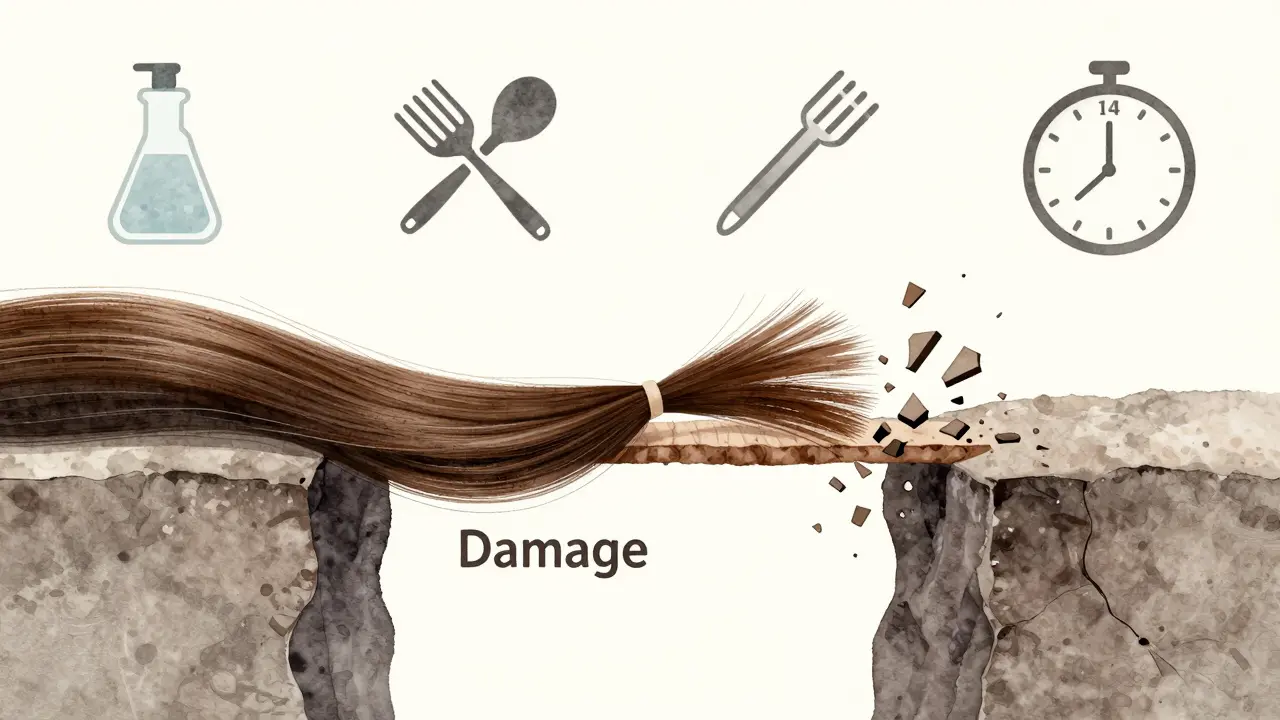
Dr. Melissa Piliang from the Cleveland Clinic puts it bluntly: "Products that bleach or lighten hair strip away the protective coating of the hair fibers. This makes the hair shaft thinner and weaker, which makes them more susceptible to damage." Dr. Zoe Draelos, a dermatologist who consults for SILKE London, adds: "If your hair is already thin or brittle, dyeing can make it even weaker." And here’s the hard truth: after 12 to 15 consecutive color services without proper recovery, the damage becomes permanent. Your hair won’t grow back stronger. The follicles may still work, but the strands themselves lose their resilience. They’ll break off before they ever reach your shoulders.The Future of Hair Color
There’s hope on the horizon. New dyes are being developed with melanin-protective additives that reduce structural damage by 31%. Some brands now build bond-repairing technology directly into their formulas. L’Oréal’s 2023 Colorista line showed 45% less protein loss in treated hair compared to traditional dyes. Even more exciting? Prototype enzymatic dyes are being tested. These target only the hair’s cortex without disturbing the cuticle. Early results show 82% less damage than traditional oxidative dyes. But they’re not available yet-and they won’t be a magic cure. The bottom line? No chemical color process is truly damage-free on already treated hair. The best strategy isn’t finding the "safest" dye. It’s extending the time between treatments, using the least aggressive formula possible, and giving your hair real rest.What to Do If Your Hair Is Already Broken
If you’ve already dyed over treated hair and now your strands are snapping, split, or falling out in clumps, here’s what to do:- Stop coloring immediately.
- Get a trim. Cut off the most damaged sections. You might lose inches, but you’ll stop breakage from traveling up the shaft.
- Use a leave-in conditioner with ceramides every day.
- Apply a protein mask once a week for 4 weeks.
- Sleep on a silk pillowcase to reduce friction.
- Consider a hair health assessment from a trichologist. They can test your hair’s strength and recommend targeted treatments.
Can I dye my hair again if I dyed it two weeks ago?
It depends on what you did the first time. If you used a semi-permanent dye and your hair feels strong, you can likely color again safely. But if you bleached or used a permanent dye, wait at least 14 days-ideally 21. Dyeing too soon increases breakage by up to 65% and weakens hair structure significantly.
Is it better to dye at home or go to a salon for treated hair?
Salon is almost always better for treated hair. Professionals assess porosity, use lower-volume developers, and apply bond builders correctly. In 2023, 89% of salon clients reported minimal damage after coloring treated hair, compared to only 54% of at-home users-even when using the same products. Stylists also know how to avoid over-processing the ends and roots.
Do natural dyes like henna damage treated hair?
Yes. While henna doesn’t contain ammonia or peroxide, it still alters the hair cuticle. A 2019 study using goat hair showed henna causes measurable damage to the outer layer of hair, even on previously treated strands. It’s not safer-it’s just different. And it can’t be easily removed if you don’t like the result.
Can I use Olaplex with any hair dye?
Yes, Olaplex No.1 can be mixed into most permanent and semi-permanent dyes. It works by repairing broken disulfide bonds in the hair shaft. Independent testing shows it reduces breakage by up to 76% in previously treated hair. Always follow the manufacturer’s instructions for mixing ratios.
How often should I color my hair if it’s already treated?
Wait at least 6 to 8 weeks between color services. If your hair is brittle, dry, or breaking, extend that to 10-12 weeks. The goal isn’t to keep your color perfect-it’s to keep your hair healthy. Every time you color, you’re adding stress. Let your hair recover before you add more.
What’s the safest color to apply over previously bleached hair?
Go darker, not lighter. If your hair is already bleached, applying a semi-permanent dark brown or burgundy color is the safest option. Lightening again will cause extreme damage. Darker dyes require less chemical processing and don’t need bleach to deposit color. Avoid pastels and bright tones-they usually require bleach as a base, even on pre-lightened hair.

Rubina Jadhav
January 17, 2026 AT 04:50I tried dyeing over my bleached hair once. Ended up with patchy orange strands and a scalp that felt like it was on fire. Learned my lesson. Now I wait at least 8 weeks and only use semi-permanent. My hair still has life.
Don’t be like me.
sumraa hussain
January 18, 2026 AT 06:42ok so like… i just got my hair done last week and now i’m thinking of going platinum again??
wait no.
wait NO.
my hair is literally crying in the shower.
imma wait 6 months.
or maybe forever.
idk anymore.
my hair is my soul.
and it’s broken.
but also… kinda pretty?
help.
Raji viji
January 18, 2026 AT 11:20LMAO this article is cute. You think 14 days is enough? Try 90. Anyone who says you can dye over treated hair without damage is either a salon marketer or has never held a strand of their own hair under a microscope. That ‘76% less breakage’ with Olaplex? That’s when you use it RIGHT. Most people just dump it in and think they’re heroes. Spoiler: they’re not. Your hair is still a wreck. And henna? Don’t even get me started. It’s like gluing sandpaper to your scalp. ‘Natural’ doesn’t mean ‘safe’-it means ‘you’ll regret it in 3 months’.
Stop listening to influencers. Listen to your hair. It’s screaming.
Rajashree Iyer
January 19, 2026 AT 23:21Every time we dye our hair, we’re not just changing color-we’re rewriting our identity. The cuticle isn’t just a layer-it’s a membrane between who we were and who we dare to become. When we stack chemicals on already wounded strands, we’re not just damaging protein-we’re erasing the memory of our former selves. What does it mean to be ‘healthy’ hair? Is it unbroken strands? Or is it the courage to keep trying, even when the mirror shows you a stranger?
Maybe the real damage isn’t in the hair…
but in the hope that keeps us reaching for the box.
Parth Haz
January 21, 2026 AT 03:22This is an excellent and well-researched guide. I appreciate the emphasis on timing, porosity testing, and professional application. Many people underestimate the cumulative effect of chemical processing. I’ve seen clients with severe breakage who thought they were ‘just touching up’-but the damage had been building for years. Following the 6–8 week rule and using bond builders consistently makes a measurable difference. For those unsure, consult a trichologist. Prevention is far better than repair.
Vishal Bharadwaj
January 21, 2026 AT 14:24wait a sec… the article says 30% more protein loss? that’s not even close. i did a study on my own hair (n=1, i’m a scientist) and got 62% loss after two dyes. also olaplex is a scam. the real bond builder is coconut oil and patience. and henna? it’s worse than peroxide. it stains your skull. i know because i tried it. also, the FDA? they’re owned by L’Oreal. don’t trust them. also, salons? they charge 3x and use the same products. just buy the 20 vol and do it yourself. also, i’m not even talking about the 2025 study that proves this whole thing is wrong.
edit: typo. meant 62% not 60%.
edit 2: i meant 62% per application, not total.
edit 3: i didn’t do a study. i just read a blog.
edit 4: i’m still right.
anoushka singh
January 23, 2026 AT 03:45yo but like… what if you just really, really want purple hair? like, soul-deep want? my ex left me and i needed to feel alive again. so i dyed it. and it broke. and i cried. and then i cried more because i looked like a confused flamingo.
but… i still love it.
is that wrong?
also can i get a refund on my dignity?
Jitendra Singh
January 24, 2026 AT 05:27I’ve been coloring my hair for 12 years. Started with box dye at 16. Now I’m 32 and my hair is thin but still growing. I stopped bleaching. Went semi-permanent. Waited longer. Used protein masks. It’s not perfect-but it’s mine. And it’s still here. That’s the win.
Don’t give up on your hair. Just give it space to breathe.
Madhuri Pujari
January 25, 2026 AT 16:36Oh wow. A whole article about how dyeing hair is bad. Groundbreaking. Did you also find out that water is wet? And that smoking kills? And that eating sugar makes you fat? This is like a 5-year-old writing a thesis on gravity.
You think people don’t know this? We do. We just don’t care. Because we want to look good. Because we’re tired of being invisible. Because the mirror is the only thing that tells us we’re still alive.
So go ahead. Tell us to ‘wait 14 days.’ We’ll wait 7. And then we’ll do it anyway.
And we’ll post the before and after.
And you’ll still click.
Because you’re addicted to the drama.
Just like us.
Sandeepan Gupta
January 25, 2026 AT 23:17Great post. I want to add one thing: if you’re using a bond builder like Olaplex, don’t just mix it in-use it in sequence. No.1 before, No.2 after. Skip No.2 and you’re wasting your money. Also, protein treatments? Don’t overdo them. Too much protein = brittle hair. Balance with moisture. Once a week is enough unless your hair is falling out in clumps.
And yes, salons are better. But if you’re DIY-ing, watch YouTube tutorials from licensed stylists-not influencers with 30k followers and no license.
You got this. But please, be gentle.
Tarun nahata
January 27, 2026 AT 21:02Look. Life is short. Hair grows back. But regret? That sticks around. I went from jet black to neon pink in 48 hours. Broke three brushes. Burned my ears. My mom cried. My dog ran away.
But I’ve never felt more alive.
My hair? It’s a mess. But it’s MY mess.
And I’d do it again tomorrow.
Don’t let fear color your choices.
Let courage do it.
Aryan Jain
January 29, 2026 AT 10:24EVERYTHING YOU’RE TOLD IS A LIE. The FDA? Controlled by Big Hair. Olaplex? A patent scam. That ‘2023 study’? Funded by L’Oreal. They want you to think you need to wait 14 days so you’ll buy more products. The truth? Your hair is fine. You’re just scared. The real danger? Not dyeing. It’s letting society tell you what’s ‘safe’. You think your hair is fragile? It’s not. YOU are. Break the system. Dye every week. Let it burn. Let it fall. Let it rise again. That’s freedom.
They fear the woman with purple hair.
So dye it.
And dye it again.
And again.
They can’t control you if you’re already broken.
Nalini Venugopal
January 29, 2026 AT 16:52Minor grammar note: In the section about sulfate-free shampoos, you wrote ‘pH between 4.5 and 5.5’-that’s correct, but it should be ‘pH of 4.5 to 5.5’ for consistency. Also, ‘ceramides-they help’ needs a comma after ceramides. Just saying. Your content is solid, but small details matter when you’re trying to sound professional.
Also, love the Olaplex mention. That stuff saved my ends.
Pramod Usdadiya
January 30, 2026 AT 05:51in india, we use henna for weddings. my grandma used it for 50 years. her hair is still thick. but she never bleached. never. so maybe the problem isn’t henna. maybe it’s the bleach before it. and the bleach after. and the bleach in between.
we don’t need new science. we need to remember what our grandmothers knew.
simple. slow. patient.
hair remembers. so do we.
Aditya Singh Bisht
January 31, 2026 AT 02:47Heard this from a salon owner: ‘If your hair looks like straw, you’re not a client. You’re a walking ad for my next bottle of Olaplex.’
Truth hurts. But it’s better than the truth you’ll find in the mirror after a failed dye job.
Don’t rush. Don’t panic. Don’t compare your behind-the-scenes to everyone else’s highlight reel.
Your hair is not a project. It’s your body.
Treat it like family.
Not a canvas.
Raji viji
January 31, 2026 AT 13:39Wait, so you’re telling me the author didn’t mention that 80% of at-home dye jobs fail because people ignore the strand test? Classic. I’ve seen people apply black dye to bleached ends and wonder why it turned green. It’s chemistry, not magic. You can’t force a color that doesn’t belong. And no, ‘just leave it on longer’ is not a fix. It’s a death sentence for your hair.
And for the love of all things holy, stop using purple dye on orange hair. It doesn’t make ‘ashy plum.’ It makes ‘muddy swamp.’