

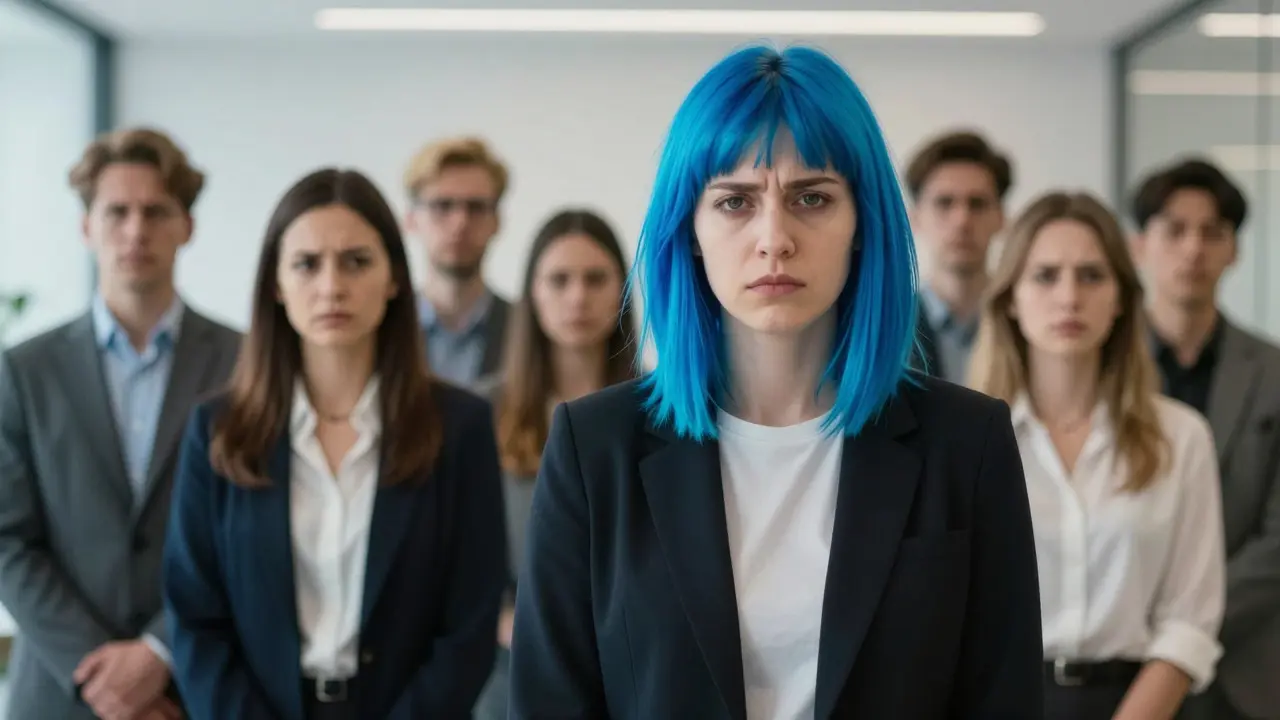
Walk into a room with bright blue hair and watch the reactions. Some people smile; others squint like they’ve just seen a glitch in the matrix. You might wonder if you’re being too loud, or if the world is just plain rude. The truth? There’s no scientific ranking of “most obnoxious” shades. But culture, memes, and psychology have picked favorites for who gets judged the hardest.
We’re going to break down which colors actually trigger the strongest negative reactions, why your brain perceives them that way, and how to handle the comments without losing your mind. This isn’t about telling you to hide your style. It’s about understanding the social landscape so you can walk taller knowing exactly what you’re dealing with.
The Contenders: Which Colors Get the Harshest Reactions?
If you ask online communities from 2019 to 2025, three shades consistently top the list of “too much.” They are Neon Blue, a highly saturated, electric hue often associated with subcultural signaling and political stereotypes., Vivid Green, a non-natural shade frequently cited as a paradigmatic example of unnatural hair color in psychological surveys., and multi-color split dyes. These aren't just pretty pastels. They are high-chroma, high-visibility choices that demand attention.
Neon Blue has become a cultural lightning rod. In recent years, it’s been linked to specific internet memes, such as the “blue-haired eco femcell,” turning the color into a shorthand for ideological extremes in certain circles. This means the judgment often isn’t about the color itself, but what the observer thinks the color represents. If someone sees blue hair and immediately assumes a specific political stance, the “obnoxiousness” is really about their bias, not your dye job.
Vivid Green sits in a similar spot. A 2026 student research report explicitly used green as the primary example of an “unnatural” color when defining the category. Because it doesn’t exist in nature, it stands out sharply against natural black, brown, blonde, or copper tones. The result is a visual contrast that some find jarring, while others find empowering.
| Color Shade | Common Stereotype | Perceived Attention Level | Workplace Risk Factor |
|---|---|---|---|
| Neon Blue | Political signaling / Subculture marker | Very High | High (due to meme associations) |
| Vivid Green | Experimental / Non-traditional | High | Moderate |
| Bright Purple | Gothic / Alternative | Medium-High | Moderate |
| Pastel Pink | Playful / Fashion-forward | Low-Medium | Low |
Why Your Brain Flags Bright Colors as “Obnoxious”
It’s not just opinion; there’s perceptual science behind it. A 2024 empirical study measured brightness and hue for 246 hair color samples. The researchers found that perceived brightness grows with the power of 0.766 of the CIELAB L* value. In plain English: the lighter and more saturated the hair, the more visually salient it becomes compared to dark natural hair. Your eyes are wired to notice high-contrast changes. When you see a wall of dark hair and one head of electric blue, your brain prioritizes the blue. That’s not rudeness; that’s biology.
This heightened visibility leads to longer gaze times. An eye-tracking study from 2013 involving 100 adults showed that participants looked longer at undamaged colored hair than at damaged colored hair. For natural hair, they spent more time looking at damaged versions. This suggests that healthy, vivid hair draws attention specifically because it looks intentional and vibrant. Detractors interpret this extra attention as “trying too hard,” while supporters see it as confidence.
There’s also a psychological component. A psychology course project hypothesized that women with unnatural hair colors are inferred to be more extroverted and less conservative than those with natural colors. If society associates natural hair with conformity, then deviating from that norm can feel threatening to observers who value predictability. The “obnoxious” label is often a defense mechanism against the discomfort of seeing someone who refuses to blend in.
The Science of Confidence vs. The Science of Judgment
Here’s where the data gets interesting. While some critics call vivid colors “stupid” or “unprofessional,” the wearers often tell a different story. A 2026 survey report titled “Unnatural Hair Color Boosts Confidence” found that 93% of respondents said changing to a non-natural shade had an “immensely positive” impact on their self-esteem. For these individuals, the color isn’t a mistake; it’s a tool for identity expression.
On the other side of the fence, a 2022 article by Emil O. W. Kirkegaard and Edward Dutton analyzed correlations between self-presentation traits and mental health. They reported that unnatural hair color predicts mental illness with a standardized effect size β≈−0.33 in certain models. The authors described this as a “moderately large” magnitude, framing vivid hair as a potential “danger zone marker.” However, correlation isn’t causation. Just because two things happen together doesn’t mean one causes the other. Yet, this statistic has been popularized in online spaces to reinforce the idea that bright hair signals instability.
So, who is right? Neither, entirely. The wearer gains confidence. The observer feels judged. The conflict arises because the same attribute-vividness-is interpreted through completely different lenses. One lens sees empowerment; the other sees deviation.
Navigating Social and Professional Risks
If you’re considering a bold color, the biggest risk isn’t the dye itself-it’s the reaction. Reddit threads from r/HairDye and r/AskWomen reveal that workplace friction is real. Users report rude comments from coworkers, hidden judgments during interviews, and the need for constant emotional labor to manage others’ expectations. One user recounted fleeing to the bathroom after a coworker’s hurtful comment about their dye choice.
However, the landscape is shifting. A 2023 discussion noted that vibrant colors are becoming “more acceptable” in recent years. The hate is still there, but it’s less universal. Pastel pinks and soft blondes escape harsh judgment more easily than neon greens or blues. If you work in a conservative field, you might face higher scrutiny. If you’re in creative industries, the risk drops significantly.
To mitigate risks, consider the following:
- Assess your environment: Is your workplace strict about dress code? If yes, weigh the long-term commitment carefully.
- Check the condition of your hair: A 2013 study showed that damaged hair, whether natural or dyed, is rated older and less attractive. Poorly executed vivid dyes that show breakage will amplify negative judgments. Invest in good bleaching and conditioning routines.
- Prepare for comments: Have a neutral response ready. “Thanks” or “I love it” shuts down most conversations faster than defensiveness.
How to Make Vivid Colors Work for You
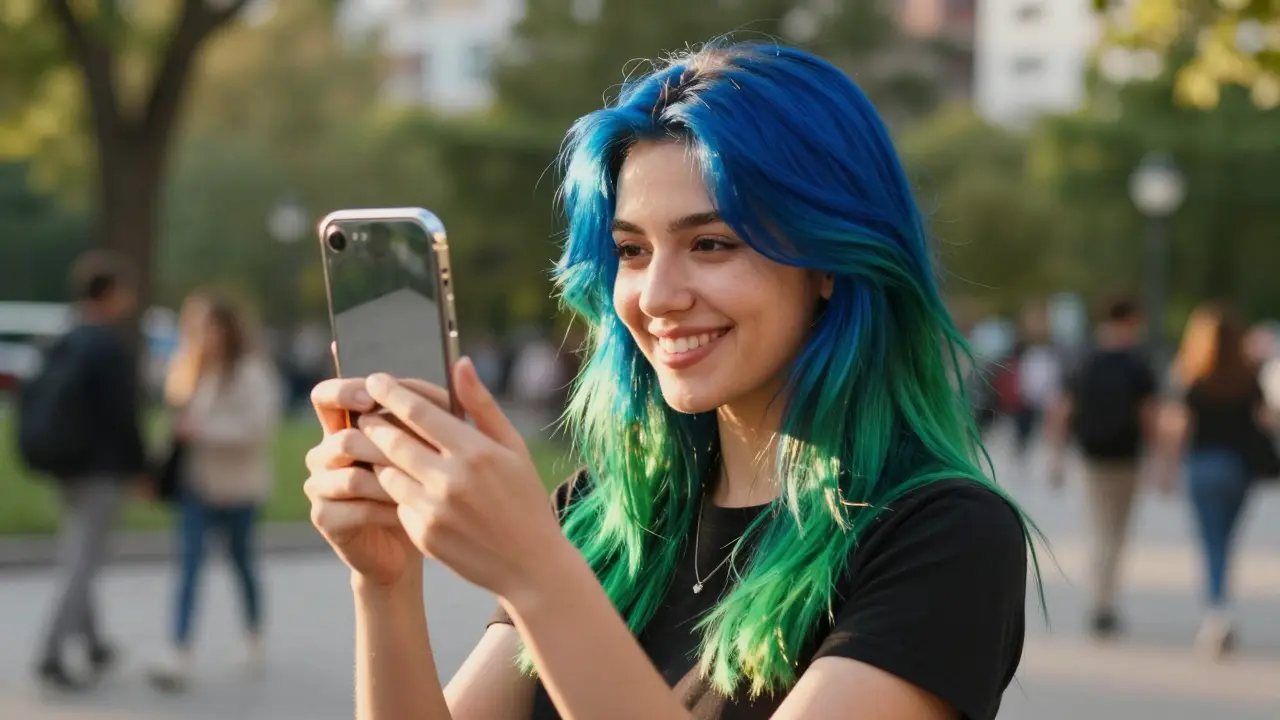
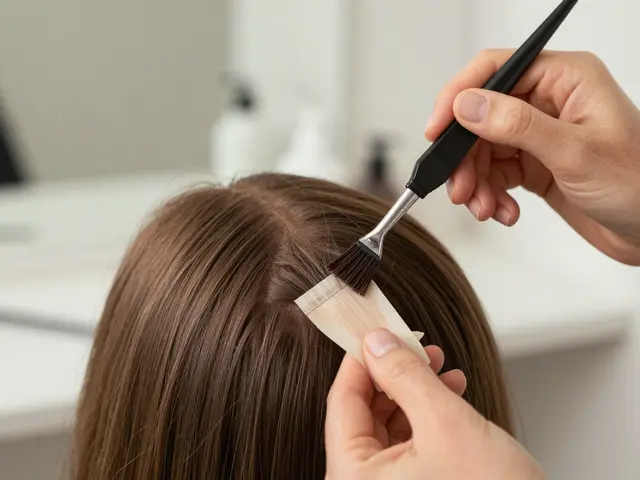
Even if you choose a “high-risk” color like blue or green, you can control how it’s perceived. The key is execution. High-chroma colors require pre-lightening the hair to a high L* value on the CIELAB scale. If the base isn’t light enough, the color turns muddy, and muddy colors look less intentional and more chaotic. Clean, vibrant application signals care and craftsmanship, which counters the “sloppy” stereotype.
Maintenance matters too. Vivid colors fade fast. Keeping them fresh shows dedication. If your hair looks dull or brassy, the “obnoxious” critique shifts from “you’re too loud” to “your hair looks bad.” By maintaining shine and saturation, you keep the focus on the aesthetic choice rather than the technical failure.
Finally, embrace the narrative. If people say your hair is obnoxious, own it. Confidence changes how others perceive you. Studies show that first impressions are influenced by grooming and demeanor. If you carry yourself with assurance, the color becomes part of your brand, not a distraction from it.
Frequently Asked Questions
Is blue hair really considered the most obnoxious color?
In many online discussions and cultural memes, yes. Neon blue is frequently singled out due to its association with specific subcultures and political stereotypes. However, this is largely a social construct rather than an objective fact. Other colors like green and purple also receive significant criticism, but blue tends to attract the most polarized reactions.
Do people judge dyed hair more than natural hair?
Yes, generally speaking. Natural hair colors (black, brown, blonde) are seen as default and safe. Dyed hair, especially vivid shades, requires active interpretation by observers. This extra cognitive load can lead to stronger judgments, both positive and negative. Neutral or subtle dyes are rarely judged, but extreme colors invite commentary.
Does having bright hair make you seem less professional?
It depends on the industry. In creative fields like design, marketing, or entertainment, bright hair is often accepted or even valued as a sign of creativity. In conservative fields like law or finance, it may be viewed negatively. There is no universal rule, but anecdotal evidence suggests that vivid colors can create friction in traditional corporate environments.
What is the least obnoxious unnatural hair color?
Pastel shades like pink, lavender, or blonde balayage tend to be the most socially accepted. They fall outside the natural range but don’t have the high-contrast shock factor of neon hues. These colors are often seen as fashion choices rather than identity statements, making them less likely to trigger strong negative reactions.
How do I deal with people calling my hair obnoxious?
Keep your response short and neutral. Defensiveness usually escalates the interaction. Saying “Thanks, I’m happy with it” asserts your preference without inviting debate. Over time, consistency helps. When people see you comfortable in your skin, their initial judgment often softens or disappears.

Brandon Olvera
August 20, 2026 AT 18:07Another article trying to tell us that if you don't look like a factory default human, you're doing it wrong. Blue hair is just another way for people to signal they aren't paying attention to what's actually happening in the country.
Elizabeth Brooks
August 20, 2026 AT 22:30honestly the part about the 'blue-haired eco femcell' meme being the real reason for the hate is so true
i've seen this exact reaction in my office and it was never about the color itself but the assumption behind it
people are projecting their own biases onto a dye job which is honestly kind of sad
Deb Kortyna, MBA
August 21, 2026 AT 22:54One must consider that the term "obnoxious" is often applied not to the aesthetic choice itself, but to the perceived disruption of social harmony.
The data presented regarding the CIELAB scale is fascinating, yet it ignores the cultural weight of conformity.
If one deviates from the norm, one invites scrutiny; this is not rudeness, it is merely the natural order of social observation.
To suggest otherwise is to ignore the fundamental need for predictability in human interaction.
The green hair example is particularly telling because it represents a complete departure from biological reality.
Thus, the judgment is less about the color and more about the signal of non-conformity.
alex kobri
August 22, 2026 AT 21:12i think we forget that most of the time the judgment is just fear of the unknown
people see something different and their brain tries to categorize it immediately
if it doesn't fit the box they have ready they call it obnoxious or weird
its not really about the hair its about their comfort zone
Zach Loescher
August 23, 2026 AT 09:44I find the correlation between vivid hair and mental health stats cited here to be... interesting, if not entirely conclusive. It’s worth noting that self-expression is a complex variable that often gets flattened by single-metric studies.
Jacob Baby Official
August 24, 2026 AT 10:47You all are missing the point entirely!
It’s not about 'fear of the unknown,' it’s about basic hygiene and respect for shared spaces!
If your hair looks like a radioactive spill, that IS obnoxious.
Stop hiding behind 'confidence' when you’re just making everyone else squint.
The study on brightness? That’s biology, not an excuse to be a visual hazard.
We should be judging these choices based on how much effort they put into maintaining them, not just giving a pass because they feel 'empowered.'
It’s selfish behavior dressed up as individualism!
john randall
August 26, 2026 AT 01:12fair point about the maintenance though
i know someone with neon blue who lets it fade to a muddy purple and then complains about the comments
when the execution is clean it does seem to get less flak
Jeff Falcon
August 27, 2026 AT 02:37I’ve been in creative industries for over a decade now, and I can tell you that the 'workplace risk' factor is heavily dependent on the specific team dynamic rather than the industry label itself.
In my experience, the biggest issue isn’t the color, but the lack of context provided by the wearer.
If you walk in with electric green hair and no explanation, people fill in the blanks with their own insecurities.
A simple, confident demeanor goes a long way in smoothing over those initial reactions.
Also, don't underestimate the power of good lighting; it changes how saturated the color appears to others significantly.
Alyson Karson
August 27, 2026 AT 03:25LOL finally some real talk
stop letting the haters win just because they cant handle a little color
you wear what makes you feel like a god and let them deal with it
confidence is the best accessory period
Iva Grekova
August 29, 2026 AT 00:16I think the key takeaway here is that perception shifts over time. When I first dyed my hair pastel pink, I got stares for months. Now, three years later, most people barely notice it unless I mention it. It’s not about changing your style, it’s about outlasting the novelty shock for the observer.
Onyinyechi Nwosu
August 30, 2026 AT 23:24in nigeria we have very vibrant fashion and colors are part of life
people here judge more on wealth or status than hair color
so maybe the 'obnoxious' label is very western centric
Chandan Singh
August 31, 2026 AT 04:51Let’s be honest, the science cited here is cherry-picked to support a narrative.
The β≈−0.33 effect size is statistically significant but practically negligible for most HR departments.
What matters is the local culture, not the global average.
Also, the CIELAB L* value discussion is irrelevant to the average person judging you at a coffee shop.
They are judging the vibe, not the lightness unit.
Brannen Hall
August 31, 2026 AT 17:17boring take
just dye your hair brown and stop complaining about people judging you
it's not that hard
tiffany King
August 31, 2026 AT 18:46Don't listen to the cynics! Every time I've worn bold colors, I've met the most interesting and open-minded people. The 'judgment' usually fades after five minutes once you start talking. Keep shining bright!