
When you use a heat styling, the process of using hot tools like flat irons, curling wands, or blow dryers to change your hair’s shape. Also known as thermal styling, it’s one of the most common ways people change their look—but it’s also one of the most damaging if done wrong. Every time you run a hot tool through your hair, you’re stripping away moisture, weakening the cuticle, and breaking down the protein structure inside each strand. It’s not magic—it’s physics. And if you’re doing it daily without protection, you’re slowly turning your hair into brittle, frizzy straw.
That’s why hair heat damage, the cumulative harm caused by repeated exposure to high temperatures shows up in predictable ways: split ends, flyaways, loss of shine, and hair that snaps when you brush it. You might think your blowout looks great, but underneath, your strands are getting weaker. And it’s not just about the temperature—it’s about how often you use these tools. A curling iron, a handheld device that uses heat to create waves or curls set to 400°F might give you perfect ringlets, but if you use it three times a week on the same section of hair, you’re asking for trouble. The same goes for hair straightening, the process of using flat irons to remove natural curl or wave. It’s not the tool itself that’s the enemy—it’s the lack of protection, the wrong temperature, and skipping heat protectant.
Good news: you don’t have to give up heat styling. You just need to do it smarter. That means using tools with adjustable heat settings, keeping temps under 350°F for fine or damaged hair, and always applying a protectant before you touch the iron to your strands. It means letting your hair air-dry as much as possible instead of blasting it with heat every morning. It means swapping out daily flat ironing for a silk pillowcase at night or learning how to style with rollers instead. And it means knowing when your hair is telling you to take a break—because once the damage is done, no serum can fully fix it.
The posts below cover everything you need to know to use heat styling without wrecking your hair. You’ll find real advice on protecting your strands, choosing the right tools, and understanding why some extensions handle heat better than others. Whether you’re dealing with dry ends from too much blow drying, wondering why your curls won’t hold, or trying to figure out if your extensions can handle a curling iron, you’ll find answers here—no fluff, no hype, just what actually works.
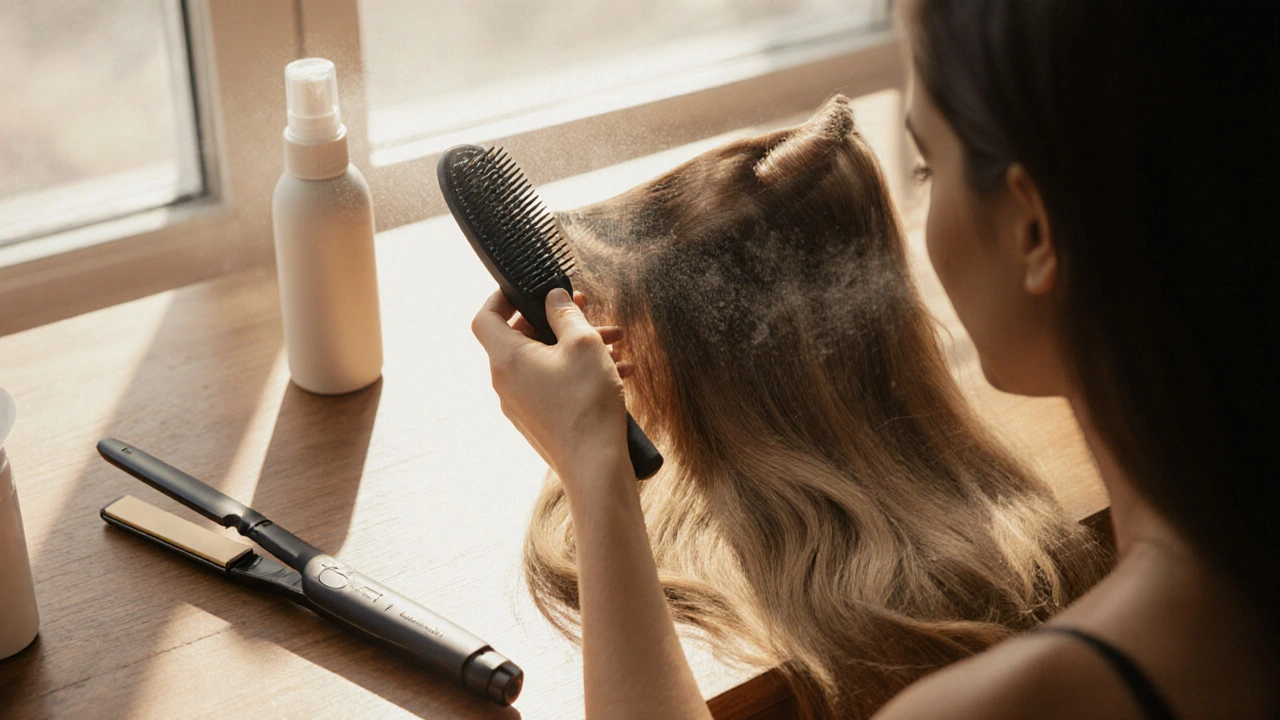
Learn whether it's safe to use heat tools on clip-in hair extensions and how to style them without causing damage. Tips for human vs. synthetic hair, heat settings, and long-term care.
 10
10