
When you use a flat iron, curling wand, or blow dryer too often—or too hot—you’re not just styling your hair, you’re changing its structure. This is heat damage, the irreversible breakdown of hair’s protein structure caused by excessive thermal exposure. Also known as thermal injury, it’s the number one reason hair becomes brittle, frizzy, and breaks off mid-strand. It doesn’t matter if you’re using a $20 dryer or a $500 straightener—heat above 350°F starts breaking down the cuticle, and repeated use turns healthy hair into straw.
Heat damage doesn’t happen overnight. It builds up slowly, which is why so many people don’t realize it’s happening until their hair snaps during brushing. You’ll notice it first as increased flyaways, lack of shine, or split ends that won’t go away no matter how much you trim. If you use heat styling tools, devices like flat irons, curling wands, and blow dryers that apply direct thermal energy to hair daily, you’re likely causing cumulative harm. Even hair extensions, added strands attached to natural hair for length or volume can suffer—especially if they’re heat-bonded or styled with the same tools as your own hair. The damage spreads. And once the protein bonds inside your hair are broken, no serum can fix them.
What actually helps? Cutting back on heat. Using a lower temperature setting. Applying a heat protectant that contains silicones or plant oils before styling. Letting your hair air-dry at least twice a week. Sleeping on a satin pillowcase to reduce friction. And if you’ve got extensions, avoiding direct heat on the bonds—those are glued or sewn in, not grown in, and they melt or fray faster than your natural hair.
You don’t need to quit heat styling forever. But you do need to respect how much your hair can take. That curl you got from a flat iron? It might look great now, but if you’re doing it every day, you’re trading long-term health for short-term style. And once the damage is done, you can’t undo it—you can only grow it out. That’s why so many people who’ve had heat damage end up cutting their hair short: not because they want to, but because the broken ends won’t hold together anymore.
The posts below cover real experiences and fixes from people who’ve been there. You’ll find guides on how to tell if your hair is truly damaged, what products actually help repair it, how to style without heat, and how to protect your extensions from the same fate. Some talk about what went wrong after a salon blowout. Others share how they switched to air-drying and finally saw their hair come back to life. No fluff. No hype. Just what works—and what doesn’t.
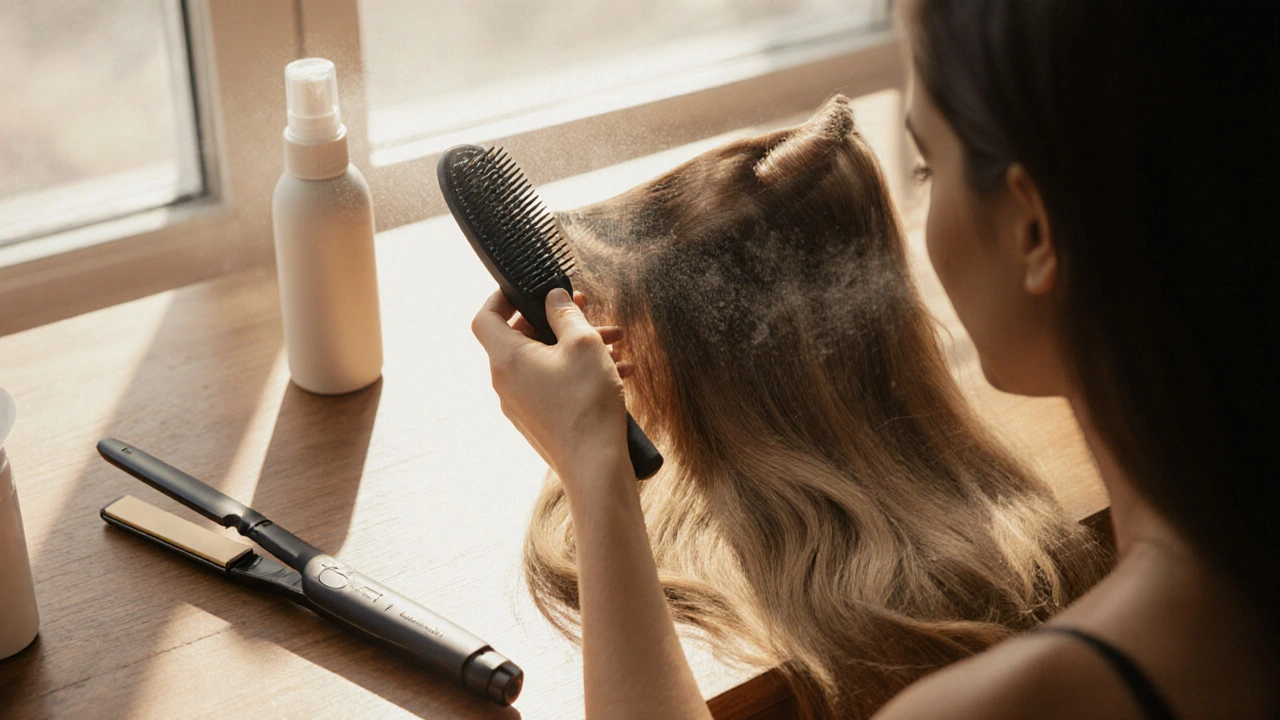
Learn whether it's safe to use heat tools on clip-in hair extensions and how to style them without causing damage. Tips for human vs. synthetic hair, heat settings, and long-term care.
 10
10