

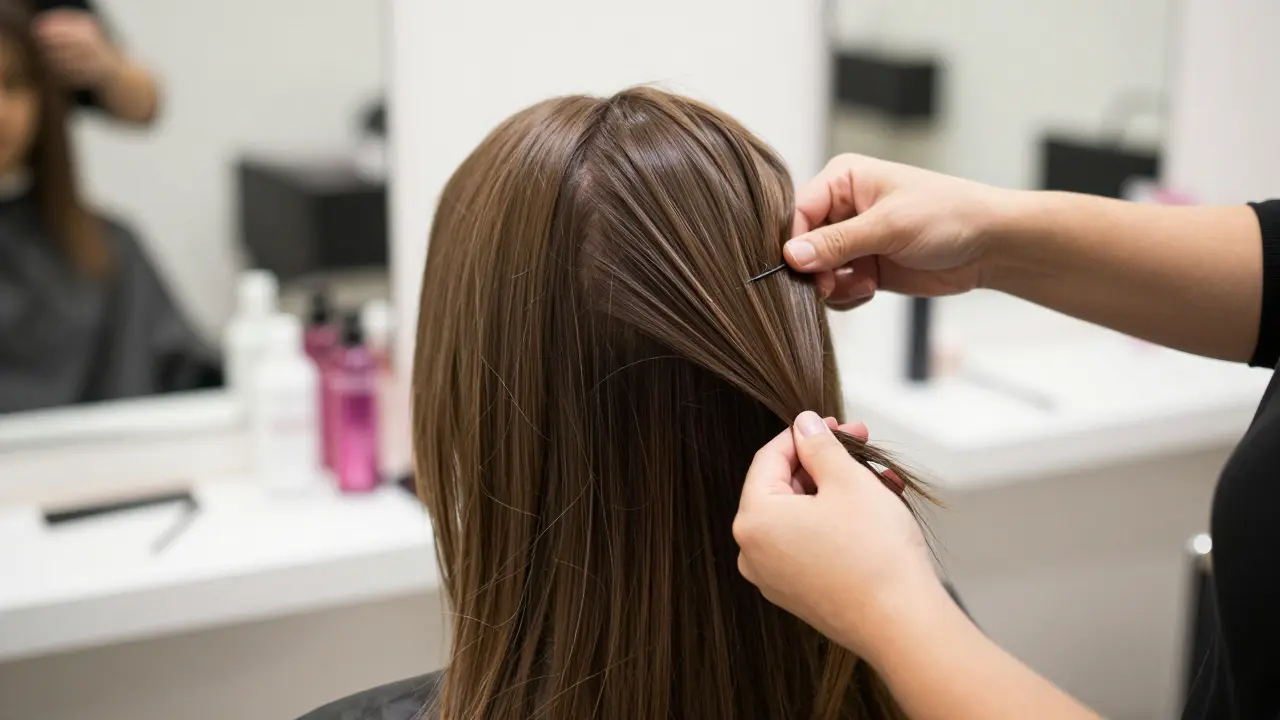
Let’s cut to the chase: if you’re thinking about adding length or volume to your natural hair, you’ve probably stared at a screen for hours comparing hair extensions and clip-ins. Both promise fuller, longer hair-but they’re not the same. One is a long-term commitment. The other is a quick fix you can toss in the drawer by bedtime. So which one actually fits your life, your hair, and your budget? Let’s break it down without the fluff.
What Are Hair Extensions?
Hair extensions are meant to be worn for weeks, sometimes months. They’re attached directly to your natural hair using methods like sew-in wefts, micro-beads, tape-ins, or keratin bonds. Once installed, you treat them like your own hair-wash, style, sleep in them. They’re not meant to come out after a party or a workout. This is permanent in the sense that you need a professional to remove them, and they stay put until you’re ready to take them off.
Real talk: if you’ve ever had a sew-in, you know the头皮 tension by day three. Tape-ins can slip if you sweat too much. Keratin bonds? They can damage your hair if not installed right. And yes, they cost between $300 and $1,500 depending on length, density, and whether you go human hair or synthetic. Human hair lasts longer, blends better, and can be heat-styled-but it also requires more upkeep.
What Are Clip-Ins?
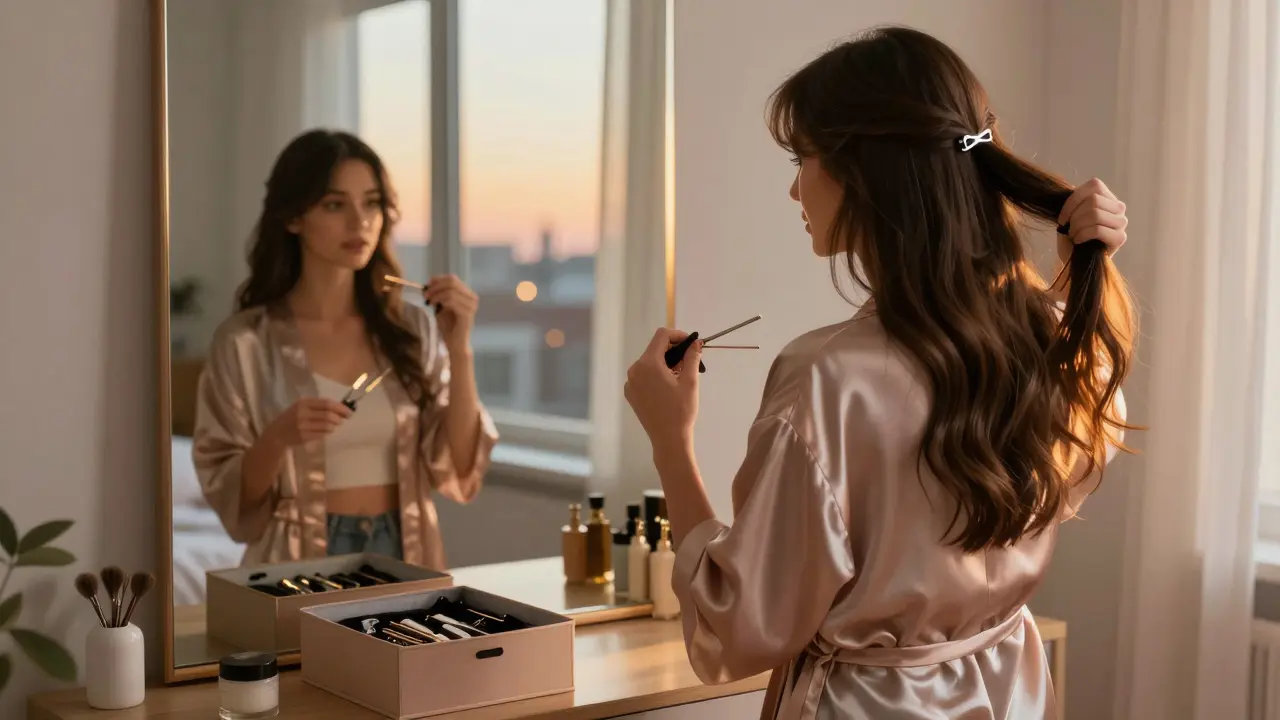
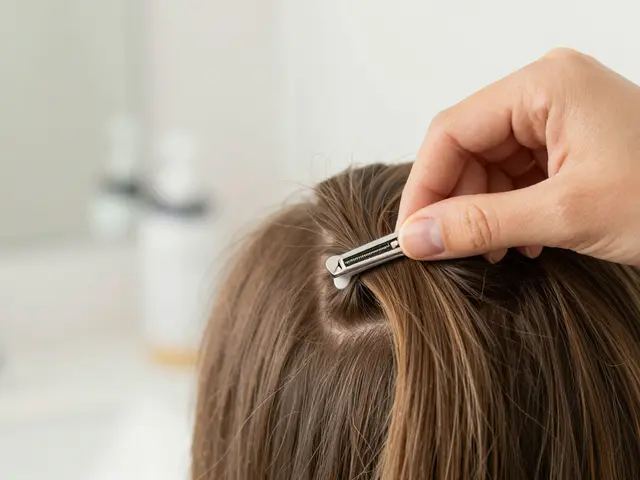
Clip-ins are exactly what they sound like: strands of hair with small metal or silicone clips sewn into the weft. You open the clips, snap them onto your natural hair, and you’ve got instant length or volume. No glue. No sewing. No salon appointment. You can put them in before a date, take them out before bed, and store them in a box until next time.
They’re usually made of human hair or high-quality synthetic fibers. Good clip-ins have a lace front or thin wefts so they lay flat and blend with your hairline. Cheap ones? They look like a wig glued to your head. You’ll know the difference the second you look in the mirror. Quality clip-ins cost $80-$300. The good ones can last a year or more if you care for them like real hair-wash them gently, avoid heat over 350°F, and store them on a wig stand.
Which One Lasts Longer?
Hair extensions win on longevity-if you treat them right. A well-maintained set of tape-ins or keratin bonds can last 6-8 weeks before needing a touch-up. With proper care, human hair extensions can be reused for up to a year. But here’s the catch: each time they’re removed and reinstalled, your natural hair takes a hit. Breakage, thinning, and traction alopecia are real risks if you wear them too often or too tight.
Clip-ins? They last longer in total use. You can use the same pair for 1-2 years if you rotate them, avoid heat damage, and don’t sleep in them. Since you’re not attaching them directly to your scalp, your natural hair gets a break every night. That’s a big deal if you’re trying to grow out your hair or protect it from damage.
How Much Time Do They Take?
Hair extensions take time to install. Even tape-ins, which are faster than sew-ins, still need 1.5 to 3 hours at a salon. And if you’re doing it yourself? Good luck. You’ll need mirrors, clips, and a lot of patience. Most people end up going back to the salon every 4-6 weeks for maintenance.
Clip-ins? You can put them in in under 5 minutes. Seriously. Once you get the hang of it, you can style them while watching TV. No appointments. No waiting. No extra cost for upkeep. You can even change styles from day to day-long straight hair one day, beachy waves the next-without buying new extensions.
What About Natural Hair Health?
This is where clip-ins have a clear advantage. Hair extensions put constant pressure on your roots. That tension, over weeks and months, can pull hair out at the follicle. It’s called traction alopecia. I’ve seen clients come in with thinning lines along their hairline because they wore sew-ins for a year straight without breaks.
Clip-ins sit on top of your hair, not underneath it. They don’t pull on your scalp. They don’t trap moisture or dirt against your skin. You can wash your scalp normally. You can let your hair breathe. If you have fine, fragile, or chemically treated hair, clip-ins are the safer choice.
Can You Style Them the Same Way?
If you’re using human hair extensions or clip-ins, yes-you can curl, straighten, and color them. But there’s a catch. Heat damages hair, no matter where it comes from. Extensions and clip-ins made of human hair can still get fried if you use high heat too often. Synthetic ones? Don’t even think about it. They melt.
Real tip: always use a heat protectant spray before styling either type. And never go above 350°F. I’ve seen too many people ruin a $200 set of clip-ins by using their flat iron on max heat. It’s not worth it.
Which One Looks More Natural?
Both can look real-if you buy quality and install them right. Hair extensions blend better because they’re attached strand by strand or in small wefts that follow your natural hairline. But if your hair is thin or short, extensions can look bulky at the roots.
Clip-ins have improved a lot. Brands like Kinky Curly, Indique, and Great Lengths now make clip-ins with lace fronts, hand-tied wefts, and multi-tone highlights that mimic natural growth. The trick is matching the color and texture to your own hair. If you have curly hair, get curly clip-ins. If your hair is fine and straight, avoid thick, heavy wefts. A bad match looks obvious.
Cost Comparison: Upfront vs Long-Term
Let’s run the numbers:
| Factor | Hair Extensions | Clip-Ins |
|---|---|---|
| Upfront Cost | $300-$1,500 | $80-$300 |
| Installation Cost | $100-$400 (salon) | $0 (do it yourself) |
| Maintenance (every 4-6 weeks) | $50-$150 | $0 |
| Lifespan | 6-12 months (with care) | 1-2 years (with care) |
| Total Cost Over 1 Year | $500-$2,000 | $100-$400 |
Clip-ins win on total cost. You pay once, use them for years. Extensions cost more upfront and keep costing you every time you need a touch-up.
Who Should Choose Hair Extensions?
You should go for hair extensions if:
- You want to wear long hair daily for months
- You don’t mind salon visits every 4-6 weeks
- You have thick, healthy hair that can handle the weight
- You’re okay with spending $1,000+ per year
- You’re not worried about scalp tension or hair damage
Hair extensions are great for brides, performers, or anyone who wants to commit to a new look without cutting their own hair.
Who Should Choose Clip-Ins?
Clip-ins are the smarter pick if:
- You want to try longer hair before committing
- You have fine, thin, or damaged hair
- You want to save money and avoid salon fees
- You like changing your style often
- You need a quick fix for events, photos, or bad hair days
They’re perfect for college students, busy moms, or anyone who wants flexibility without the hassle.
Can You Use Both?
Yes. And many people do. Some use clip-ins for daily wear and extensions for special occasions. Others wear clip-ins while their extensions grow out. There’s no rule saying you have to pick one forever. Your hair, your rules.
Final Verdict
If you want low maintenance, low cost, and zero damage to your natural hair-go with clip-ins. They’re practical, versatile, and kind to your scalp.
If you want to wake up every morning with long, flowing hair and don’t mind the cost, time, and upkeep-extensions are your thing.
But here’s the real truth: most people who start with extensions end up switching to clip-ins after a few months. Why? Because they miss their natural hair. They get tired of the maintenance. They realize they don’t need 20 inches of hair every single day.
Clip-ins give you the freedom to look fabulous without losing your hair in the process. And that’s worth more than any length of hair.
Can clip-ins damage your hair?
Clip-ins don’t damage your hair if used correctly. They clip onto your hair, not into it. But if you use cheap, heavy wefts, sleep in them, or pull them too tight, you can cause breakage. Always choose lightweight, well-made clip-ins and remove them before bed.
How long do hair extensions last?
Good quality human hair extensions last 6-12 months with proper care. Tape-ins and keratin bonds need touch-ups every 4-6 weeks. Synthetic extensions last 2-3 months before they start looking frizzy or dull.
Can I sleep with clip-ins in?
You shouldn’t. Sleeping in clip-ins can cause tangles, breakage, and loosen the clips. It also puts stress on your natural hair. Always take them out before bed. Store them on a wig stand or in a silk bag to keep them tangle-free.
Are clip-ins worth the money?
Yes-if you buy quality. A $200 set of human hair clip-ins used 2-3 times a week can last 2 years. That’s less than $10 a month. Compare that to $150 every 6 weeks for extensions. Clip-ins save you money and protect your hair.
Do hair extensions make your hair grow slower?
No, extensions don’t stop your hair from growing. But they can cause breakage or thinning if they’re too tight or worn too long. That damage can make your hair look like it’s not growing. Your hair grows at the same rate-it just looks shorter because strands are snapping off.
What’s the best type of clip-in for fine hair?
Look for lightweight, thin wefts with silicone grips, not metal clips. Avoid thick, heavy sets. Go for 120-160 grams total weight. Brands like Bellami and Hairdo offer fine-hair-specific clip-ins that blend seamlessly without weighing you down.

Dmitriy Fedoseff
January 7, 2026 AT 11:56Hair extensions are just modern-day colonialism for your scalp-forcing your natural hair to bow to foreign strands while you pretend it’s self-expression. Clip-ins? That’s autonomy. You’re not enslaving your roots; you’re borrowing beauty when you need it. No one’s forcing you to wear it 24/7. Freedom isn’t a luxury-it’s the only ethical choice.
And don’t get me started on the beauty industry’s lie that you need permanent transformation to be worthy. You’re already enough. The hair? Just a temporary accessory. Not a sentence.
Mongezi Mkhwanazi
January 8, 2026 AT 14:33Let me be perfectly clear-hair extensions are a catastrophic misallocation of resources, both financial and physiological. The notion that one can ‘maintain’ tape-ins for six to eight weeks is a delusion propagated by salons with vested interests in recurring revenue. The scalp is not a canvas; it is a living, breathing ecosystem, and to subject it to constant tension is to invite irreversible follicular attrition. Moreover, the psychological dependency induced by such systems-where one’s self-image becomes contingent upon external augmentation-is a symptom of late-stage capitalist beauty standards. Clip-ins, by contrast, permit intermittent engagement without systemic harm. One may remove them, reflect, and return to one’s unadorned self. This is not vanity-it is mindfulness.
Mark Nitka
January 9, 2026 AT 01:49I tried both. Extensions for six months-ended up with a bald patch behind my ears. Clip-ins for two years now, and my hair is thicker than ever. Honestly, the biggest myth is that extensions look more natural. If you buy decent clip-ins and match your color right, no one can tell. I’ve worn them to job interviews, weddings, even my sister’s funeral. No one knew. No one needed to know.
Save your money. Save your hair. Save your sanity.
Kelley Nelson
January 9, 2026 AT 09:26While I appreciate the pragmatic approach outlined herein, one must acknowledge the inherent vulgarity of commodifying aesthetics through transient augmentation. The very notion of ‘clip-ins’ as a viable alternative to the artistry of professionally applied extensions betrays a profound cultural regression-a capitulation to the tyranny of convenience over craftsmanship. One does not, after all, wear a fast-food meal in lieu of a Michelin-starred degustation and claim culinary sophistication. The same principle applies here.
Human hair extensions, when sourced ethically and applied with precision, are not merely enhancements-they are heirlooms. To dismiss them as ‘expensive’ is to misunderstand the value of enduring beauty.
Aryan Gupta
January 9, 2026 AT 19:16Did you know the FDA doesn’t regulate hair extensions? None of this is tested. The glue they use in keratin bonds? It’s the same chemical they use in industrial adhesives. And those ‘human hair’ extensions? 80% of them are synthetic, dyed and labeled as ‘Remy’ to scam you. I’ve seen the factory videos. They use hair from dead women in India-unconsented, harvested from temples, sold to Western salons. You think you’re buying beauty? You’re buying exploitation. Clip-ins? At least you’re not funding human trafficking.
And if you’re using heat on them? You’re literally melting plastic onto your scalp. That’s not styling-that’s arson.
Fredda Freyer
January 11, 2026 AT 06:41One thing no one talks about: the emotional labor of extensions. You have to treat them like your own hair-wash them gently, sleep on silk, avoid humidity, never tie them up, never let them get wet in the rain. It’s like having a second child that demands constant attention.
Clip-ins? You put them in, you feel fabulous, you take them out, you go to bed. No guilt. No maintenance. No anxiety. It’s the difference between owning a car and renting one. You don’t have to worry about the oil changes, the inspections, the depreciation. You just use it when you need it.
Also, if you’re using clip-ins with fine hair, get the ones with silicone grips, not metal. Metal clips? They rip out strands like a lawnmower. Silicone? They hug your hair like a hug from your mom.
And yes-your hair grows just fine with clip-ins. I grew 4 inches while wearing them daily for a year. No breakage. No thinning. Just freedom.
Gareth Hobbs
January 12, 2026 AT 13:55Extensions? Pfft. Only Americans and overpaid influencers go for that nonsense. In the UK, we’ve got sense. Clip-ins are the only way-cheap, easy, and you don’t end up looking like a badly glued wig on a drunk teenager. I’ve seen blokes with tape-ins sweating at the gym-looked like they’d glued a ponytail to their head with superglue. Pathetic.
And don’t even get me started on the ‘human hair’ lie. Half of it’s Chinese synthetic junk with a ‘100% Remy’ sticker slapped on. You’re getting ripped off. Clip-ins? At least you know where you stand. Pay once, use for years, no salon bills. Simple. Efficient. British.
Zelda Breach
January 14, 2026 AT 06:16Let’s be real: if you’re asking whether clip-ins or extensions are better, you’re already losing. The real question is why you feel the need to alter your natural hair at all. Society told you your hair isn’t enough. You believed it. Now you’re spending thousands to pretend otherwise. The extensions are a symptom. The clip-ins? A slightly less expensive coping mechanism.
Either way-you’re still playing a game designed to make you feel inadequate. The real victory? Loving your hair as it is. But since you’re here, at least go with clip-ins. Less damage. Less debt. Less delusion.
Alan Crierie
January 14, 2026 AT 21:55Just wanted to say-this post was so thoughtful and balanced. Thank you for not just pushing one side. I’ve been using clip-ins for 18 months now, and honestly? They changed my life. I have curly, fine hair that gets overwhelmed by extensions. The clip-ins I got from Bellami? Light as air, blend perfectly, and I can wear them to work and take them out before dinner. No one knows. No one cares. I just feel like me-but with a little extra sparkle 😊
Also, storing them on a wig stand? Game-changer. I got mine from Amazon for $12. Don’t just toss them in a drawer. Your hair will thank you.
Nicholas Zeitler
January 16, 2026 AT 21:38STOP. Just STOP. If you’re even thinking about extensions, pause. Breathe. Ask yourself: ‘Do I need this, or am I just tired of looking in the mirror?’
Clip-ins are the MVP. You can buy a good set for less than a Netflix subscription. You can use them for dates, photos, job interviews, birthdays, holidays. You can switch styles daily. You can take them out before bed. You can let your hair breathe. You can grow your own hair out without sacrificing your confidence.
And if you’re worried about cost? Do the math. Extensions cost you $150 every 6 weeks. That’s $300 a year. Clip-ins? $200 once. Lasts two years. You’re saving $400. Plus your hair stays healthy. That’s not just money-that’s peace of mind.
You’ve got this. Go clip-in. You’ll thank yourself in 6 months.
Teja kumar Baliga
January 17, 2026 AT 16:54I used extensions for a year in college-ended up with thinning at the temples. Switched to clip-ins. My hair grew back in 4 months. Now I use them for weddings, festivals, and just because I feel like it. No stress. No pain. No drama. Just hair that looks good when I want it to. Simple. Effective. Indian wisdom.