
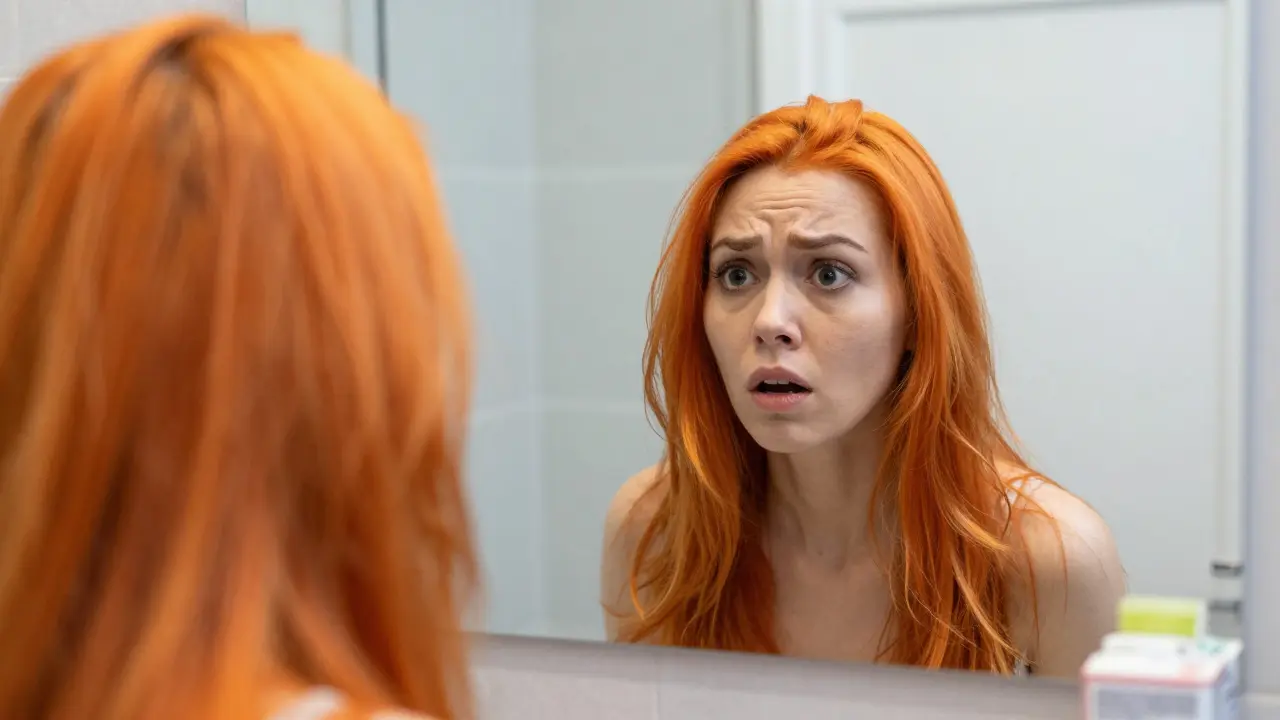
You’ve just spent hours bleaching your hair, expecting a cool, icy platinum result. Instead, you’re staring in the mirror at what looks like a bright carrot top. It’s frustrating, it’s expensive, and it feels like a disaster. Your immediate instinct is probably to grab a box of light blonde dye-maybe an "extra light ash" or a "high-lift blonde"-and hope it washes away the orange. It’s a logical guess: if dark dye makes hair darker, surely light dye makes it lighter, right?
Here is the hard truth that every professional colorist knows but rarely explains simply: light blonde hair dye will almost never lighten orange, brassy hair significantly. In fact, applying a standard light blonde box dye over strong orange pigment often makes the problem worse, turning your hair a muddy, murky brown-orange instead of the cool blonde you want.
To fix this, we need to understand why the orange is there in the first place and why dye behaves differently than bleach. Let’s break down the science of hair levels, the myth of "lifting color," and exactly what you should do to get from brass to blonde without ruining your hair texture.
The Golden Rule: Color Does Not Lift Color
If you remember only one thing from this article, let it be this phrase: Color does not lift color. This is the fundamental law of hair chemistry.
When you use permanent hair dye, you are adding pigment to your hair shaft. You are not removing anything. Bleach (lightener) works by breaking down the natural melanin in your hair to make it lighter. Dye works by opening the cuticle and depositing artificial color molecules inside.
Imagine your hair is a white canvas. If you paint it red, you can’t turn it back to white by painting yellow over it. You’d have to scrape off the red paint first. That scraping process is what bleach does. When your hair is orange after bleaching, that orange pigment is sitting on top of your natural base. Applying a light blonde dye is like trying to cover a red wall with a thin layer of beige paint. The red (or orange) will still show through, often creating a dull, unexpected shade.
Professional brands like Zotos and Salonory emphasize that permanent oxidative dyes cannot meaningfully lift existing artificial color. If your hair is already dyed or bleached, a lighter shade of dye will not strip away the darker warm tones. It will simply sit on top, potentially making the hair look darker or more uneven.
Understanding Hair Levels: Why You Are Orange
To fix your hair, you need to know where you stand on the hair level scale. This is a universal system used by stylists worldwide, ranging from Level 1 (black) to Level 10 (platinum blonde).
| Level | Description | Underlying Pigment (What shows when lifted) |
|---|---|---|
| 1-3 | Black / Dark Brown | Red |
| 4-5 | Medium Brown / Light Brown | Red-Orange |
| 6 | Darkest Blonde | Orange |
| 7 | Dark Blonde | Orange-Yellow |
| 8 | Medium Blonde | Yellow |
| 9-10 | Light Blonde / Platinum | Pale Yellow |
Most people who end up with "brassy" hair after a single at-home bleach session are sitting somewhere between Level 5 and Level 7. At these levels, the underlying pigment exposed is distinctly orange. To achieve a true light blonde (Level 9 or 10), you need to lift the hair past the orange stage into the yellow stage.
A standard light blonde box dye is formulated to work on virgin hair (hair that has never been colored). It expects to lift natural pigment from Level 6 or 7 up to Level 9. But because your hair is already damaged and saturated with artificial orange pigment, the dye cannot lift further. It stops where it is, leaving you stuck at Level 6 or 7, but now with added ash pigment that clashes with the orange.
Why Ash Blonde Dye Often Fails on Orange Hair
You might see advice online suggesting that "ash" neutralizes warmth. This is technically true based on color theory, but only if the starting point is correct. On a color wheel, blue cancels out orange, and violet cancels out yellow.
However, here is the catch: ash blonde dyes contain blue or green pigments. If you apply a blue-based ash dye over strong orange hair (Level 6), the blue mixes with the orange. What do you get? A muted, muddy brown or a khaki green tone. It doesn’t disappear; it just gets dirtier.
Ash blonde dye works beautifully if your hair is already pale yellow (Level 9). The blue in the ash dye neutralizes the faint yellow, giving you a cool, platinum finish. But on deep orange hair, the contrast is too stark. The dye deposits its cool tones, but the underlying orange is so strong that it fights back, resulting in a dull, lifeless color rather than a bright blonde.
Many users report that after applying a light ash blonde over orange hair, their hair looks "dirty" or "muddy." This is because the dye hasn’t removed the orange; it has merely layered a grey-blue tint over it. The result is often darker than before, not lighter.
When Can Light Blonde Dye Actually Help?
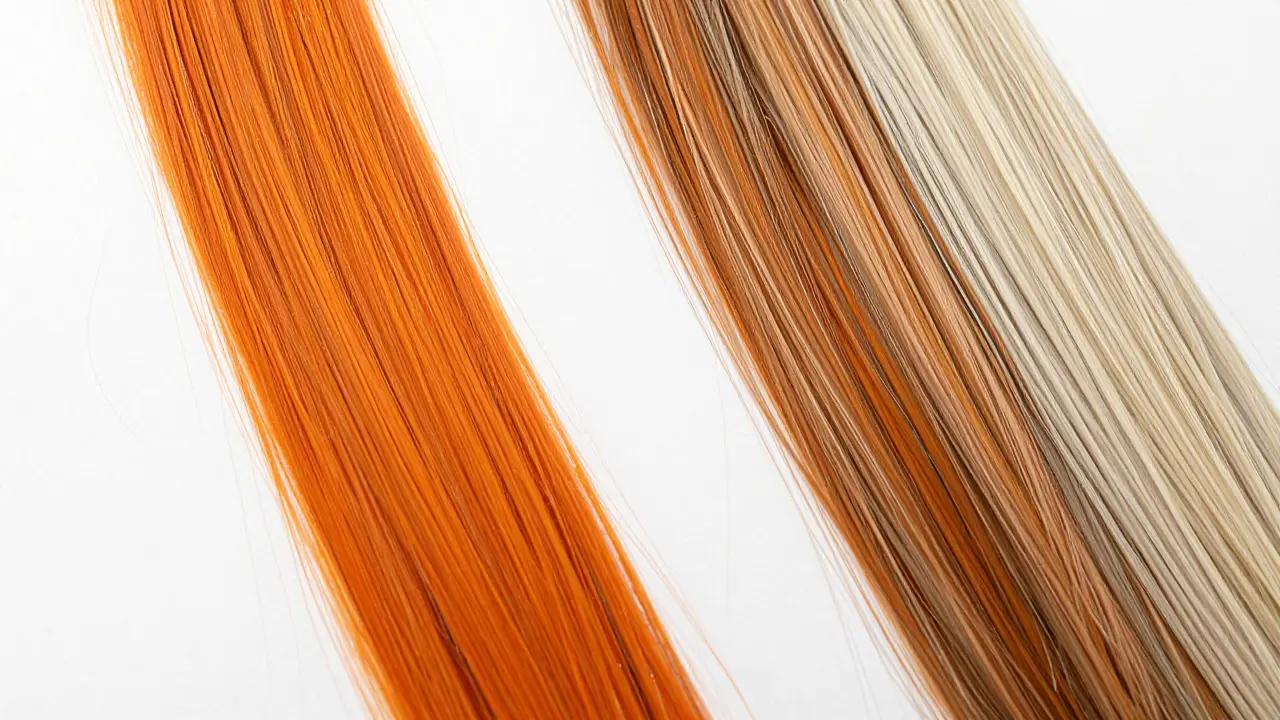
There is a narrow window where light blonde dye can be useful, but it requires specific conditions. If your hair has been lifted to Level 8 (medium blonde) and is showing slight orange-gold tones, a high-quality light ash blonde dye (Level 9 or 10) with a low-volume developer (like 10 volume) can help.
In this scenario, you aren’t trying to lift the hair. You are using the dye as a toner. A toner is a demi-permanent or semi-permanent color that deposits pigment without lifting. By choosing a shade that is one level lighter than your current hair, you can deposit enough blue/violet pigment to shift the orange-gold toward a cooler, neutral blonde.
This works best if:
- Your hair is already very light (Level 8+).
- The brassiness is mild (more gold than bright orange).
- You use a demi-permanent formula, which is gentler and focuses on deposition rather than oxidation.
If your hair is anywhere near Level 6 or lower, skip the box dye. You are better off with dedicated toning products or further lightening.
The Real Solution: How to Fix Orange Hair
If you are determined to get rid of the orange, you have two realistic paths. Neither involves slapping a light blonde box dye over the problem and hoping for magic.
Option 1: Further Lightening (Bleach)
If your goal is a light or platinum blonde, you must lift the hair to Level 9 or 10. Since dye cannot lift color, you need bleach. However, caution is critical. Repeated bleaching damages the hair structure, leading to breakage. Use a bond-building treatment (like Olaplex or K18) during the process to protect the integrity of your hair. Aim to lift the hair until it looks like pale banana yellow. Only then can you tone it to blonde.
Option 2: Toning with Blue Products
If your hair is too fragile for more bleach, or if you are okay with a darker blonde (Level 7-8), focus on neutralizing the orange without lifting. For strong orange tones, you need blue. Purple shampoo is for yellow hair; it will do almost nothing for orange. Look for:
- Blue Shampoo/Mask: These deposit blue pigment to counteract orange. Use them once a week to maintain a cooler tone.
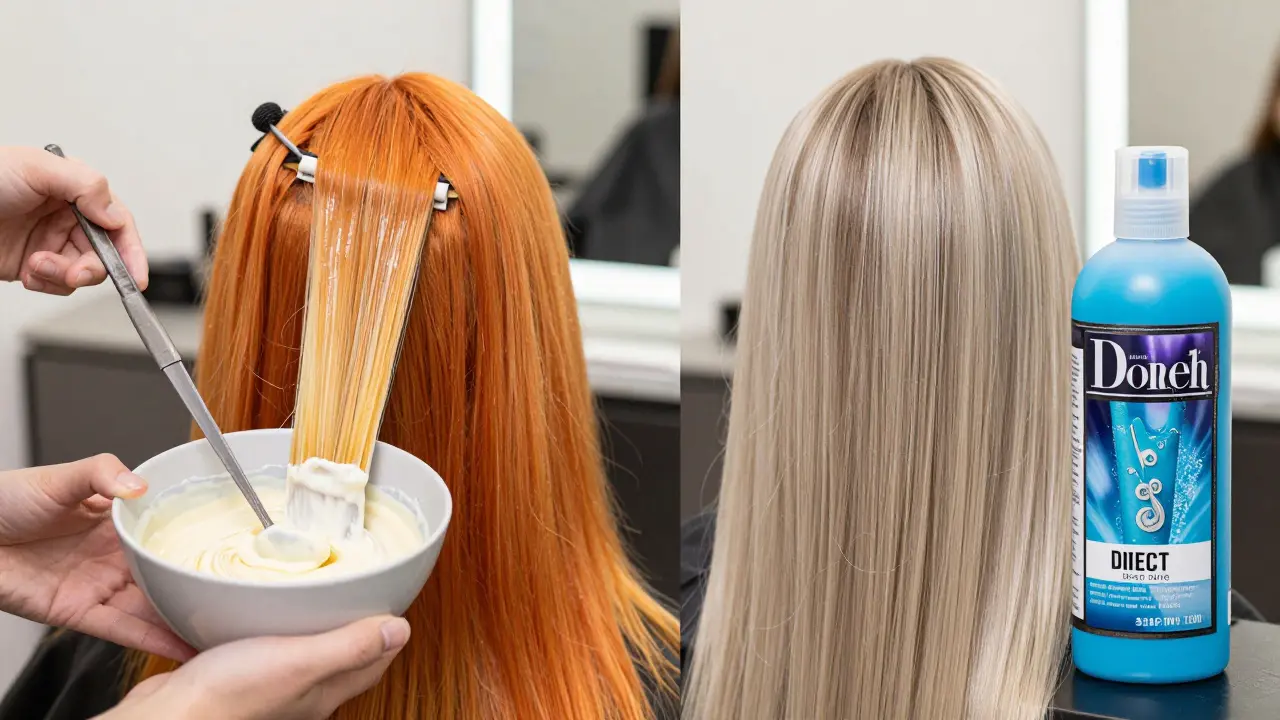
- Direct-Dye Toners: Professional-grade direct dyes (like Wella Color Charm T18 or similar blue-violet shades) mixed with a 5-volume developer can deposit intense cool tones without lifting. This turns orange hair into a cooler, darker ash blonde or brown-blend, but it won’t make it lighter.
Common Mistakes to Avoid
Trying to fix hair color at home is easy to mess up. Here are the most common pitfalls that lead to worse results:
- Using High-Lift Blonde on Dyed Hair: High-lift colors are designed for virgin roots. They fail on previously colored lengths and can cause severe banding (a dark line where the new growth meets the old color).
- Applying Dye Immediately After Bleaching: Your hair cuticle is open and porous right after bleaching. Applying dye immediately can lead to uneven absorption and rapid fading. Wait at least 48 hours, or use a protein treatment to seal the cuticle first.
- Expecting Permanent Results from Toner: Toners and shampoos are temporary. They wash out. You will need to maintain your cool tone with regular washing in cold water and occasional re-toning.
Summary: What Should You Do Today?
If you have orange, brassy hair, put down the light blonde box dye. It will not lighten your hair, and it may make the color look muddy. Instead, assess your hair’s level. If it’s dark orange (Level 5-6), consider a careful second round of bleaching with bond protection to reach yellow, followed by a purple or blue toner. If it’s light orange/gold (Level 7-8) and you want to keep it darker, use a blue shampoo or a direct-dye blue toner to neutralize the warmth. Patience and understanding the chemistry will save you from a costly salon correction later.
Can I use purple shampoo on orange hair?
No, purple shampoo is designed to neutralize yellow tones. On orange hair, purple will have little to no effect. You need blue shampoo or blue toner to cancel out orange pigment.
Does high-lift blonde dye work on previously colored hair?
Generally, no. High-lift blondes are formulated to lift virgin hair up to 3-4 levels. They cannot effectively lift artificial pigment from previously dyed or bleached hair. Using them on colored hair often results in minimal lift and potential damage.
How long should I wait after bleaching before applying toner?
It is best to wait at least 48 hours after bleaching before applying any color or toner. This allows the hair cuticle to close and the pH balance to normalize, ensuring even color absorption and reducing damage.
Why did my hair turn green after using ash blonde dye?
Ash blonde dyes contain green or blue pigments. If applied over hair that is not light enough (still orange or yellow), these cool pigments mix with the warm underlying pigment, resulting in a greenish or muddy hue. This is a sign that the hair needed more lift before toning.
Is it safe to bleach orange hair again?
It can be safe if done carefully, but repeated bleaching increases the risk of breakage. Always use a bond-building agent, check your hair's elasticity before proceeding, and avoid overlapping bleach onto previously processed sections if possible. If your hair feels gummy or stretches without snapping, stop immediately.