
You look in the mirror, run your fingers through the hair falling over your forehead, and ask yourself: why do we call these "bangs"? It’s a word that feels as American as apple pie, yet it has zero connection to fruit or pastry. If you’ve ever scrolled through social media seeing trends like curtain bangs is a face-framing hairstyle where hair parts in the middle and falls on either side of the face, you know this term is everywhere. But the origin isn’t about the sound they make when you cut them, nor does it refer to window coverings directly.
The truth is simpler, stranger, and rooted in the evolution of language itself. To understand why we say "bangs," we have to look at how English borrowed words from other languages, how regional dialects split terms in half, and how a specific type of window treatment gave its name to one of the most popular hairstyles in history.
The British Connection: Fringe vs. Bangs
If you travel to London, Paris, or Sydney, you won’t hear anyone asking for "bangs." They’ll ask for a "fringe." This is the first clue. In British English, Australian English, and most Commonwealth countries, the hair cut short across the forehead is called a fringe. The word comes from the Old French frange, meaning a decorative border or edge, which makes perfect sense given how the hair frames the face.
In the United States, however, "fringe" took on a different life. By the mid-19th century, "fringe" in American slang often referred to something else entirely-specifically, the decorative tassels on clothing or, more infamously, the sexual connotations associated with certain types of attire. As language evolves to avoid awkwardness or double meanings, Americans needed a new word for the haircut. Enter "bangs."
| Region | Common Term | Etymological Root |
|---|---|---|
| United States / Canada | Bangs | Window drapes (shortened) |
| UK / Australia / NZ | Fringe | Old French 'frange' (border) |
| France | Frangues | French 'frange' |
| Germany | Pony | German 'Pony' (ponytail-like fall) |
The Window Treatment Theory
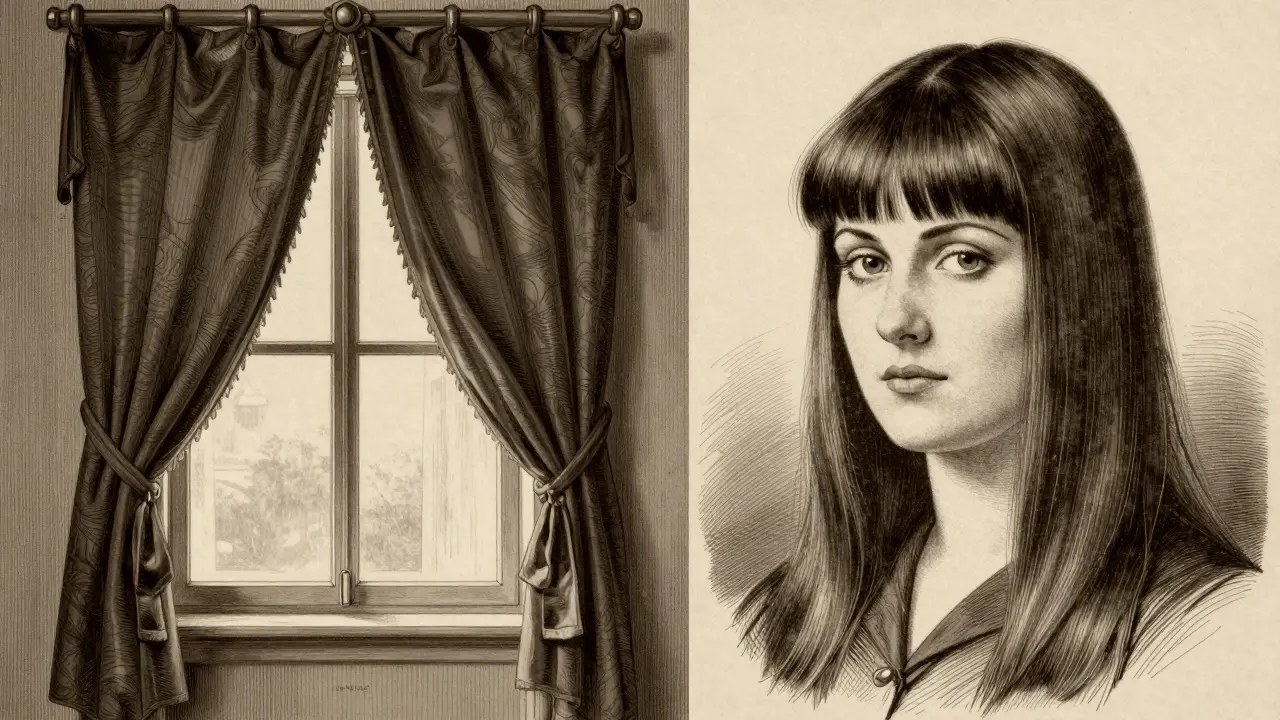
The most widely accepted theory among linguists connects "bangs" to the word "drabes" or "draperies." In the late 19th and early 20th centuries, heavy curtains were often called "drabs." When people wanted shorter, lighter curtains that covered only the top part of a window, they were sometimes called "half-drabs" or simply "drabs." Over time, the pronunciation shifted. The "d" sound softened, and the word morphed into "bangs."
Think about it: both hang down from the top, covering what’s beneath. Just as a short curtain covers the upper part of a window, bangs cover the upper part of the face. This visual metaphor stuck. By the 1920s, the term "bangs" was firmly established in American dictionaries to describe hair cut straight across the forehead.
This linguistic shift wasn’t unique to hair. Language loves brevity. We shorten "information" to "info," "photograph" to "photo," and apparently, "drab curtains" to "bangs." It’s a classic case of semantic borrowing, where an object’s function transfers its name to a similar-looking thing.
Why Not "Blunt Cuts"?
You might wonder why we don’t just call them "blunt cuts," since many bangs are cut straight across. While "blunt" describes the technique, it doesn’t describe the location. A blunt cut can be at the ends of long hair, too. "Bangs" specifically identifies the hair on the forehead. This specificity matters because bangs require a different maintenance routine than the rest of your hair. They grow faster relative to their length, requiring trims every 3-4 weeks to maintain shape, whereas the back of your hair might go 8-12 weeks between cuts.
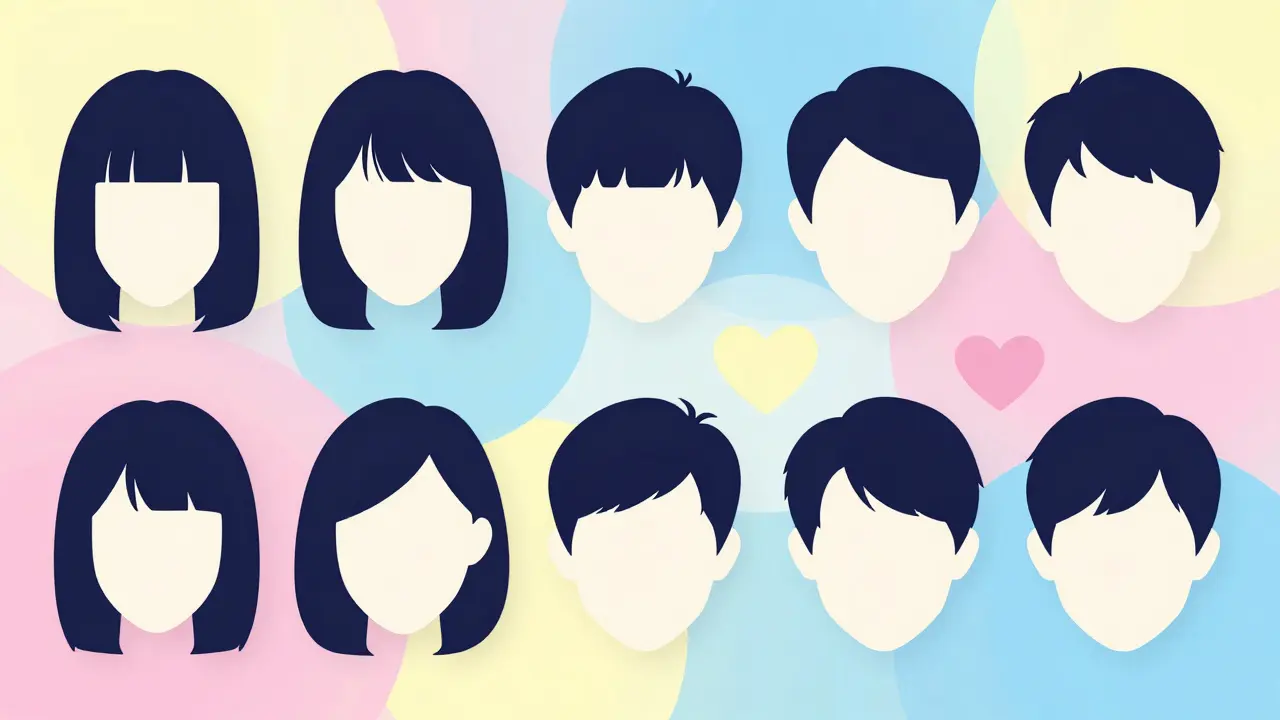
Additionally, "bangs" implies a style choice, not just a cutting method. You can have wispy bangs, side-swept bangs, or micro-bangs. Each variation serves a different aesthetic purpose, often used to balance facial features. For example, thick, straight bangs can soften a strong jawline, while side-swept bangs can elongate a round face. The term "bangs" encompasses all these variations under one umbrella.

The Rise of Curtain Bangs
In recent years, the conversation around bangs has shifted dramatically with the popularity of curtain bangs is a parted hairstyle that splits in the center, resembling open curtains. Unlike traditional blunt bangs that sit flat against the forehead, curtain bangs are longer, thinner, and parted in the middle. They blend seamlessly into the rest of the hair, offering a low-commitment way to experiment with front hair.
This trend revived interest in bangs because it addressed a common fear: looking severe or dated. Traditional bangs can feel high-maintenance and unforgiving if they grow out unevenly. Curtain bangs, however, grow out gracefully. They transition naturally into layers, making them ideal for people who want the framing effect without the daily styling struggle. The name "curtain" reinforces the window treatment analogy, emphasizing the parting action rather than the coverage.
The resurgence of curtain bangs also aligns with the broader beauty trend toward effortless, "lived-in" looks. Social media platforms like TikTok and Instagram have amplified this style, showing users how to achieve the look with minimal tools. A simple round brush and blow dryer can create the sweeping motion characteristic of curtain bangs, making it accessible to home stylists.
Cultural Shifts and Celebrity Influence
Celebrities have played a huge role in normalizing and renaming bangs. In the 1960s, icons like Twiggy and Brigitte Bardot wore heavy, straight bangs that defined the era. Then came the 1970s with shag cuts and feathered bangs. Each decade brought a new interpretation, but the term "bangs" remained constant in the US.
Today, stars like Hailey Bieber and Zendaya have made curtain bangs a staple. Their influence pushes salons to adapt. Stylists now spend more time educating clients on how to style curtain bangs versus blunt bangs. This education includes product recommendations, such as lightweight texturizing sprays to avoid greasiness, and heat protectants to prevent damage from frequent blow-drying.
The cultural acceptance of bangs has also expanded beyond gender norms. Men are increasingly experimenting with fringe styles, though they often use terms like "fringe" or "forehead hair" to distance themselves from the feminine connotations sometimes attached to "bangs." This linguistic nuance shows how deeply embedded these terms are in our perception of style and identity.
Maintaining Your Bangs: Practical Tips
Regardless of whether you call them bangs or fringe, maintaining them requires attention. Here’s what you need to know:
- Trimming Frequency: Blunt bangs need trimming every 3-4 weeks. Curtain bangs can go 6-8 weeks before needing a touch-up.
- Washing Routine: Wash bangs separately if the rest of your hair is oily. Use a dry shampoo on the roots to absorb excess oil without weighing down the strands.
- Styling Tools: A small round brush (1-1.5 inches) works best for curling blunt bangs. For curtain bangs, a larger barrel curling iron creates the sweeping effect.
- Product Choice: Avoid heavy creams. Opt for volumizing mousses or light-hold hairsprays to keep bangs from flattening against the forehead.
If you’re hesitant to commit, clip-in bangs offer a temporary solution. These allow you to test the look without cutting your natural hair. It’s a smart move for anyone unsure about how bangs will suit their face shape.
Face Shapes and Bang Styles
Not all bangs work for everyone. Understanding your face shape helps you choose the right style:
- Oval Faces: Most bang styles work, including blunt and curtain bangs.
- Round Faces: Side-swept or curtain bangs add length and angle, avoiding the widening effect of straight-across bangs.
- Square Faces: Soft, wispy bangs or deep side parts soften angular jawlines.
- Heart-Shaped Faces: Curtain bangs balance a wider forehead by adding volume at the sides.
Consulting with a stylist before cutting is crucial. They can assess your hair texture, density, and growth patterns to recommend a style that grows out well. Fine hair may require texturizing techniques to add body, while thick hair might need thinning shears to reduce bulk.
Why do Americans say 'bangs' instead of 'fringe'?
Americans likely adopted "bangs" from the term "drab curtains" or "half-drabs," which were shortened and phonetically shifted over time. Meanwhile, British English retained "fringe," derived from the Old French word for a decorative border. The divergence happened as American slang evolved to avoid other meanings of "fringe."
What is the difference between bangs and curtain bangs?
Traditional bangs are cut straight across the forehead and lie flat. Curtain bangs are parted in the middle, longer, and sweep away from the face, resembling open curtains. Curtain bangs are lower maintenance and grow out more naturally than blunt bangs.
How often should I trim my bangs?
Blunt bangs typically need trimming every 3-4 weeks to maintain their shape. Curtain bangs can go 6-8 weeks between trims because they blend into the rest of the hair and grow out more gracefully.
Do bangs make your face look bigger?
It depends on the style. Straight, thick bangs can widen the appearance of a round face. However, side-swept or curtain bangs add vertical lines and angles, which can elongate and slim the face. Choosing the right style for your face shape is key.
Can I cut my own bangs at home?
Yes, but proceed with caution. Cut dry hair, not wet, as wet hair shrinks when it dries. Start by cutting less than you think you need. Use sharp scissors and cut vertically (point cutting) rather than horizontally to avoid a harsh line. If unsure, consult a professional stylist.