

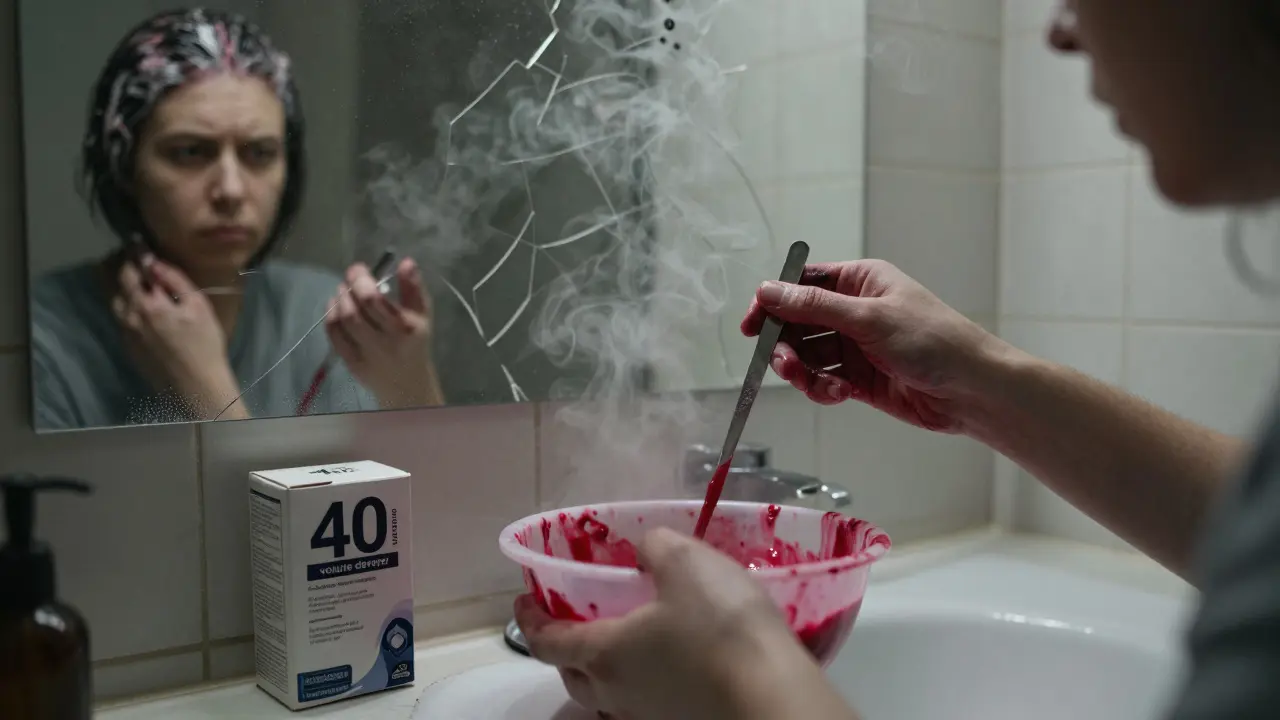
Every year, millions of people try to save time and money by coloring their hair at home. But not all techniques are safe-and some can cause serious harm. If you’ve ever used a box dye, mixed two colors, or left the product on longer than the instructions said, you might be risking more than just a bad color. You could be exposing yourself to chemicals that burn your scalp, trigger allergic reactions, or even increase long-term health risks. The truth is, some hair coloring methods should never be done without professional training, proper ventilation, and the right safety gear.
Never Use High-Volume Developers at Home
One of the most dangerous mistakes people make is using 30- or 40-volume hydrogen peroxide to lift color faster or make it last longer. These are professional-grade developers meant for salons, not kitchens or bathrooms. At home, there’s no way to control how the chemical interacts with your scalp and hair. According to clinical data, improper use of high-volume developers causes chemical burns in 12% of cases. That’s not a rare accident-it’s predictable damage.
What happens? The peroxide strips away your hair’s natural protection, then burns into the scalp. People report stinging, blistering, and even hair loss in patches. A Reddit thread from January 2025 had over 247 comments from users who tried this “hack” to make their color pop. Nearly 70% of them ended up with painful burns that took weeks to heal. And it’s not just the hair that suffers-inhaling the fumes can cause wheezing, coughing, and throat irritation. Cleveland Clinic recorded that 35% of home users experience respiratory issues within 30 minutes of using high-volume developers.
Avoid Mixing Different Hair Color Brands
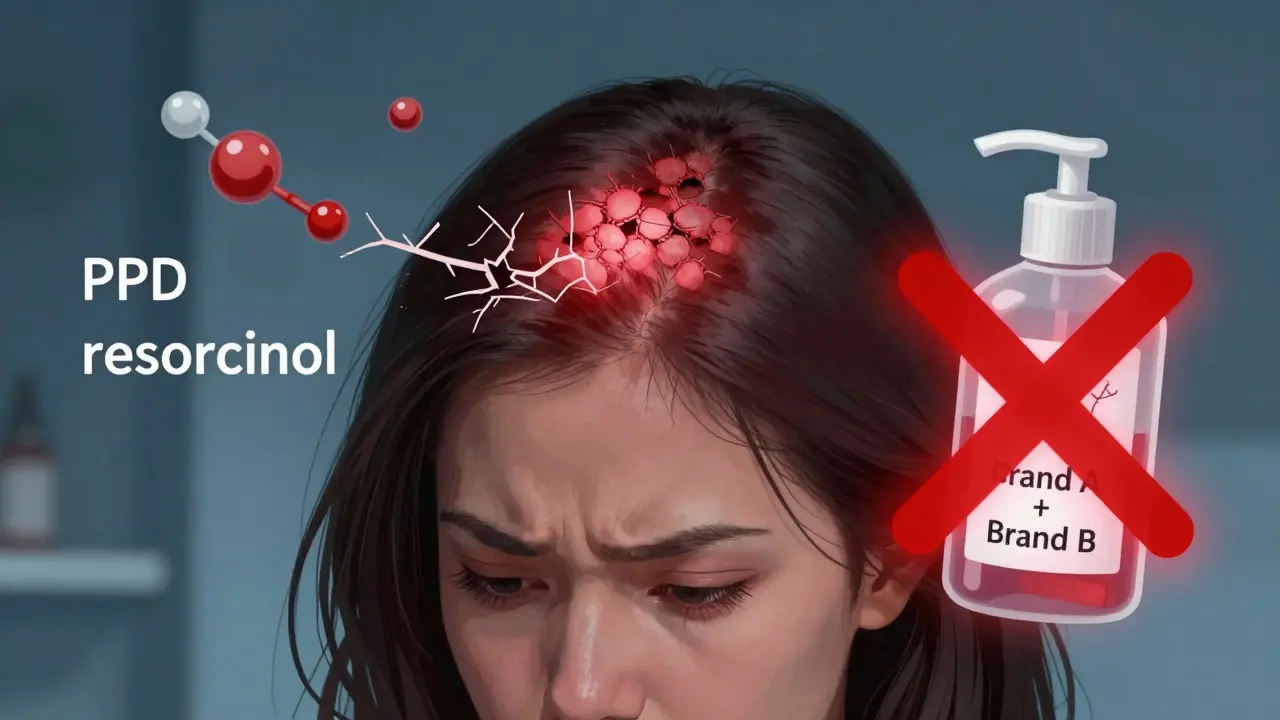
It’s tempting to mix a box dye from one brand with a toner from another to get the exact shade you want. But this isn’t like mixing paint. Hair dyes contain complex chemical formulas that weren’t designed to interact with each other. When you combine them, unpredictable reactions occur-some even create new toxic compounds that weren’t in either product originally.
Dr. Michele Green, a dermatologist in New York, explains it plainly: “Mixing brands is like throwing random chemicals into a beaker. You don’t know what’s going to happen.” In one documented case, a woman mixed a PPD-based dye with a resorcinol-heavy toner and ended up with a chemical reaction that left her scalp swollen and blistered. Emergency room visits for this exact mistake rose 22% in 2024, according to the American Academy of Dermatology.
Even if you don’t see immediate damage, these combinations can weaken your hair’s structure over time. The result? Brittle strands, breakage, and hair that snaps off at the root. Stick to one brand’s complete system-developer, color, and conditioner-all designed to work together.
Don’t Apply Color to Damaged or Recently Treated Hair
If you’ve relaxed, straightened, or permed your hair in the last two weeks, don’t color it. The chemicals in relaxers and straighteners open up the hair cuticle and weaken the cortex. Adding dye on top is like pouring acid on an already cracked surface.
Beautylish forum users documented 42 cases of severe chemical burns from applying color immediately after relaxing. Dermatologists say this combo increases burn severity by up to 300%. The scalp becomes hypersensitive, and the dye penetrates deeper than it should-leading to prolonged irritation, scarring, or even permanent pigment changes.
Same goes for coloring over broken skin. If you have a cut, scrape, or sunburn on your scalp, skip the dye. The FDA’s injury database shows that 23% of reported hair dye injuries involved application over damaged skin. That’s not a coincidence-it’s a direct cause-and-effect.
Never Skip the 48-Hour Patch Test
This is the single most important safety step-and yet, 79% of home users skip it. The patch test isn’t a suggestion. It’s your last line of defense against a severe allergic reaction.
Para-phenylenediamine (PPD) is the most common allergen in hair dye. It’s in 75% of permanent box dyes. A reaction can range from itchy redness to full-blown anaphylaxis. The patch test works because symptoms take 48 to 72 hours to appear. If you rub a small amount behind your ear or on your inner elbow and don’t see swelling, burning, or hives after two days, you’re likely safe.
But if you skip it? Your risk of a severe reaction jumps from 1.4% to 12.3%. That’s nearly nine times higher. The American Contact Dermatitis Society tracked over 1,200 cases in 2024 where people skipped the patch test and ended up in the ER with swollen eyes, face, and throat. Don’t gamble with your health. Even if you’ve used the same brand for years, your body can develop an allergy at any time.
Avoid Products with Lead Acetate or High Resorcinol
Some hair dyes-especially those marketed as “progressive” or “gradual color”-still contain lead acetate. The FDA banned it in cosmetics in 2018, but it’s still sneaking into imported products sold online. Just 0.5% concentration can cause neurological symptoms like dizziness, metallic taste in the mouth, and headaches.
Amazon reviews for these products are filled with complaints: “I got dizzy after one use,” “My kid said my hair tasted weird.” In 2025, the FDA issued a formal warning, and Amazon removed 82% of lead acetate-containing dyes within three months. Still, some sellers relist them under different names. Always check the ingredient list. If you see “lead acetate,” put it back.
Resorcinol is another red flag. It’s used to stabilize color, but concentrations above 1.25% can disrupt thyroid function. A 2023 study in Environmental Health Perspectives found that women using dyes with 2.5% resorcinol had measurable hormone imbalances after just six months of regular use. Many box dyes still contain this level. Look for “resorcinol-free” labels-43% of new 2026 products are already making this switch.
Don’t Color Synthetic Hair Extensions or Braids
This one catches people off guard. If you’re dyeing your natural hair and have synthetic extensions or braids in, don’t apply dye to them. Synthetic hair is made from plastic fibers that absorb chemicals differently. More importantly, Consumer Reports found that 65% of tested synthetic hair products contain benzene-a known carcinogen.
When you add hair dye to synthetic fibers, the two chemicals can react and form new toxic compounds. One user on Reddit described her extensions turning bright orange and smelling like burning plastic. She ended up with chemical burns on her scalp and had to get her hair cut short. Even if the extensions look fine, the fumes from the reaction can be dangerous to inhale. Always remove synthetic pieces before coloring-or better yet, choose human hair extensions that can be safely colored.
Don’t Leave Dye On Longer Than Instructed
“I left it on for an extra 20 minutes to get darker” is a common excuse. But every minute you leave dye on increases chemical absorption by 1-2%. After 10 extra minutes, that’s 25-40% more toxin soaking into your skin and bloodstream.
The American Academy of Dermatology measured this in a controlled study. They found that extending processing time by just 10 minutes caused a measurable spike in PPD and resorcinol levels in the bloodstream. That’s not just about color intensity-it’s about your body absorbing more poison than it should.
Also, timing isn’t just about duration. Heat from blow dryers, hats, or even body temperature can speed up the chemical reaction. If you’re in a warm room or wearing a shower cap for too long, you’re accelerating the damage. Stick to the timer. Set two alarms. If the color isn’t dark enough, wait six weeks and try again.
Use Nitrile Gloves, Not Bare Hands
Most people apply hair dye with their fingers. They say, “It’s easier to feel where I’m applying it.” But your skin absorbs chemicals. Studies show that bare-handed application leads to 90% more chemical absorption than using gloves.
Nitrile gloves block 98% of dye chemicals. Latex gloves? Only 82%. And many people don’t even wear gloves-they use rubber dish gloves or nothing at all. Cleveland Clinic’s 2024 study found that 65% of home users applied dye without proper protection. The result? Stained hands, rashes, and allergic reactions on the fingers and wrists.
Don’t risk it. Buy a pack of nitrile gloves for $2 at the drugstore. They’re thin enough to feel the scalp, strong enough to protect you. And throw them away after one use.
Coloring Too Often Increases Cancer Risk
Using permanent hair dye every 2-3 weeks isn’t just bad for your hair-it’s bad for your health. A December 2025 WebMD report reviewing 96 studies found that women who color their hair this frequently face a 31% higher risk of breast cancer. That’s not a small number. Professional colorists, who space treatments every 6-8 weeks, only show a 7% increased risk.
The risk is even higher for Black women. The Sister Study published in the International Journal of Cancer in November 2024 found that Black women who use permanent dye every 5-8 weeks have a 60% higher breast cancer risk compared to white women. Researchers believe this is tied to both frequency and the higher concentrations of PPD and resorcinol in products marketed to Black hair.
It’s not about never coloring your hair. It’s about being smart. Space out treatments. Choose semi-permanent or plant-based options. And if you’re coloring often, talk to your doctor about screenings.
What Should You Do Instead?
Safe home coloring is possible-if you follow the rules. Here’s what to do:
- Use only dyes labeled “PPD-free” or “resorcinol-free”
- Always do a 48-hour patch test
- Use 10- or 20-volume developer only
- Never mix brands
- Remove synthetic extensions before coloring
- Wear nitrile gloves
- Apply in a well-ventilated room
- Set a timer and stick to it
- Wait at least 6 weeks between full-color applications
There are safer alternatives now. Hairprint’s plant-based color system, which uses natural minerals instead of PPD, saw a 210% sales spike in early 2026. Brands like Madison Reed and Clairol’s Natural Instincts now offer low-chemical options with clear ingredient lists. You don’t have to choose between color and safety anymore.
Final Warning: TikTok Hacks Are Dangerous
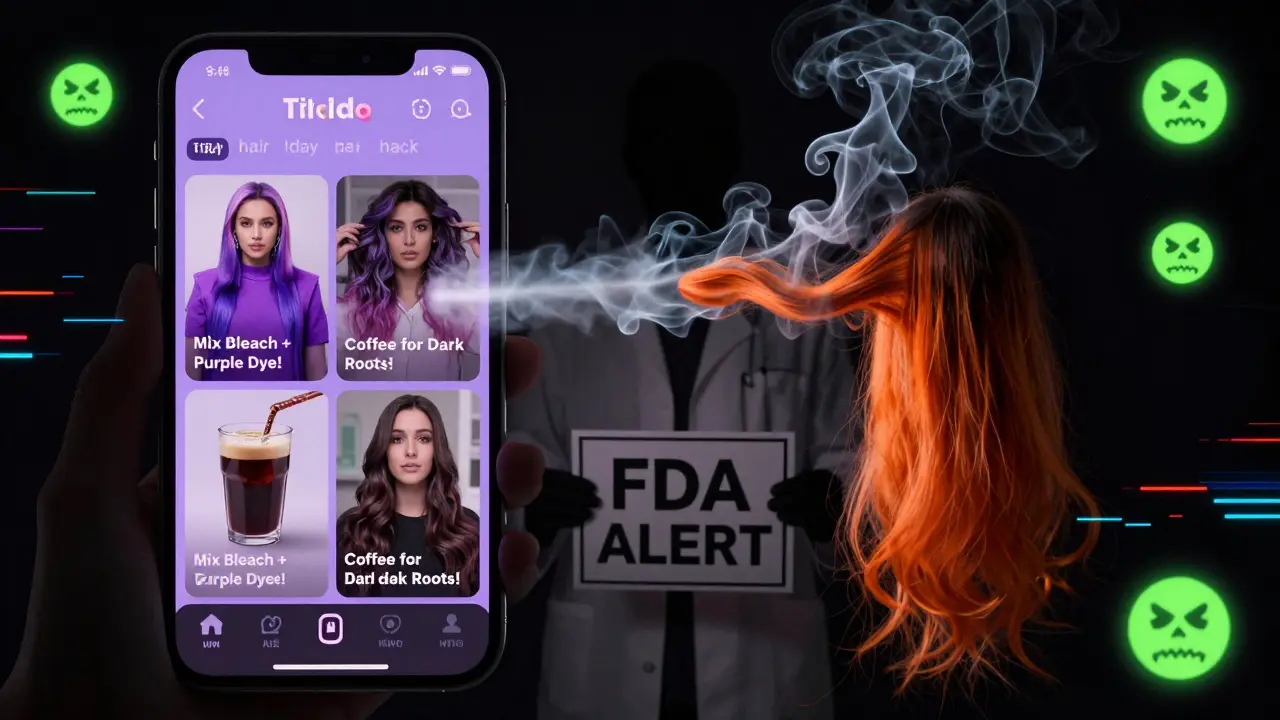
Over 2.4 billion views on TikTok under #hairdyehacks show how popular these tricks are. But every one of those videos is a potential disaster waiting to happen. “Mix bleach with purple dye!” “Use coffee to darken roots!” “Apply dye to dry hair for more pigment!” These aren’t tips-they’re chemical experiments.
Emergency room visits for home coloring injuries rose 37% in 2025, directly tied to viral trends. The FDA and dermatologists are sounding the alarm. If you see a hack that sounds too good to be true, it probably is. Your hair and skin aren’t lab rats. Don’t risk your health for a viral look.
Can I use hair dye if I have sensitive skin?
Yes-but only with caution. Choose dyes labeled hypoallergenic or PPD-free. Always do a 48-hour patch test. Avoid products with ammonia, resorcinol, or lead acetate. If you’ve had a reaction before, consider semi-permanent or plant-based color systems like Hairprint. Consult a dermatologist if you’re unsure.
Is it safe to dye my hair while pregnant?
Most experts agree that occasional hair dye use during pregnancy is low-risk, especially after the first trimester. But avoid high-volume developers, PPD-heavy dyes, and leave-in treatments. Opt for semi-permanent color or root touch-ups with low-chemical formulas. Always patch test, wear gloves, and work in a ventilated space. Talk to your OB-GYN before starting any new chemical treatment.
Why do some hair dyes still contain banned ingredients?
The FDA has only banned 11 cosmetic ingredients since 1938, while the EU has banned over 1,300. Many products sold online, especially from overseas sellers, still contain banned chemicals like lead acetate or high levels of resorcinol. Amazon and other retailers have removed many of these since 2025, but some slip through. Always read ingredient labels carefully. If you see “lead acetate,” “PPD,” or “resorcinol” in high amounts, avoid it.
How often should I color my hair at home?
For permanent color, wait at least 6 to 8 weeks between applications. Coloring every 2-3 weeks increases chemical exposure and raises health risks, including hormone disruption and higher cancer risk. If you need to touch up roots, use a root concealer or semi-permanent color in between. Never color more than 10 times a year unless you’re under professional supervision.
What’s the safest hair color option for home use?
The safest options are semi-permanent dyes, plant-based formulas like Hairprint, or ammonia-free, PPD-free temporary colors. Look for products labeled “resorcinol-free,” “no ammonia,” and “low peroxide.” Avoid anything with “progressive color” or “gray coverage” unless it’s explicitly lead acetate-free. Always check the ingredient list and choose brands that disclose full transparency.



Andrew Nashaat
January 21, 2026 AT 00:13Okay, but let’s be real-why are people still using 40-volume developer like it’s a magic wand? You’re not dyeing a T-shirt, you’re melting your scalp. I’ve seen people post selfies with their heads wrapped in foil like they’re in a sci-fi movie. It’s not cute. It’s not clever. It’s just… tragic. And don’t even get me started on the ‘mixing brands’ trend-like, you wouldn’t mix bleach with drain cleaner, but you’ll mix a box dye with a toner? What is this, chemistry class gone wrong?!
And the patch test? 79% skip it. SEVENTY-NINE PERCENT. That’s not negligence-that’s a death wish with glitter. I don’t care if you’ve used the same dye since 2012. Your immune system doesn’t remember your loyalty. It remembers toxins. Stop gambling with your nervous system.
Also, why are we still letting Amazon sell lead acetate products? The FDA banned it in 2018. That’s seven years ago. Someone’s still making bank off people who can’t read ingredient lists. I swear, if I had to pay a dollar every time someone said ‘but it’s just a little bit,’ I’d own a private island by now.
And TikTok? Please. I’ve watched three videos where someone says ‘I left it on for 90 minutes and my hair is now a unicorn!’ Spoiler: they’re bald. And crying. And in the ER. Stop glorifying chemical warfare as ‘aesthetic.’
Use nitrile gloves. Not dish gloves. Not latex. NITRILE. They cost two bucks. You’re worth more than a stained hand and a rash that looks like a spider’s nightmare.
And for the love of all that is holy, stop coloring over relaxed hair. It’s not ‘boosting the color.’ It’s creating a chemical volcano. I’ve seen dermatology reports. It’s not pretty. It’s not worth it. You’re not a scientist. You’re a person who wants to look good. Don’t turn yourself into a cautionary tale.
Gina Grub
January 22, 2026 AT 12:04High-volume developers = scalp erosion. End of story. No nuance. No exceptions. The data is clear. People still do it because they want viral hair. They don’t want safety. They want content.
PPD? Toxic. Resorcinol? Endocrine disruptor. Lead acetate? Carcinogen. Yet brands keep it in. Why? Profit. Not care. Not science. Profit.
And the ‘I’ve used it for years’ excuse? That’s how addiction starts. Your body doesn’t build tolerance. It builds damage.
Stop normalizing self-harm disguised as beauty.
Nathan Jimerson
January 23, 2026 AT 07:14This is important information. Many people don’t realize how dangerous these practices are. Taking care of your hair shouldn’t mean risking your health. Simple steps like patch tests and gloves make a huge difference. Stay safe, stay informed.
Sandy Pan
January 24, 2026 AT 01:38There’s a deeper question here: why do we equate radical transformation with self-worth? We’re told our gray hair is ‘unprofessional,’ our natural texture is ‘unkempt,’ so we pour chemicals on our scalps like penance. We’re not just coloring hair-we’re performing identity. And the cost? Our skin, our lungs, our peace.
What if safety wasn’t a compromise but a rebellion? What if choosing not to dye, or dyeing less, or choosing plant-based options, wasn’t seen as ‘giving up’ but as reclaiming autonomy?
The real hack isn’t mixing bleach with purple dye. It’s refusing to believe you need to be someone else to be beautiful.
We’ve been sold a lie: that transformation requires destruction. But healing? That’s the real art.
Eric Etienne
January 25, 2026 AT 06:08Lmao people still do this? I used box dye once. My scalp looked like a crime scene. Never again. Just go to the salon. It’s cheaper than ER visits.
Dylan Rodriquez
January 25, 2026 AT 12:08I want to acknowledge the people who read this and thought, ‘I’ve done all of this.’ You’re not alone. You’re not a bad person. You were trying to feel good, to express yourself, to fit in. That’s human.
But now you know better. And that’s powerful.
It’s never too late to choose safety. Start with the patch test. Buy gloves. Skip the mixing. Wait six weeks. You don’t need to be perfect-you just need to be aware.
And if you’re reading this and thinking, ‘I’m too scared to try again’-you’re not weak. You’re wise.
Healing isn’t about fixing your hair. It’s about trusting yourself again.
Amanda Ablan
January 26, 2026 AT 10:05Thank you for sharing this. I didn’t realize how much risk was involved in things I thought were harmless, like leaving dye on longer or using regular gloves. I’m going to start doing the patch test every time-even if I’ve used the same brand for years. It’s just not worth the risk.
Also, I’ve been using Hairprint for my roots and it’s been great. No weird smells, no burning, and my hair actually feels healthier. If anyone’s curious, I can share the link.
Meredith Howard
January 27, 2026 AT 07:49The scientific data presented here is compelling and aligns with peer-reviewed literature on chemical exposure through dermal absorption
It is noteworthy that the incidence of allergic contact dermatitis from para phenylenediamine has increased in parallel with the proliferation of at home hair coloring products
Further epidemiological studies are warranted to assess long term systemic effects particularly in populations with frequent exposure
Recommendations regarding nitrile glove usage and developer volume limitations are clinically sound
However the assertion regarding breast cancer risk requires contextualization with confounding variables including family history and lifestyle factors
Yashwanth Gouravajjula
January 27, 2026 AT 16:02In India, many women use henna and indigo for color. Natural. Safe. No chemicals. No burns. No panic. Just patience. Maybe we don’t need to chase trends. Maybe we need to return to what worked.
Kevin Hagerty
January 29, 2026 AT 08:31Wow someone actually wrote a novel about not dying from hair dye
Guess what I left dye on for 3 hours and my hair turned neon green
Worth it
Richard H
January 29, 2026 AT 09:59Y’all are overreacting. We’ve been dying our hair for decades. If it was that dangerous, the FDA would’ve banned it all. This is just woke fearmongering. Get over it.
And if you’re scared of chemicals, go live in a cave. Hair dye isn’t poison. It’s art.
Also, why are you listening to some dermatologist? I got my color from a TikTok influencer. She’s got 2 million followers. She knows more than you.
Kendall Storey
January 31, 2026 AT 06:26Let’s flip the script: instead of asking what to avoid, let’s celebrate what’s working. Brands like Hairprint, Madison Reed, and even L’Oréal’s new low-chem lines are proving you don’t need to sacrifice safety for color. The market is changing. We’re not stuck with toxic options anymore.
And yes-patch tests matter. Gloves matter. Timing matters. But so does progress. We’re not just avoiding danger-we’re choosing better tools. That’s not fear. That’s evolution.
Don’t just survive your hair routine. Upgrade it.